



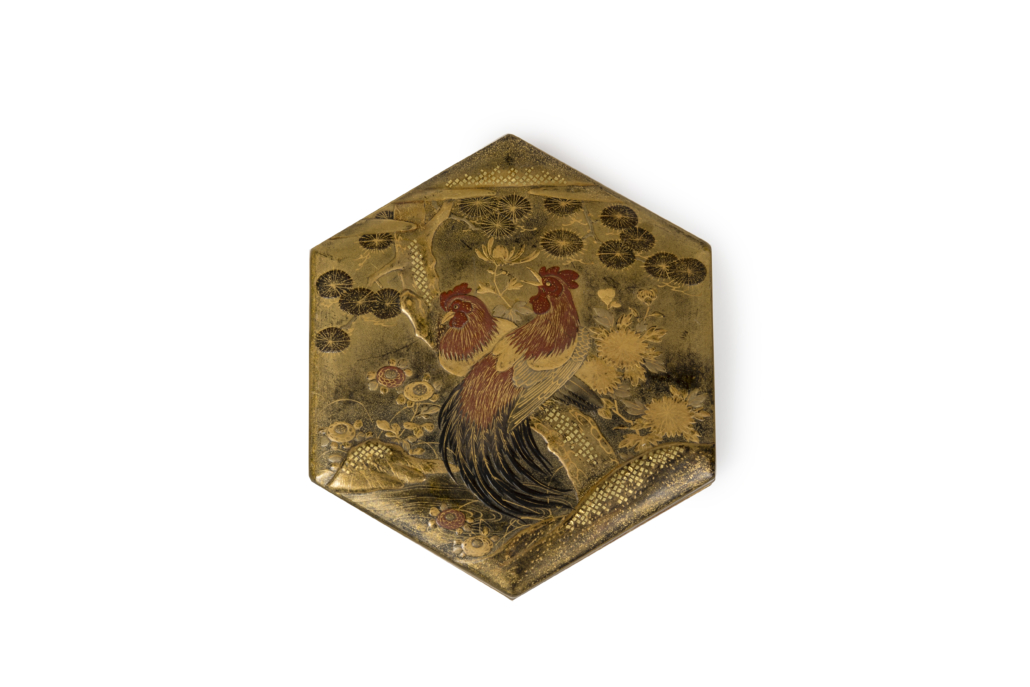
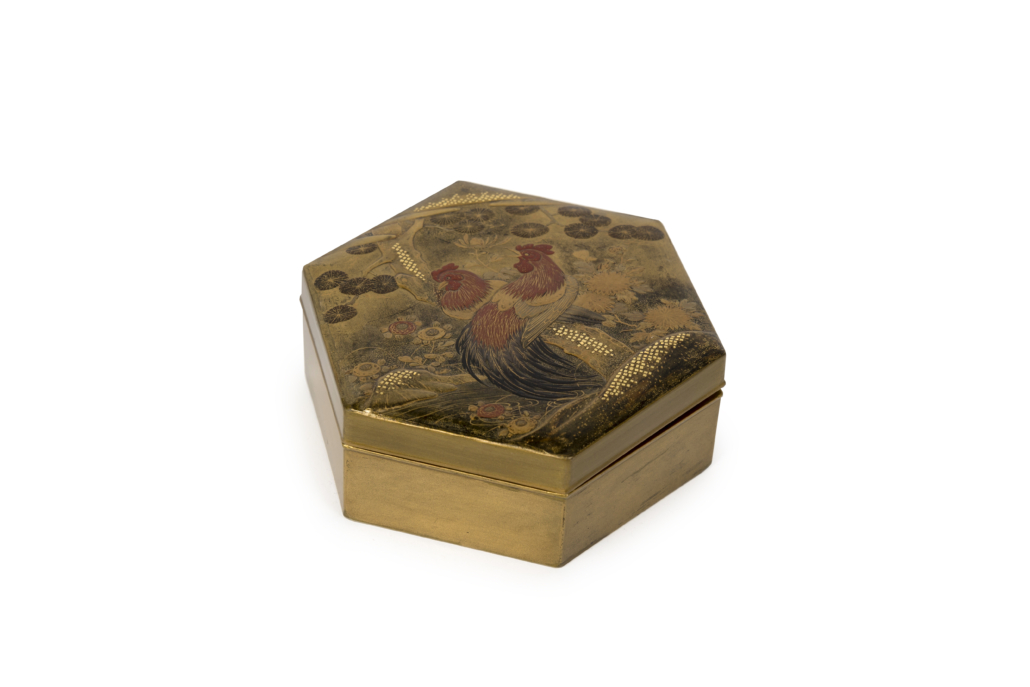

This small hexagonal kobako presents a rich scene featuring two roosters perched on a pine tree, set within an abundant natural landscape. The sides of the composition are adorned with peonies and chrysanthemums, each element rich in symbolic significance.
In the Kojiki (Record of Ancient Matters), Japan’s oldest mythological chronicle, the rooster plays a pivotal role in luring the sun goddess Amaterasu out of her cave using its crow and a magical mirror.
The surrounding vegetation also carries profound meanings. The peony (botan), revered in Japan for its beauty and grace, symbolizes wealth, honor, and elegance. The pine (matsu) stands as a metaphor for unwavering strength, shaped by the trials of daily life, and for those who remain steadfast in their values despite adversity. During the New Year celebrations, the Japanese place two pines—of equal height—at the entrance of their homes, a Shinto tradition that welcomes the presence and blessings of the kami (deities), believed to dwell in the branches of evergreen trees like the pine.
Among the three featured plants, the chrysanthemum (kiku) carries the deepest symbolic weight. Far from its Western association with mourning, in Japan the chrysanthemum is a symbol of imperial power, longevity, and happiness. Introduced from China during the Nara period, it was originally prized for its medicinal properties. Its noble status is reflected in its long history: once reserved for the elite in ancient China, it eventually became the emblem of the Japanese Imperial family in the 13th century under Emperor Go-Toba. The 16-petal chrysanthemum crest continues to symbolize the Emperor, the Imperial family, and the Japanese people.
The “Chrysanthemum Throne” remains a poetic and political term to refer to the Japanese monarchy. The flower even appears on the Japanese passport and 50 yen coin, and lends its name to the Supreme Order of the Chrysanthemum—the highest honor bestowed by the Emperor.
Culturally, the chrysanthemum is also one of the Four Gentlemen (Junzi)—a grouping of plants (plum blossom, orchid, bamboo, and chrysanthemum) that each represent a season and are frequent subjects in East Asian painting. The chrysanthemum, as the flower of autumn, is known as the “golden flower” and symbolizes noble character and serenity.
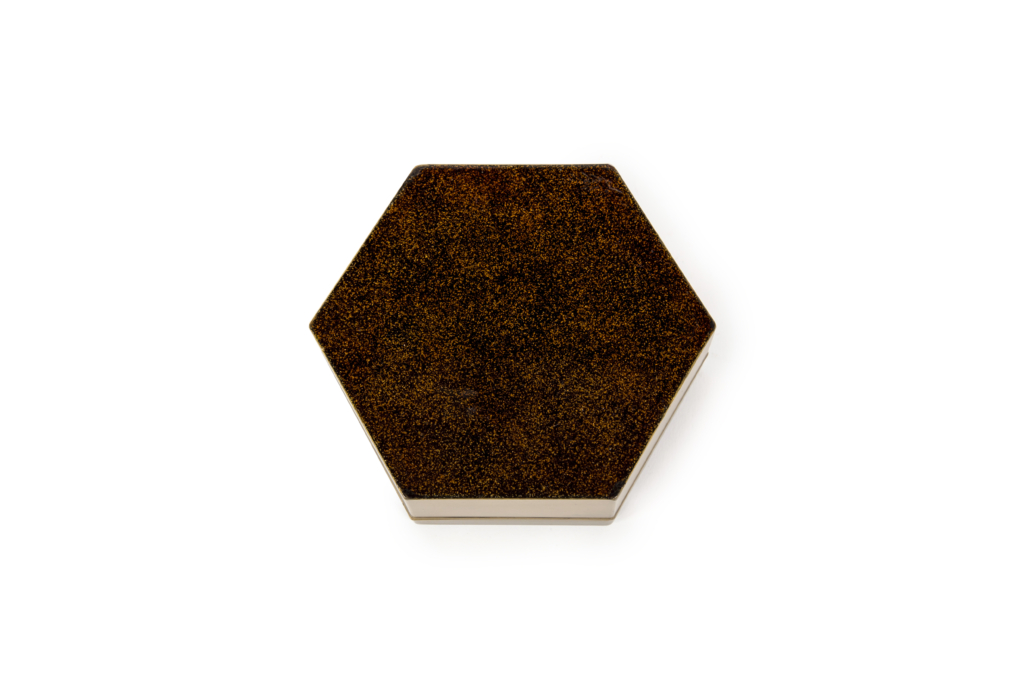
This kobako showcases multiple lacquer techniques. The body is covered in a fundame ground of gold lacquer, while the lid features a polychrome composition in takamaki-e (raised maki-e), a method developed during the Muromachi period (1336–1573). The surface is further enriched with hirameji, using diamond-shaped gold flakes, and layered maki-e work of varying intensity to create texture and volume. The interior is decorated in gold maki-e on a copper-toned background.
Japan – Edo era (1600–1868)
Dimensions: Length: 10.5 cm – Height: 4 cm