



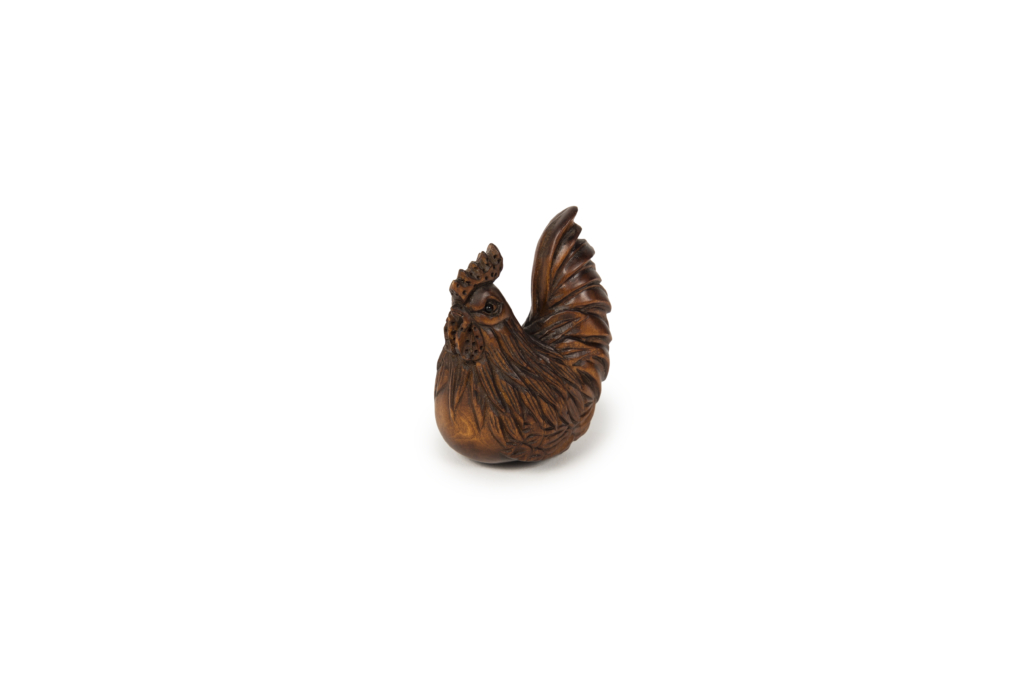
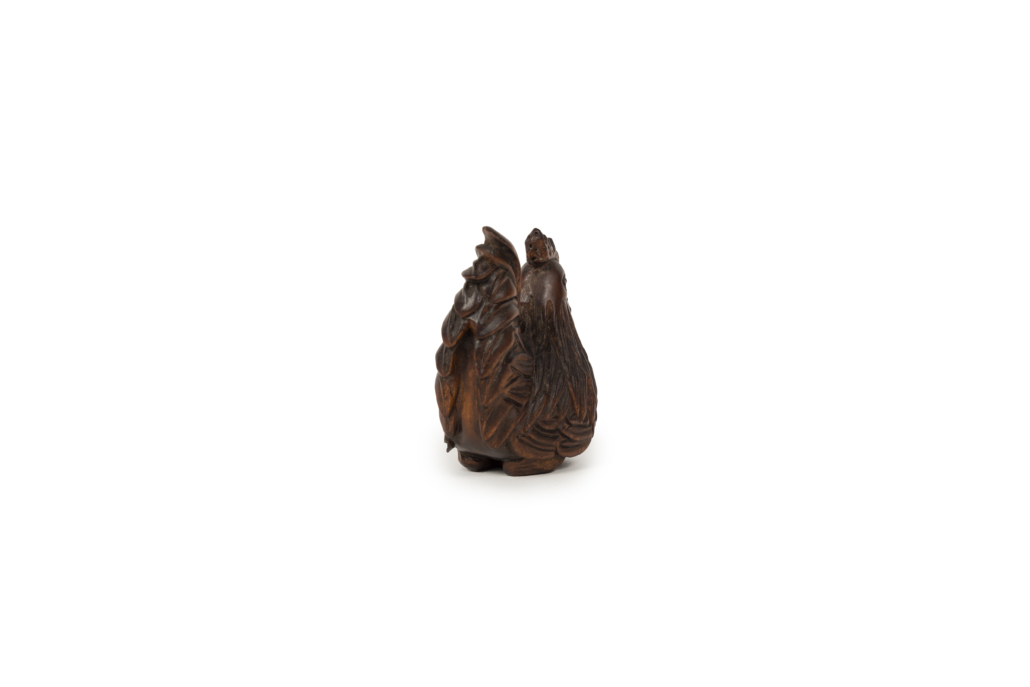
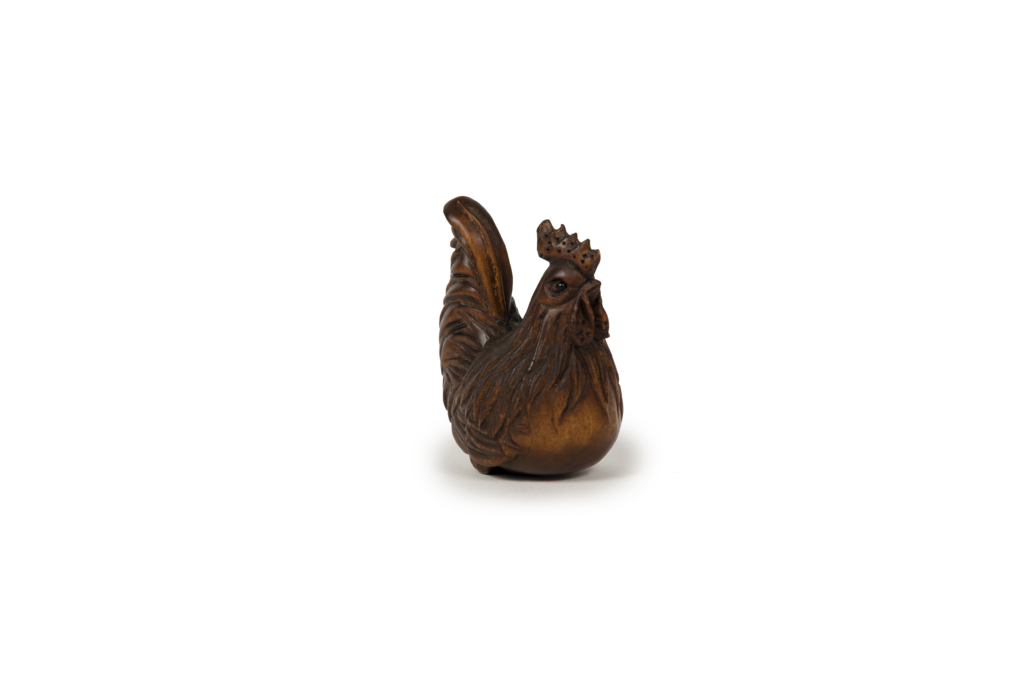

NETSUKE ROOSTER
Référence : 2025-1379
Small yet interesting netsuke in boxwood representing a seated rooster. The finish of its dishevelled feathers is neat, while the details of comb and the beak are treated with great realism. Verny nice brown patinq of use, characteristics of netsuke of the beginning of the Meiji period. Emblematic animal from the Chinese and Japanese zodiacal calendar, it is a symbol of prosperity that could grant a prolific descendance. In the Kojiki (lit. Chronicle of antique facts), a book on the mythology of Japan, the rooster can make the goddess Amaterasu out of her cave, only using its chant and a magic mirror.
The kimono being a piece of cloth mostly designed without any pocket, the small items of day-to-day life were hung on the belt almost like a chatelaine, but rather in small boxes that were part of a greater set called sagemono. In order to be kept firmly in place a netsuke was notch into the belt (obi) of the kimono, this would secure any type of sagemono and help tighten the link between social status and traditional apparel. Netsuke are small figurine made of wood, sometime ivory and are among the greatest example of the excellence of Japanese craftsmen. They are meticulously sculpted, often in precious material, and always over a long period, sometimes, up to a month. Under the Edo era, rich collectors were already fighting for the most attractive pieces, preserving these from being worn too intensively. Under the Meiji era a lot of aspects of society changed, so did fashion and with it netsuke and sagemono lost most of their utilitarian purpose only leaving the attraction one could have for any type of precious and small objects.
Japan – Meiji era (1868-1912)
Height : 5 cm – width : 3 cm – depth : 4 cm