


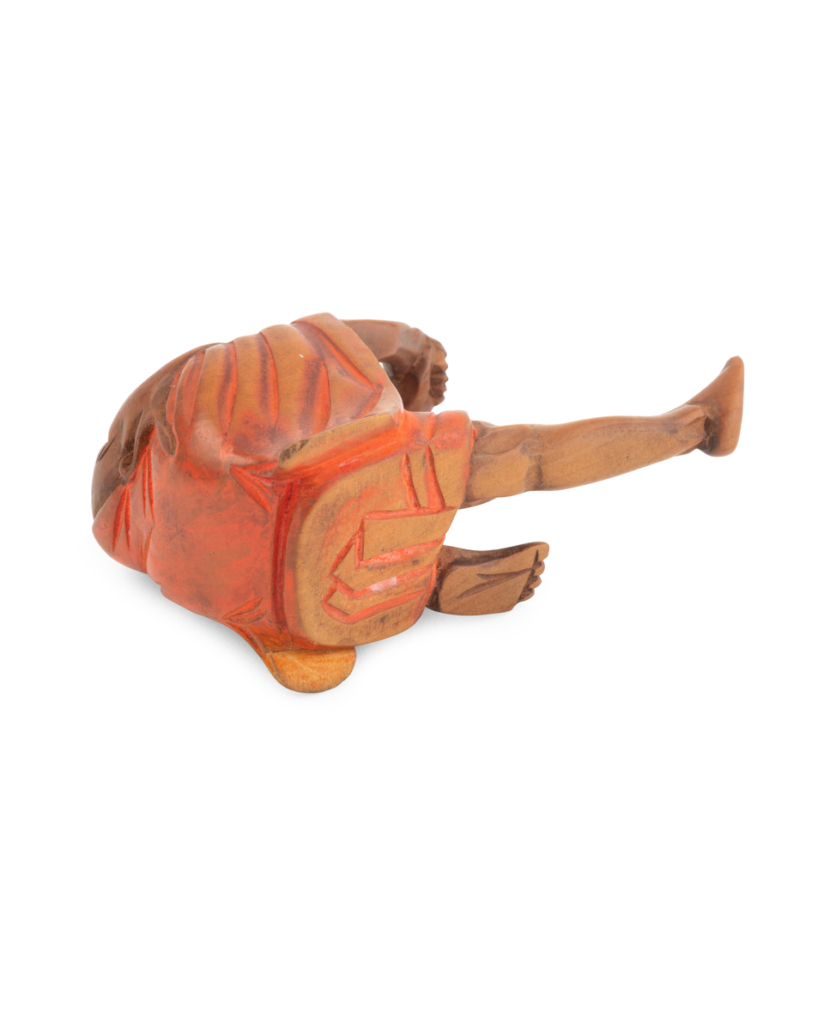

NETSUKE DARUMA – MEIJI
Référence : 2025-1430
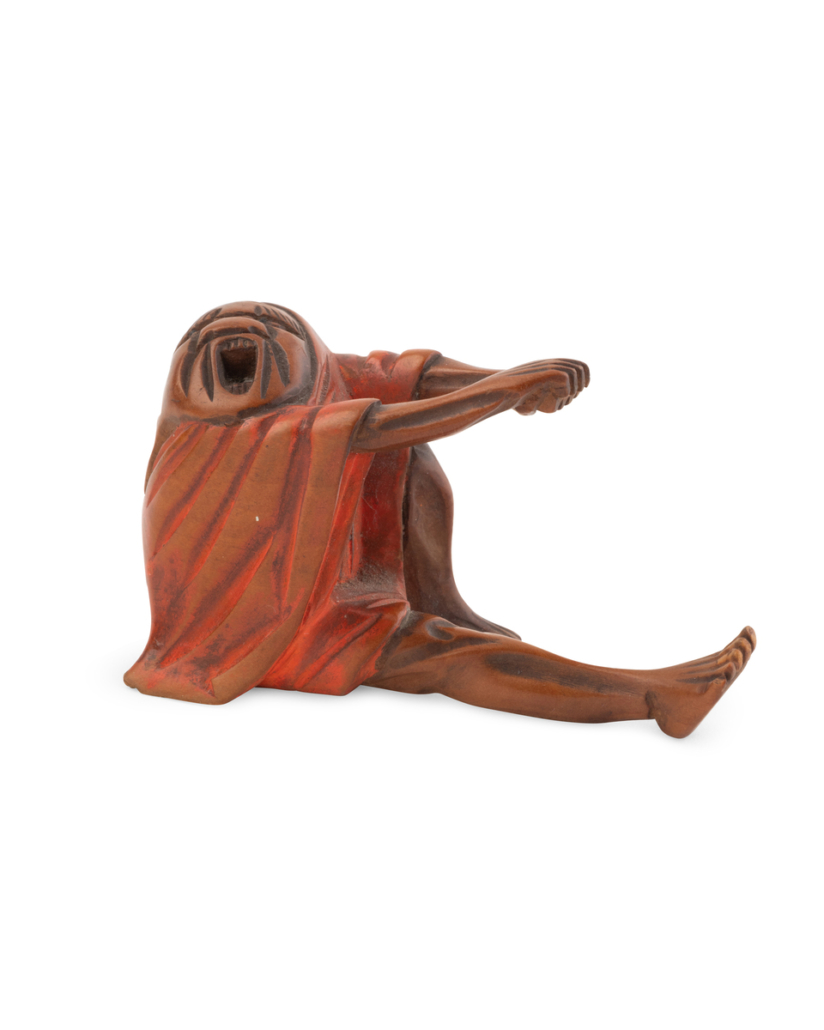
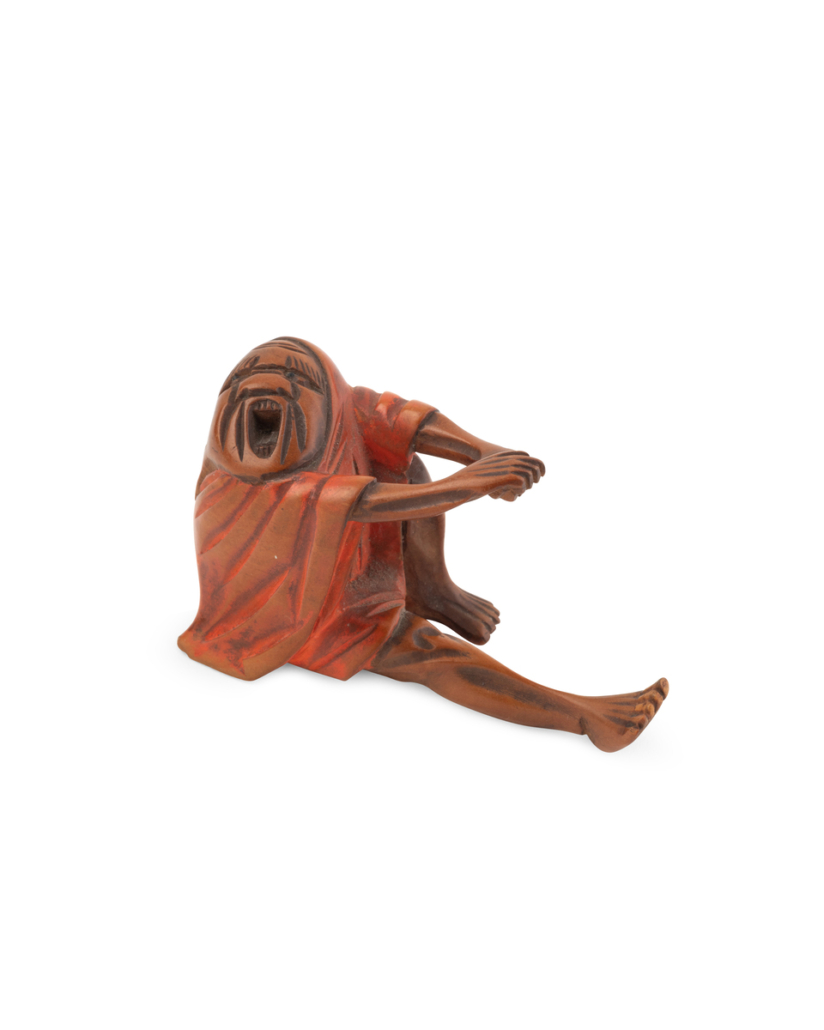
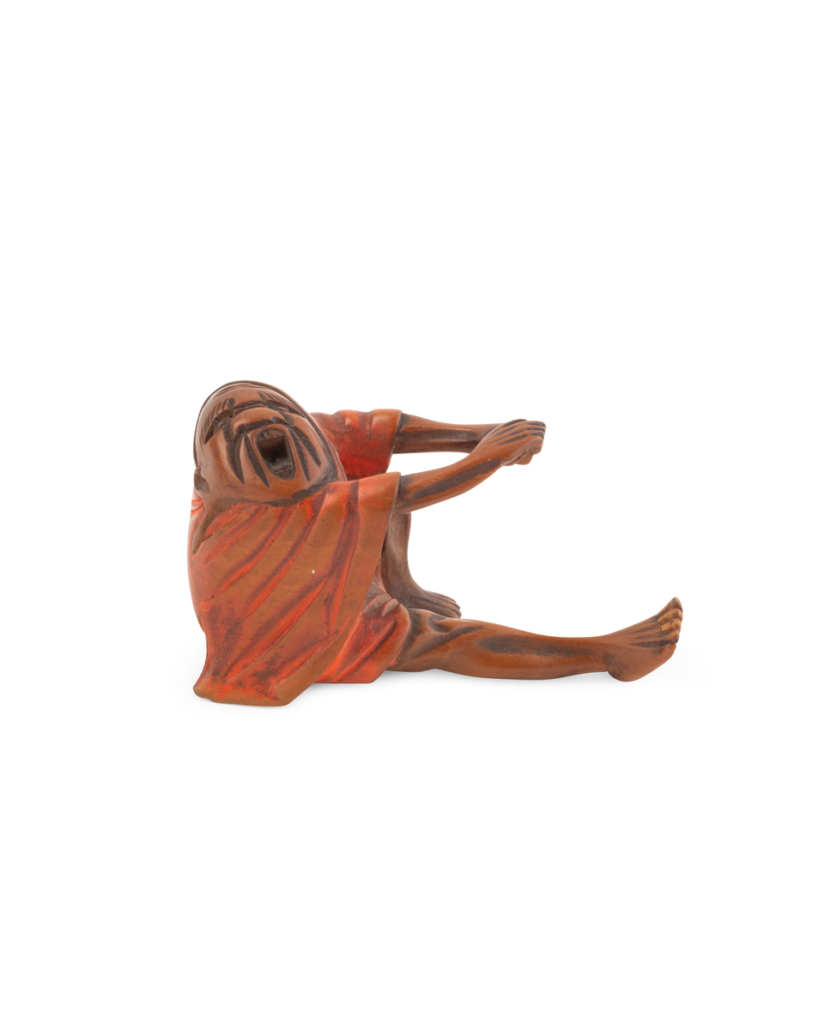
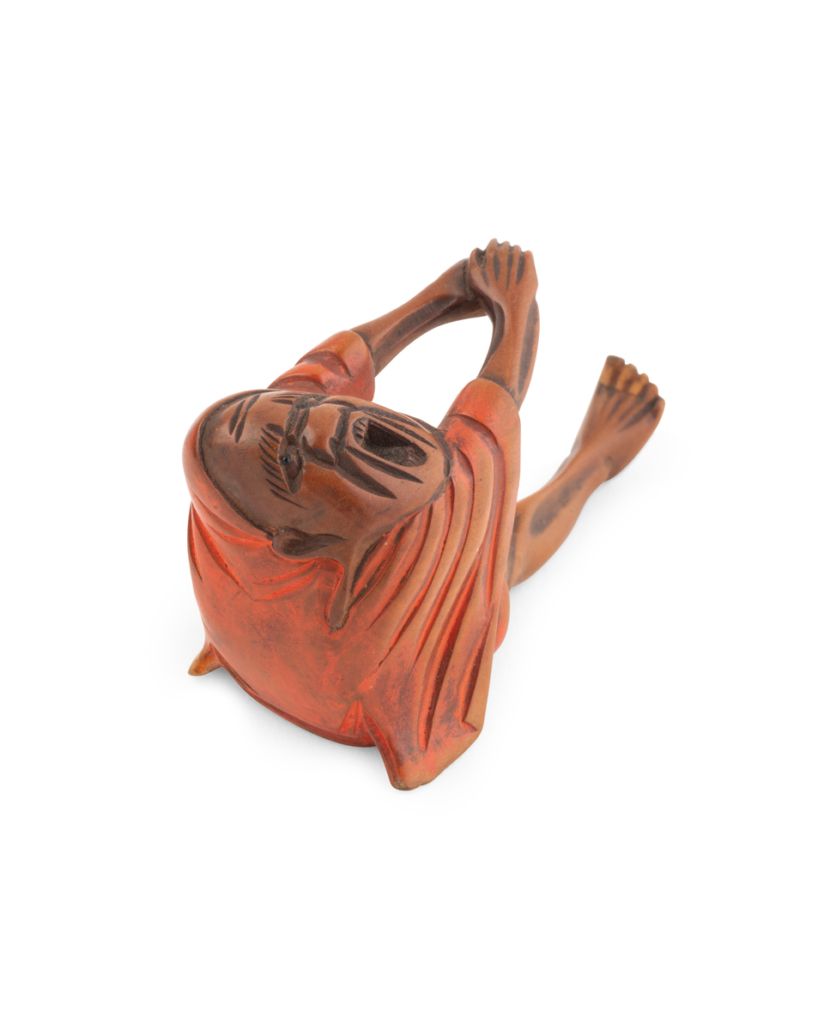
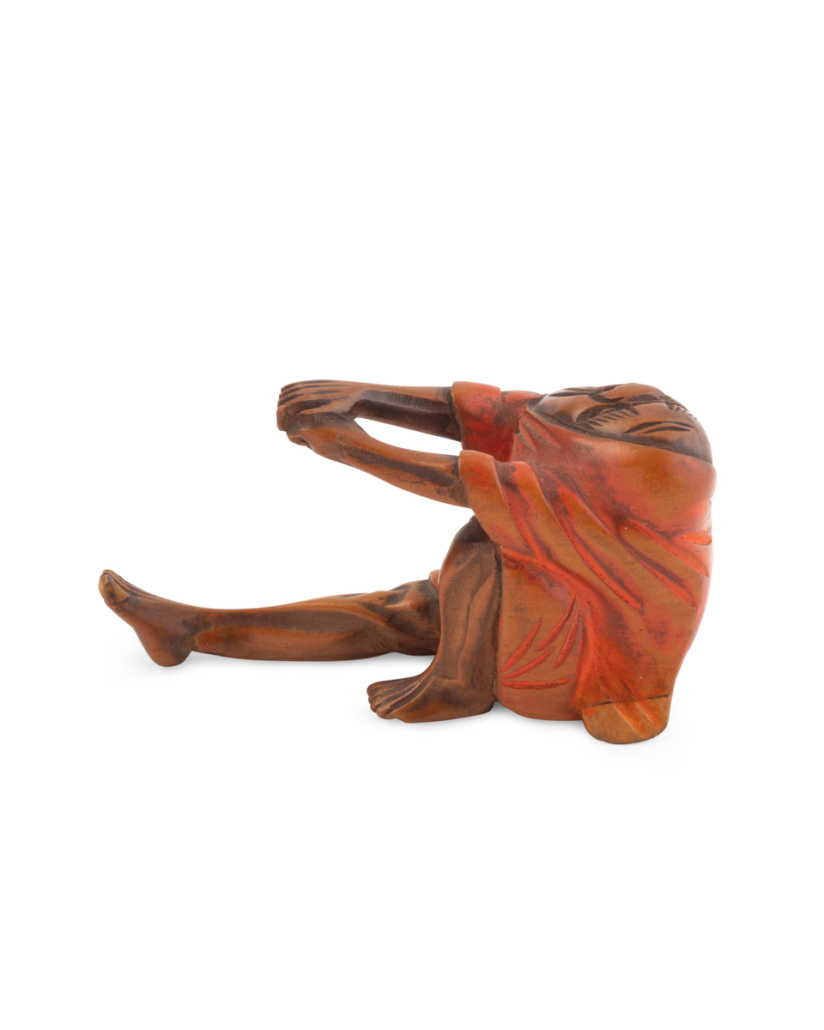
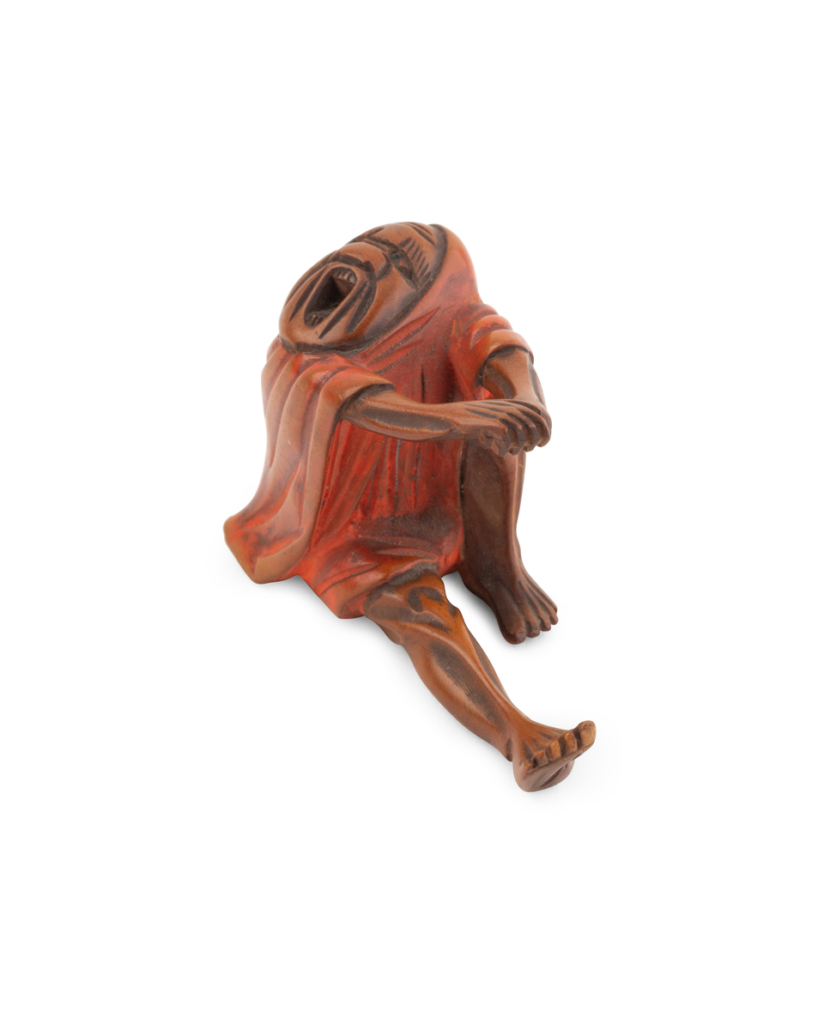
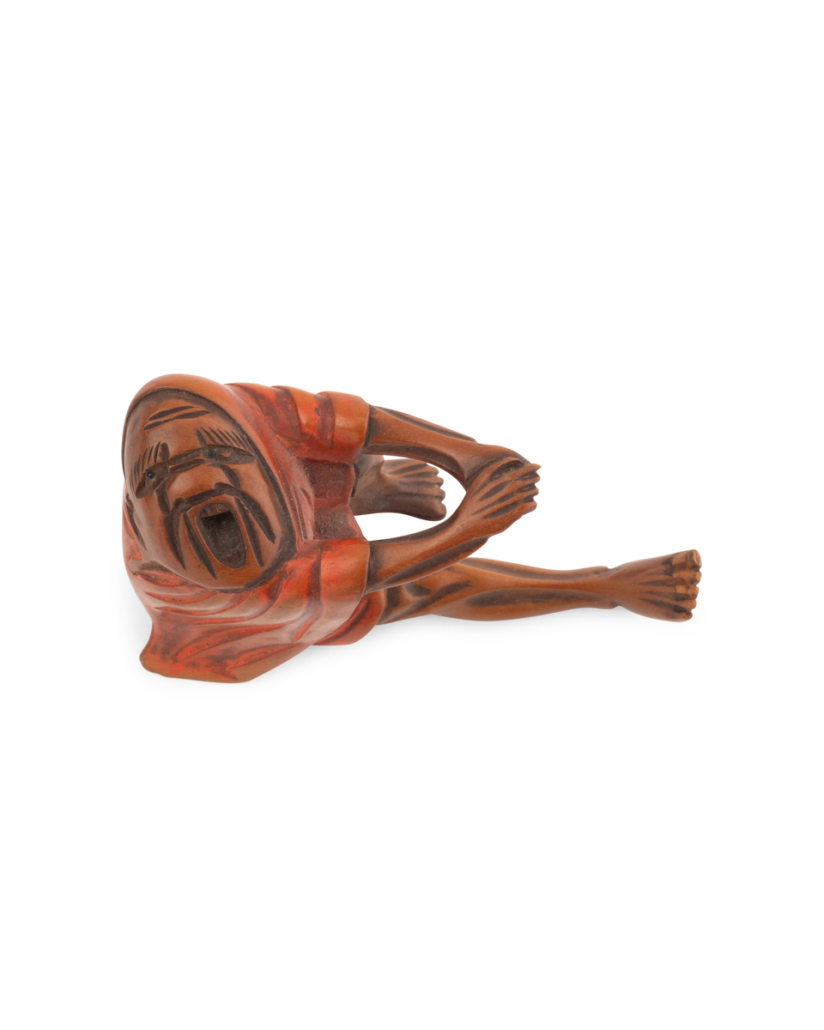
Netsuke in lacquered boxwood representing a yawning Daruma in a red cloak. Daruma, the Japanese name for Bodhidharma, was an Indian Buddhist monk and the founder of the Chan school in China, later regarded as the patriarch of Zen in Japan. In Japanese artistic tradition, inspired by the episode of his “nine years of wall-gazing” meditation, Daruma is often depicted without legs. Here he is shown yawning, a rare and humorous representation of the revered figure.
The first biography of Bodhidharma was a brief text written by the Buddhist monk Daoxuan (702–760), nearly one hundred years after Bodhidharma’s death. As his legend grew, Bodhidharma came to be credited with the teaching that meditation represented a return to the Buddha’s original precepts. Under the Tang dynasty (618–907), he was regarded as the first patriarch of the tradition later known as Chan in China, Zen in Japan, Sŏn in Korea, and Thiền in Vietnam. These names correspond to the pronunciation of the Sanskrit word dhyāna (“meditation”) in Chinese, Japanese, Korean, and Vietnamese, respectively. Bodhidharma was also considered the twenty-eighth Indian patriarch in a direct lineage of transmission from the Buddha.
In Japan, from the introduction of Zen Buddhism in the 7th century onward, Bodhidharma’s name became known. From the Kamakura period (1185–1333), with the rise of Zen sects firmly established throughout the archipelago, he came to be associated with a figure of legendary renown. He was the subject of numerous ink paintings—both washes and works in the style of the Song (960–1279) and Yuan (1279–1368) dynasties—in which he is depicted as a corpulent figure with a stern expression.
In the Japanese artistic tradition, inspired by the episode of his “nine years of wall contemplation,” Daruma is often represented without legs.
Here, he is shown yawning, a rare and humorous representation of this venerated figure.
Oval-shaped figurines inspired by this artistic tradition were also regularly produced. Known as okiagari-kobōshi (“self-righting little monk”), they owe their name to the fact that their center of gravity, located in the lower part of the object, allows them to right themselves when tipped over. Even today, in merchants’ homes, altars are often dedicated to these objects, which are believed to bring good fortune and commercial success.
In many provinces throughout the archipelago, the famous “Daruma market” (daruma-ichi) is held in January, drawing crowds eager to acquire one of these auspicious talismans
Japan, end of XIX th century, Meiji era
Height: 3.5 cm – length : 6 cm -width : 2.5 cm