




SUZURIBAKO EDO
Référence : 2025-1397
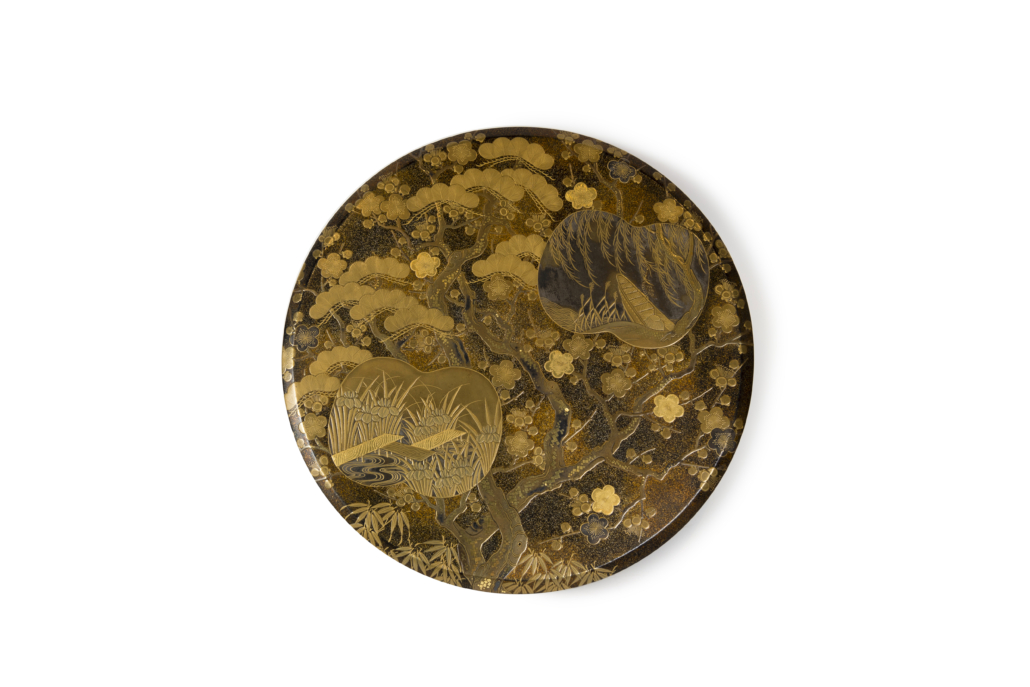
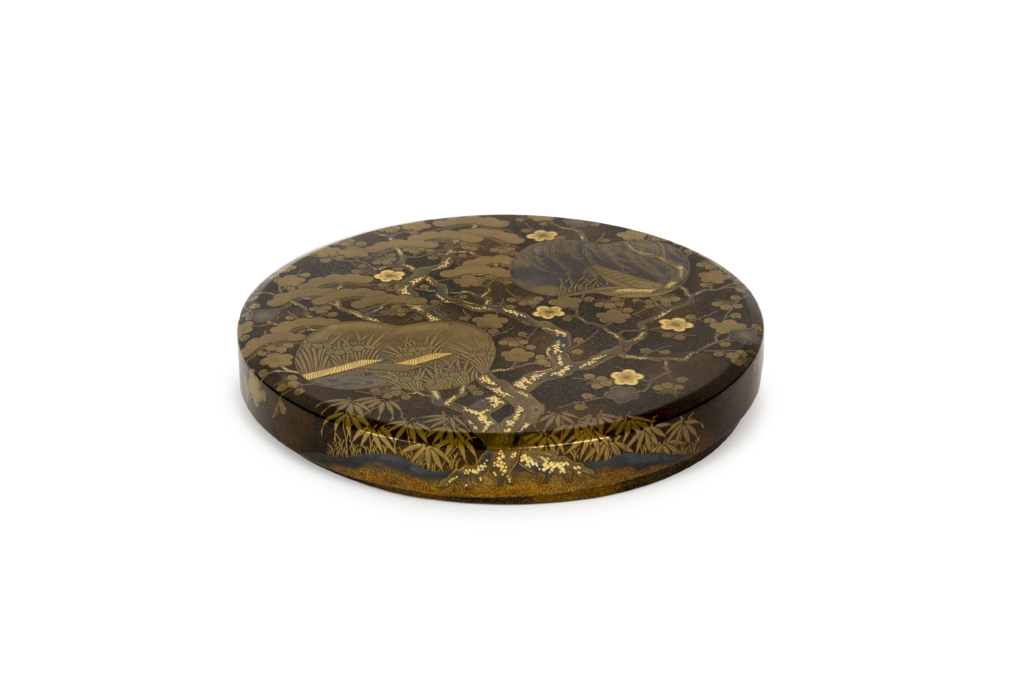
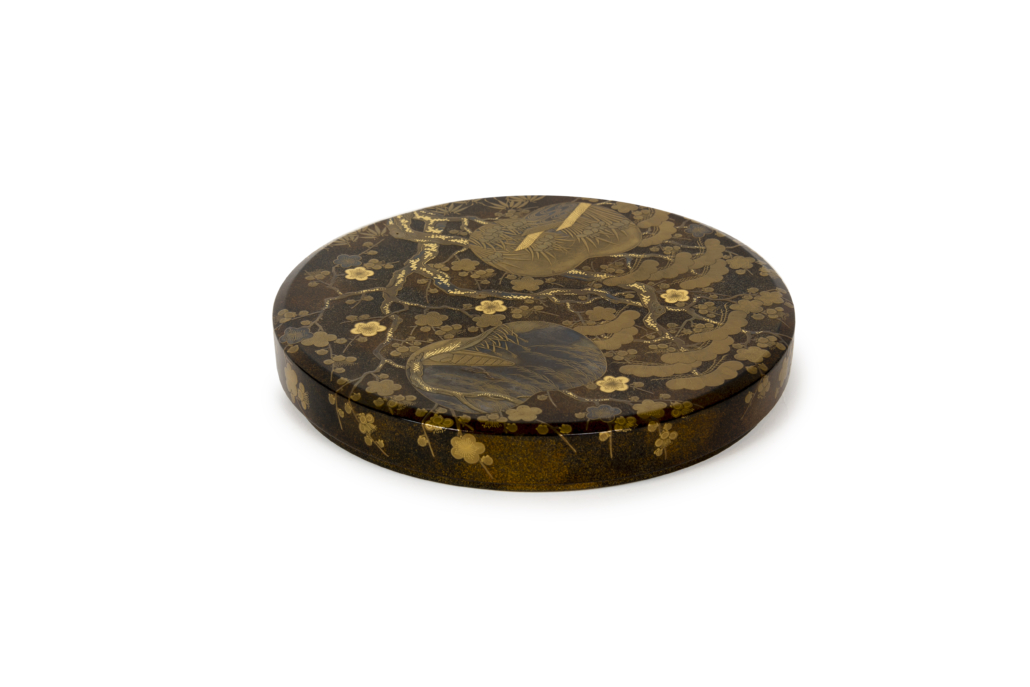
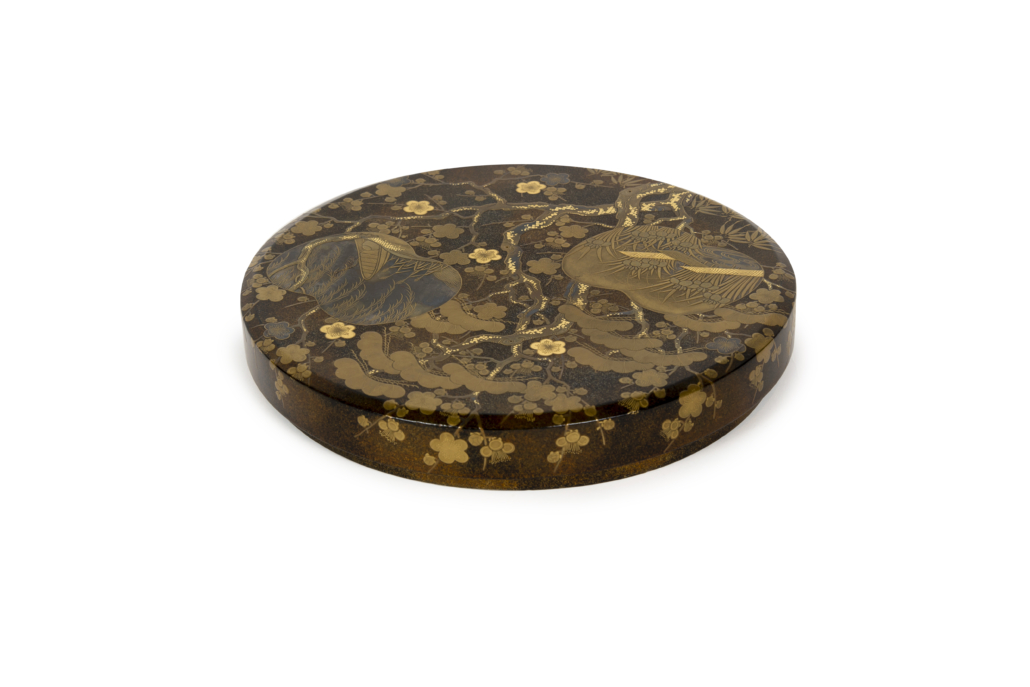
Impressive suzuribako writing box decorated in gold and tin maki-e lacquer on a nashiji ground. The lid is adorned with a composition depicting a pine and a plum tree whose trunks intertwine, with young bamboo shoots growing at their base. The branches and blossoms of both trees fill the entire surface, except for two fan-shaped reserves.
The choice to depict these two symbolically powerful species in such an entwined manner is deliberate, as both the pine and the plum carry deep cultural meaning in Japan.
The pine (matsu) symbolizes strength and longevity, thriving in poor soil and standing firm against winds and storms. During New Year celebrations, the Japanese traditionally place two pines of similar height on either side of their entrance, following a Shinto belief that deities (kami) dwell in the branches of evergreen trees. Because of its evergreen foliage, the pine has long been favored for attracting benevolent spirits, often accompanied by a shimenawa sacred rope.
The plum blossom (ume), one of the first flowers to bloom each year—usually at the end of winter or early spring—symbolizes resilience and renewal. Heralding the arrival of spring, plum blossoms bring hope and joy after the cold months. Although similar to cherry blossoms, they can be distinguished by their rounder petals without notches. Their delicate fragrance attracts pollinators and admirers alike. Ranging from white to deep pink, plum blossoms are widely used in floral arrangements and as artistic motifs in painting, ceramics, and textiles. They are a recurring theme in Japanese art. For instance, the National Museum of the Château de Versailles and Trianon preserves a remarkable five-legged tray in the shape of a plum blossom once owned by Queen Marie-Antoinette.
The lid also features two small fan-shaped medallions: one depicting a jetty among irises, the other showing a boat beneath a willow tree and tall miscanthus grasses.
The Japanese iris (shōbu) symbolizes resilience and determination, blooming even under difficult weather conditions. It also serves as a metaphor for a beautiful woman in traditional theater. Associated with the rainy season at the start of summer, the iris conveys courage, strength, and perseverance. Frequently represented in ikebana and sumi-e painting, it is admired for its elegance. June is the ideal time to observe its many varieties, which range from white to pink, violet, blue, and yellow. Growing along waterbanks and marshy soils, irises are often admired from boats or from wooden platforms built above the water.
The second medallion depicts a small boat, likely a fishing vessel, beneath a willow rendered with kirigane gold foil. The Japanese willow (yukiyanagi) is valued in floral arrangements and tea ceremonies, symbolizing simplicity and elegance. Celebrated in literature and poetry, it evokes the transience of life. Its presence in gardens brings serenity and harmony, and it often appears in festivals and seasonal displays. Because of its graceful branches, the willow embodies the aesthetics of wabi-sabi, appreciating beauty in impermanence. Its blossoms are also associated with healing and renewal. Known for thriving in difficult environments and drawing nourishment from deep roots, the willow symbolizes physical and emotional rejuvenation. In folklore, sitting beneath a willow is believed to bring good fortune and restore the body and spirit.
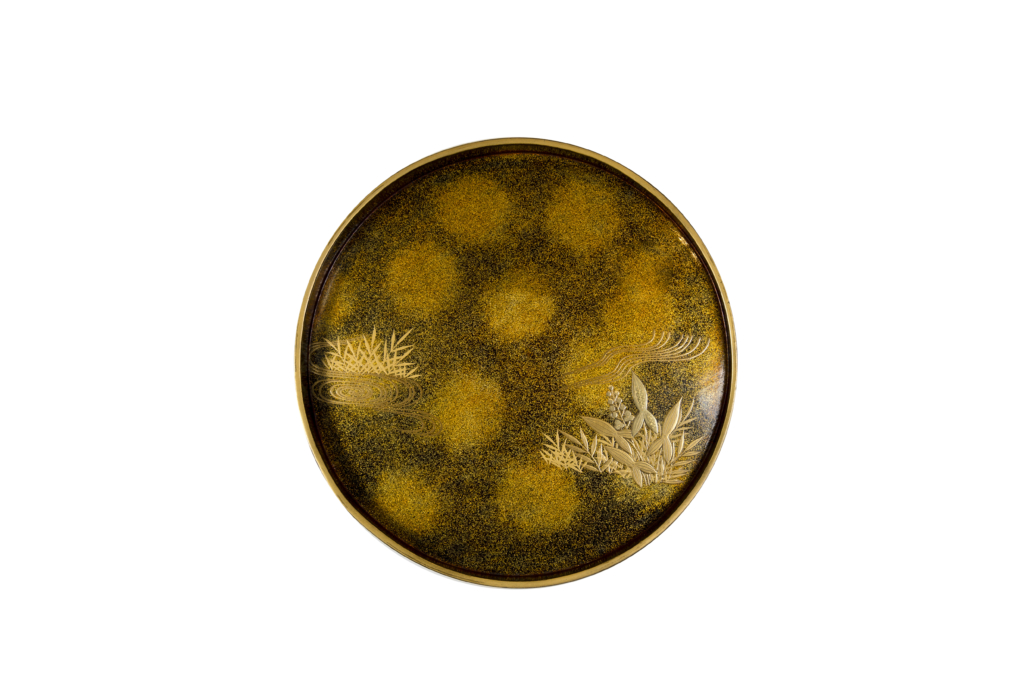
The interior of the lid features a more understated decoration of physalis leaves and husks about to open. The simplified treatment evokes early spring and the precocity of the young fruit, yet each is executed with care in maki-e, many enhanced with small kirigane gold inlays.
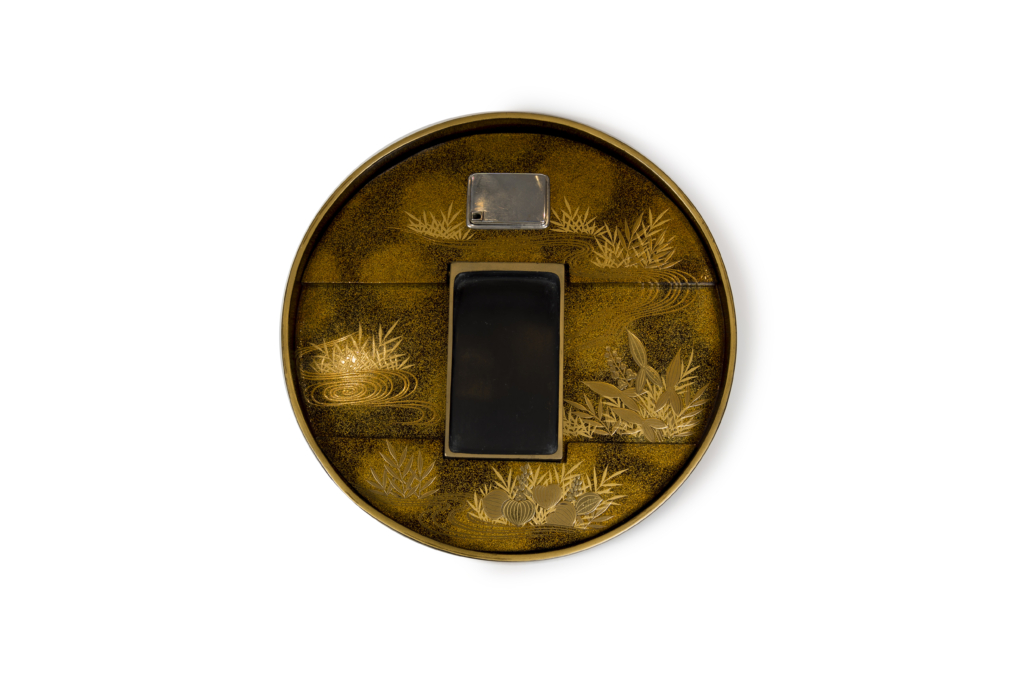
The writing box contains its inkstone and its suiteki (water dropper), rectangular in form and crafted from silver sheet.
Japan – Edo period (1603–1868)
Height: 4.5 cm – Diameter: 27 cm