






CHILI PEPPER KOGO – TAISHŌ
Référence : 2026-1474
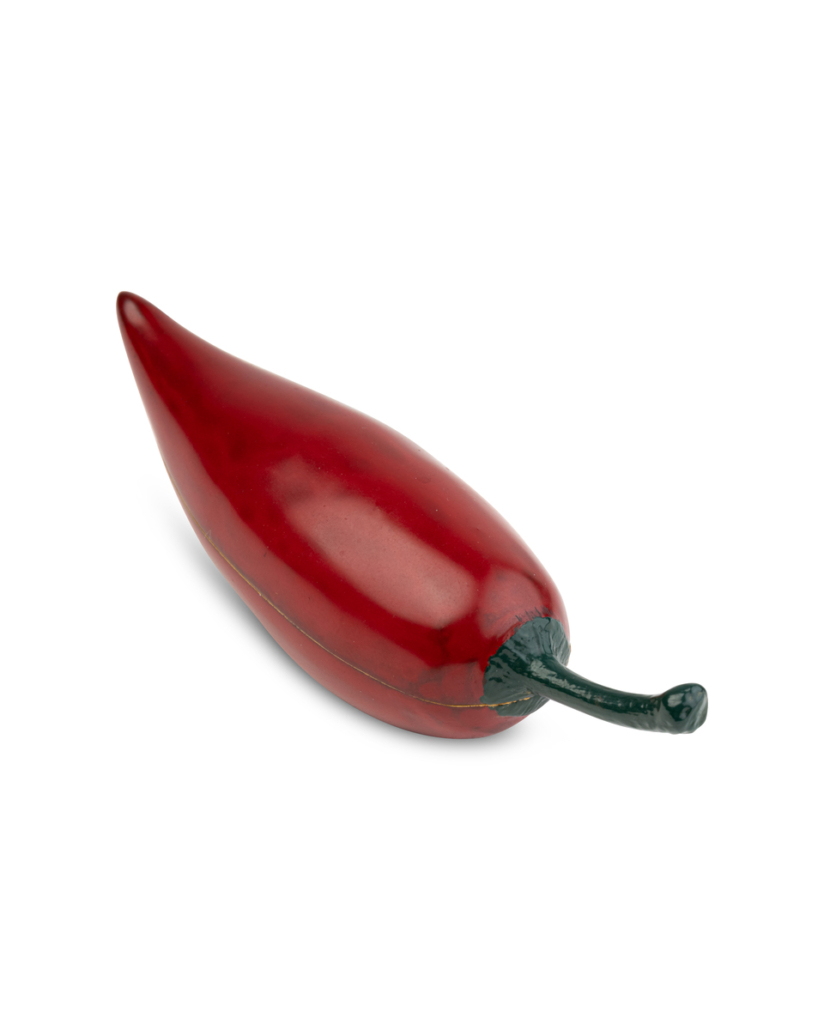
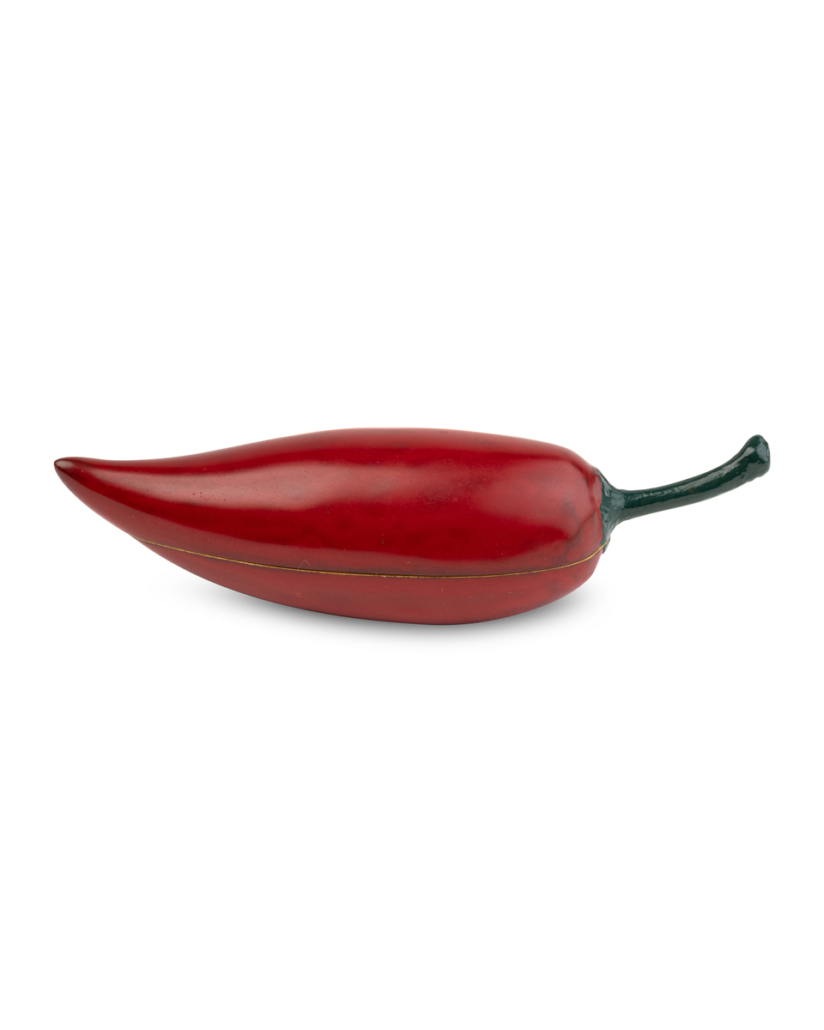
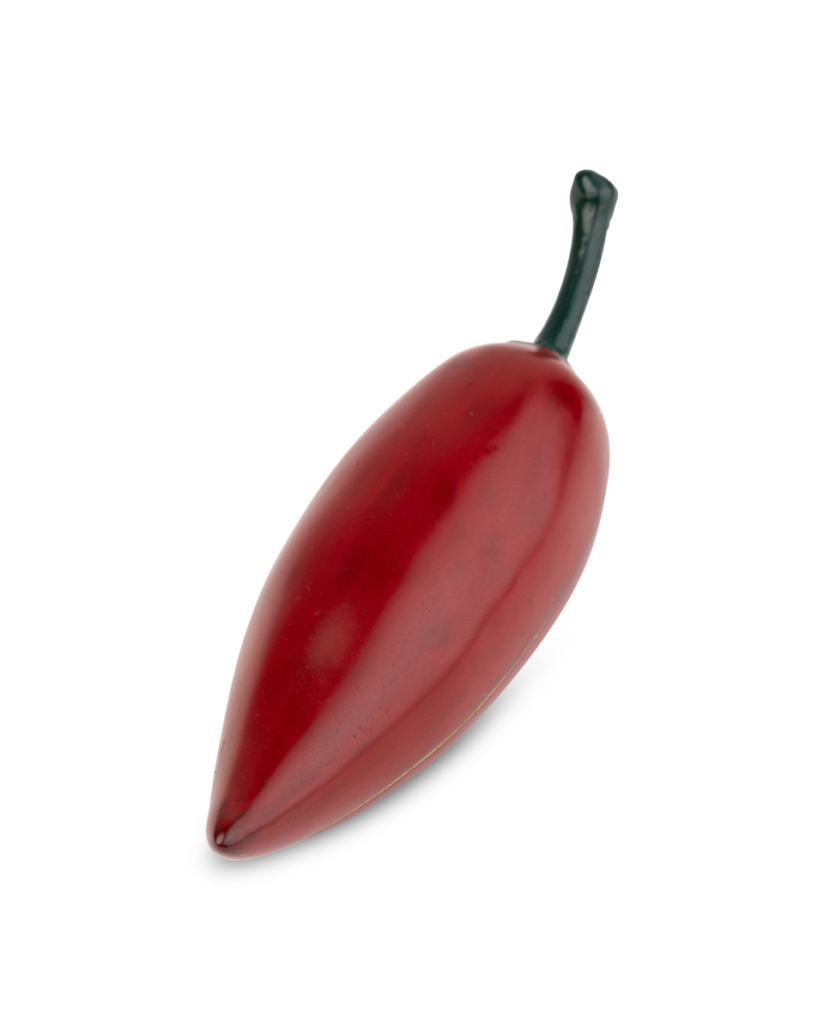
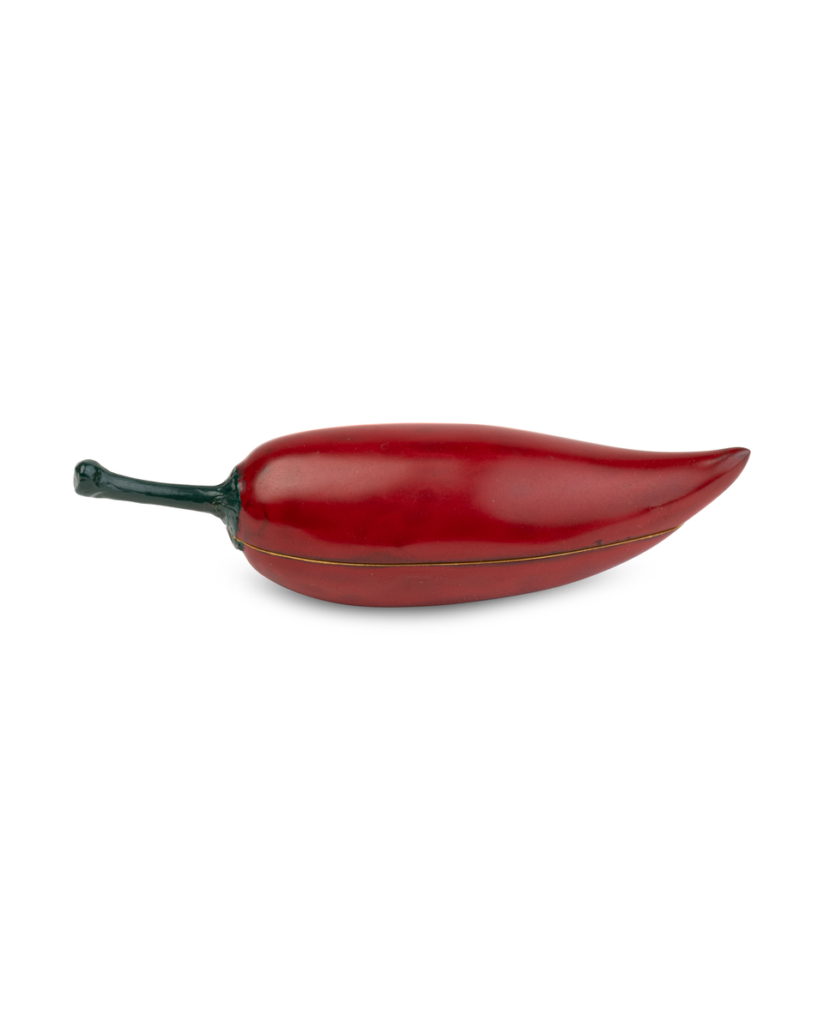
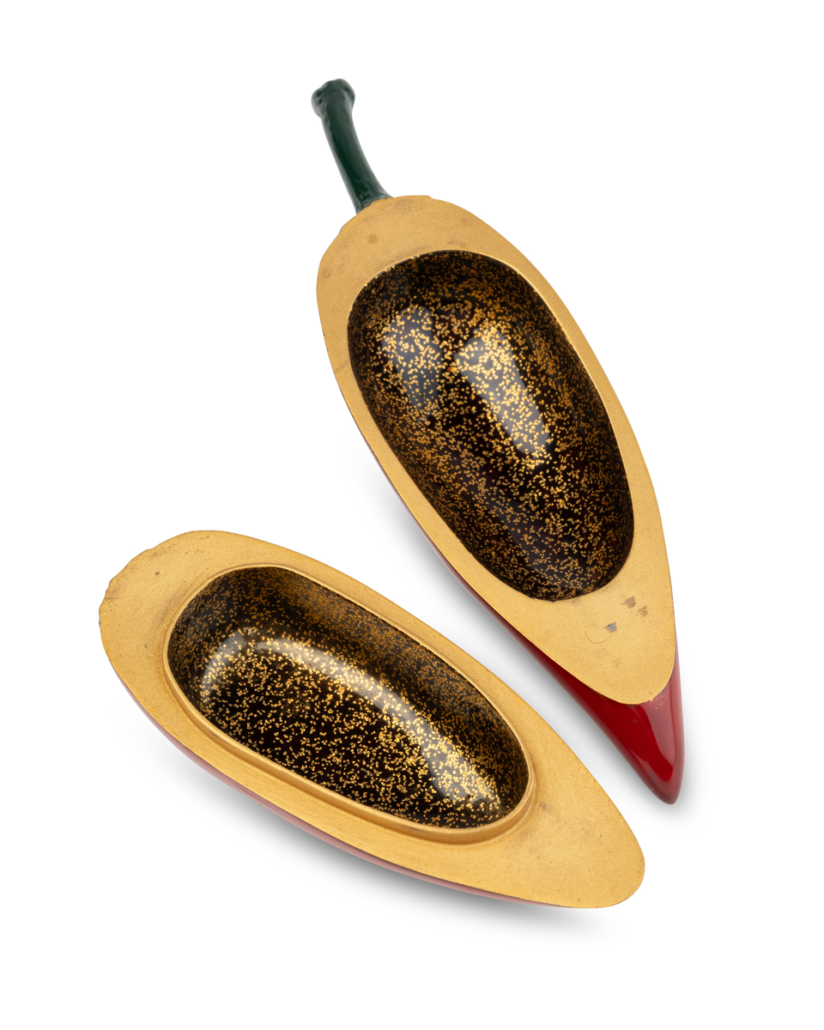
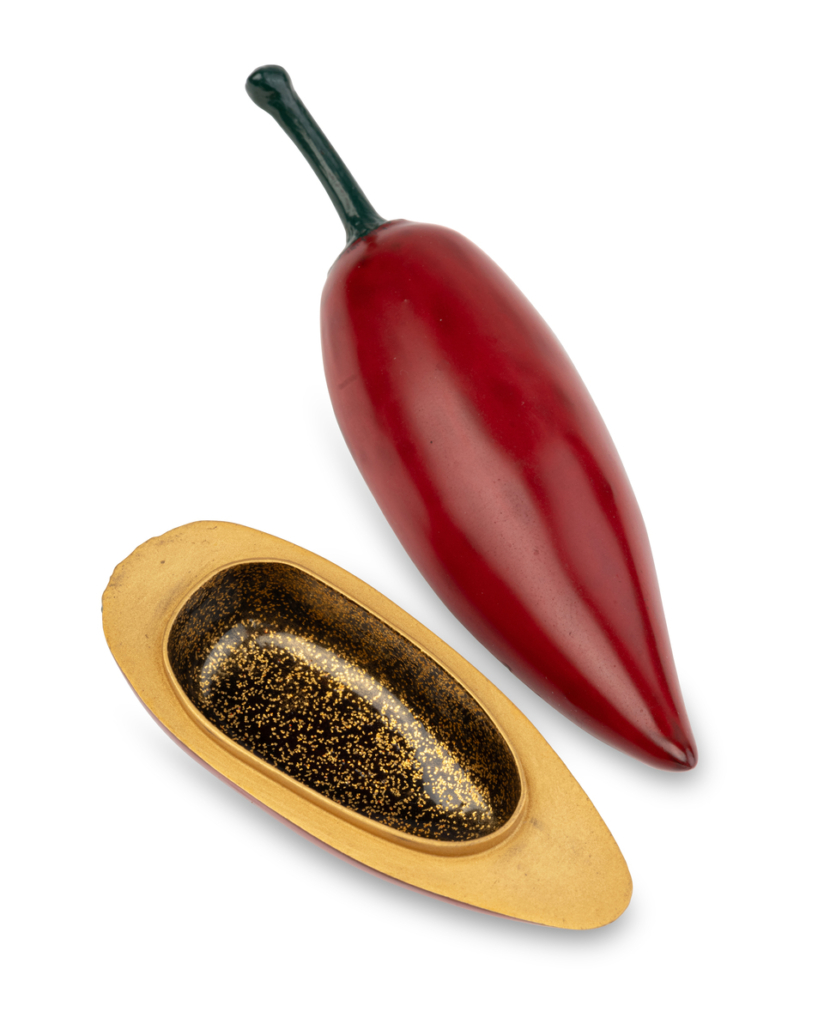
Small kogo representing a chili pepper, finished with a subtly shaded red lacquer on the body of the fruit and a textured, glossy green lacquer on the stem. The underside is executed in nashiji lacquer over a black ground, as is the interior, apart from the rim, which is in gold lacquer. A kōgō is an incense container used in Japan as part of the tea ceremony. Made of glazed earthenware, lacquered wood, or white porcelain, they often depict animals, plants, or human figures.
It appears that the chili pepper was imported into Japan during the 17th century through Portuguese trade routes. A linguistic explanation supports this hypothesis, as maize—とうもろこし (tōmorokoshi)—was also introduced during this period. It shares with tōgarashi the prefix tō. This is no coincidence, as it relates directly to the kanji 唐, which originally referred to China and later came to designate anything foreign, broadly meaning imported goods.
Very often, tōgarashi is translated as “red chili pepper” to avoid confusion with ピーマン (pīman), related to the Portuguese pimentão, itself derived from the Latin pigmentum, which depending on place and period referred either to any coloring substance or to spices in general. Today, both in Portugal and in Japan, the term more commonly refers to the mild pepper or bell pepper. In French, poivron is only attested in writing from the second half of the 18th century, formed from the word poivre (pepper) and the suffix -on. Meanwhile English speakers choose to use the word bell pepper to distinguish it from its hot and south American counterpart.
Across the world, chili peppers are associated with dynamic qualities, sometimes substantiated by their tonic effects on the heart, now well known. In China, garlands of drying chilies hung in front of windows and above house doors are reputed to attract good fortune and prosperity while warding off harmful influences. In Japan, imported chilies were highly prized by the samurai class of the Edo period; they consumed them before battle either to give themselves courage or in the belief that they would become desensitized to pain.
Sold with is travelling box signed by Murooka Shuo (田中 高明)
Japan – Taishō period (1912–1926)
Height: 2.5 cm – Length: 9 cm – Width: 3 cm