



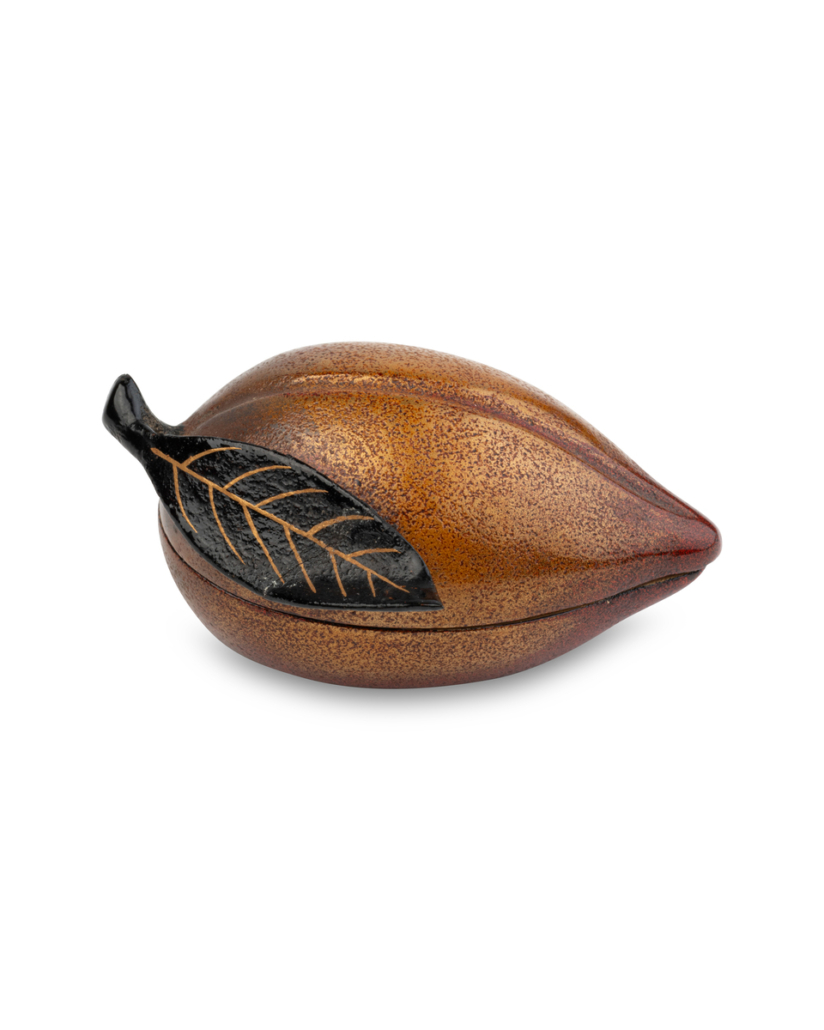

PEACH KOBAKO – TAISHŌ
Référence : 2026-1500
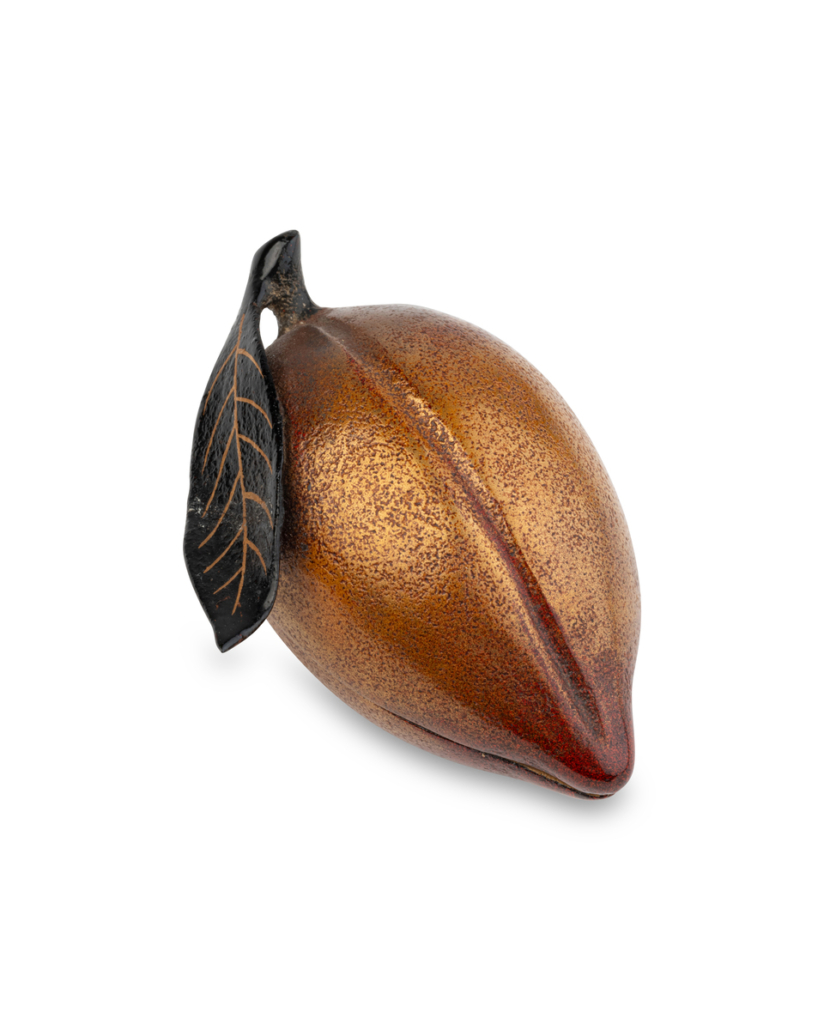
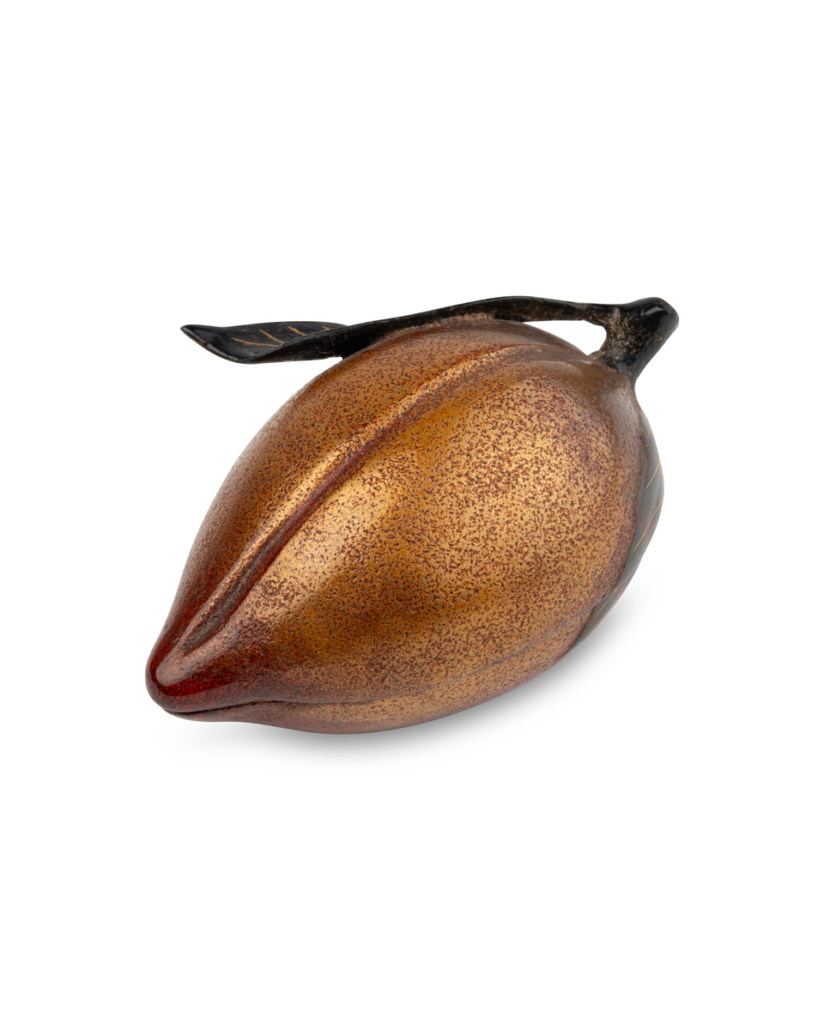
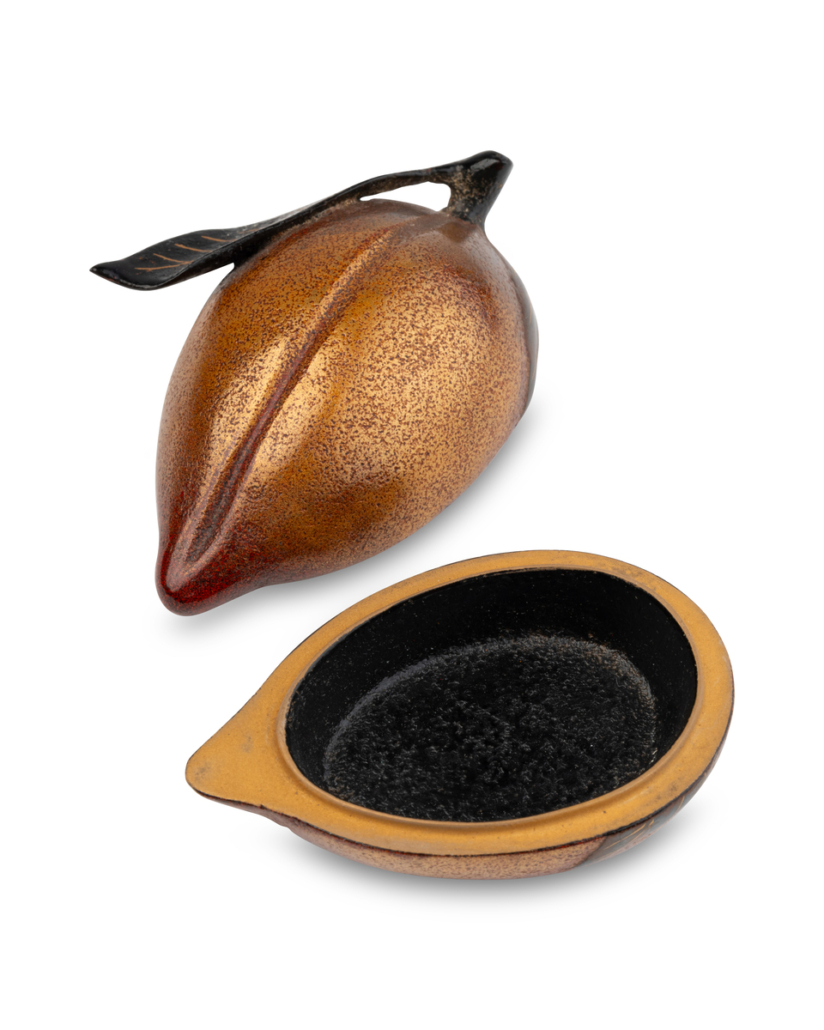
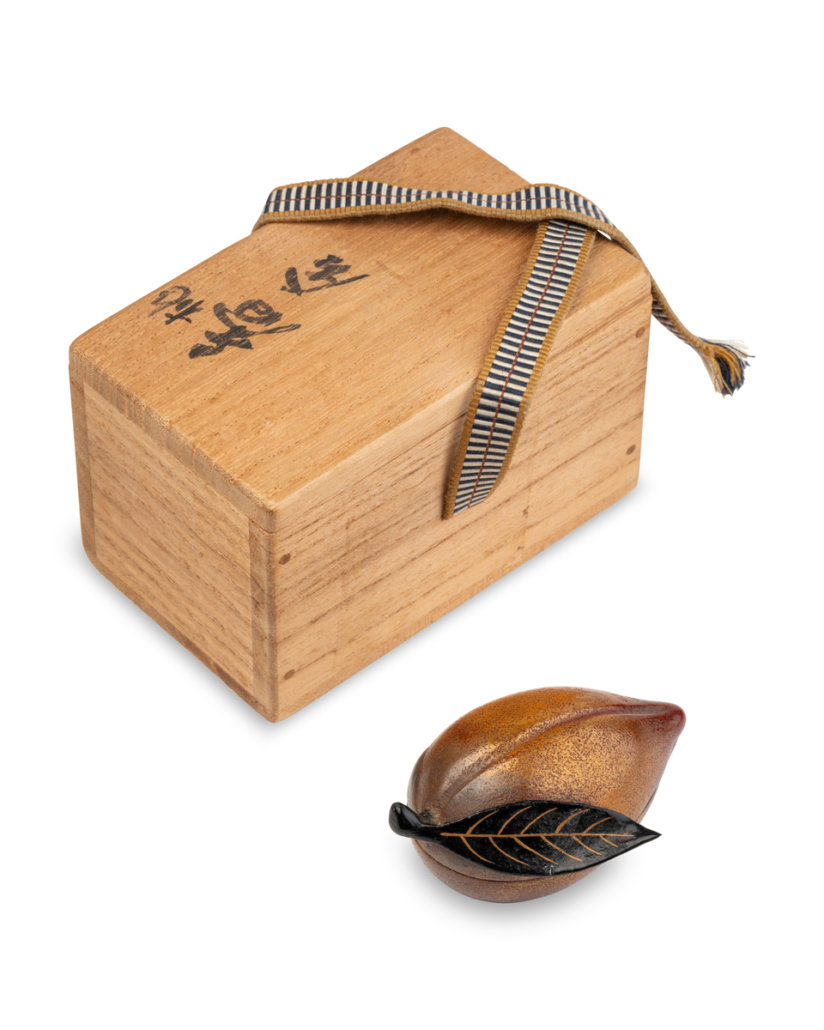
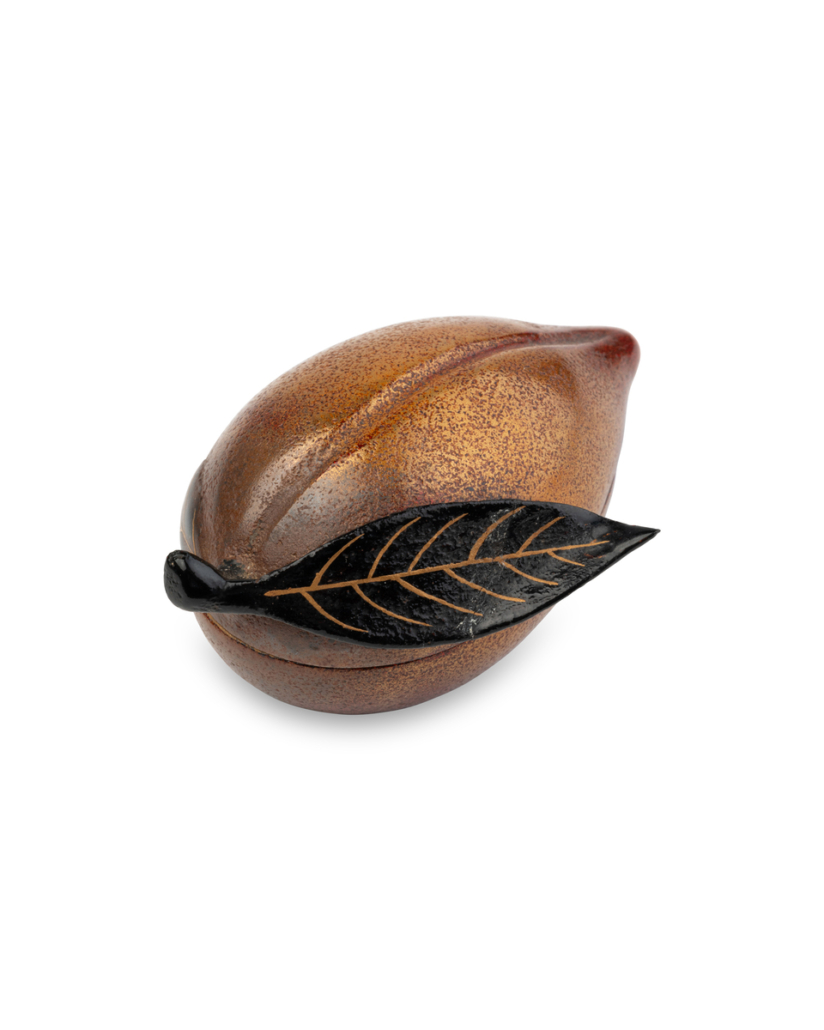
Small kobako (small box) in lacquer, maki-e and nashiji, in the shape of a peach.
One leaf is lacquered in grey, another, detached from the stem, is lacquered in black.
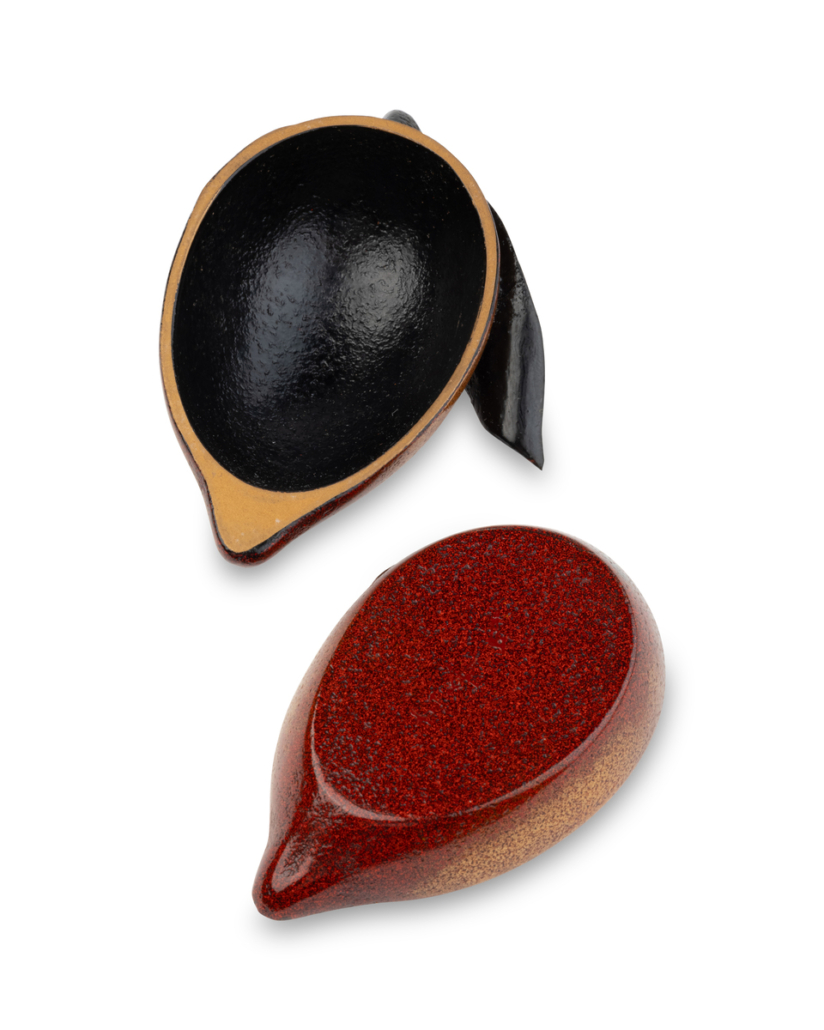
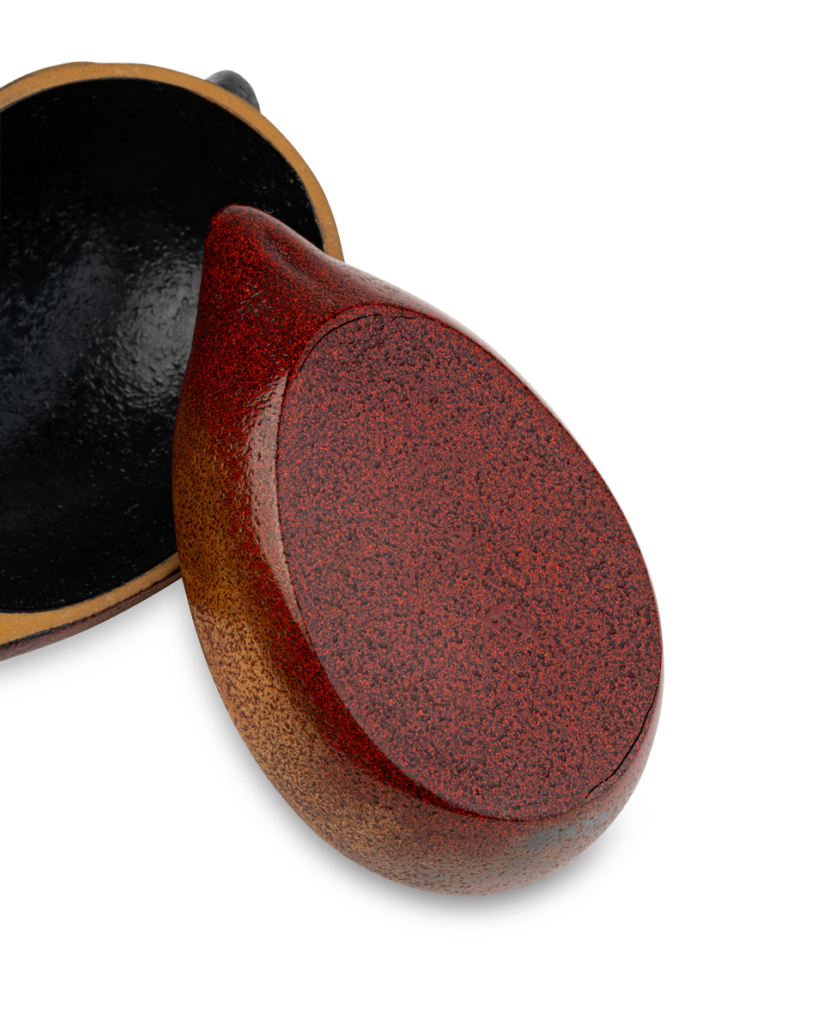
The curve and color—ranging from gold on the top to red on the underside—evoke a ripe fruit. The interior is lacquered in black, and the rim is finished with plain gold lacquer. Since the most ancient times, the peach has held rich symbolism, above all in China, but also in Japan and throughout Asia. The peach tree is among the most common—and perhaps best known—Chinese symbols of longevity. It is one of the traditional attributes of Shou, the god of long life. Among the plants symbolically representing the months of the year, the peach tree is associated with the third month of the Chinese calendar.
According to ancient traditions, peach wood and its color warded off demons, its petals could bewitch humans, and its fruit—the legendary peaches of immortality—ripened only once every thousand years.
Legend has it that this marvelous tree grew in the gardens of the Queen Mother of the West, goddess of the fairies, in the Kunlun Mountains. Every thousand years, when the miraculous tree bore fruit, the goddess invited all the immortals and held a grand feast to share the peaches of immortality. But in the Chinese novel Journey to the West, it is told that one day, the monkey Sun Wukong (the Monkey King) entered the goddess’s garden and ate the peaches of immortality. Though the guests were horrified by his act, Sun became immortal himself.
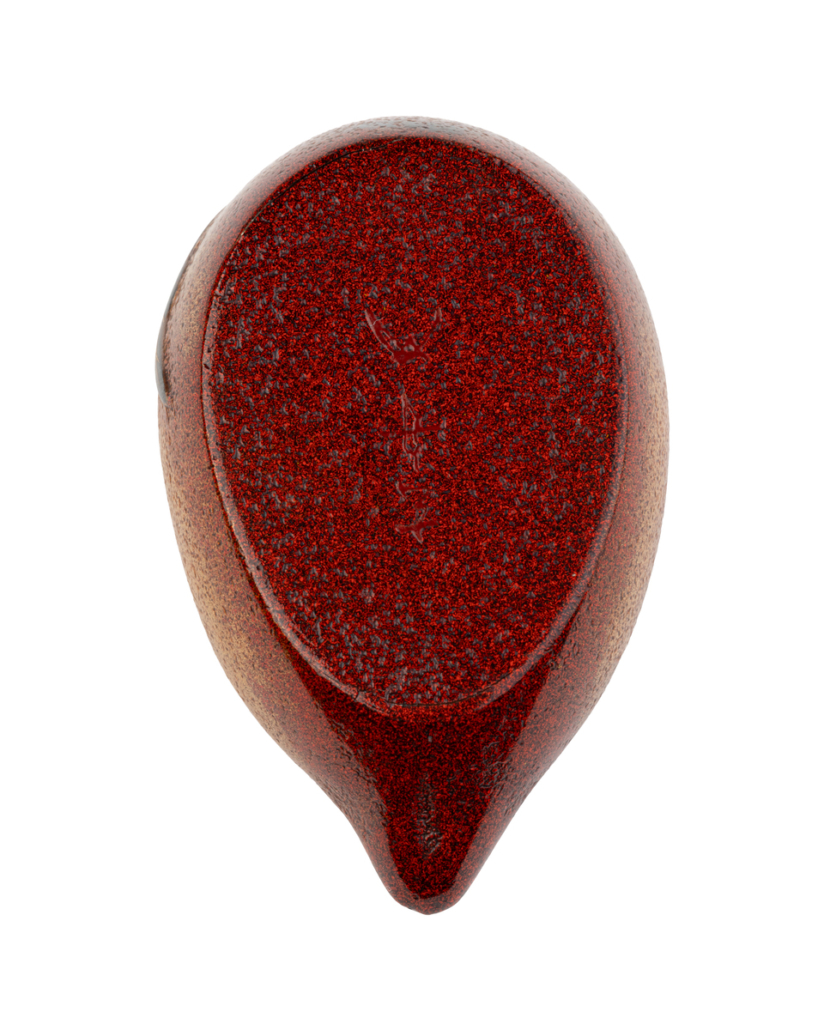
A signature by Eijiri Bisuke appears underneath the kobako, as well as on its transport box.
Japan – Taishō era
Height: 3.5 cm – Length: 7 cm – Width: 5 cm