





POMEGRANATE KOGO – SHŌWA
Référence : 2026-1471
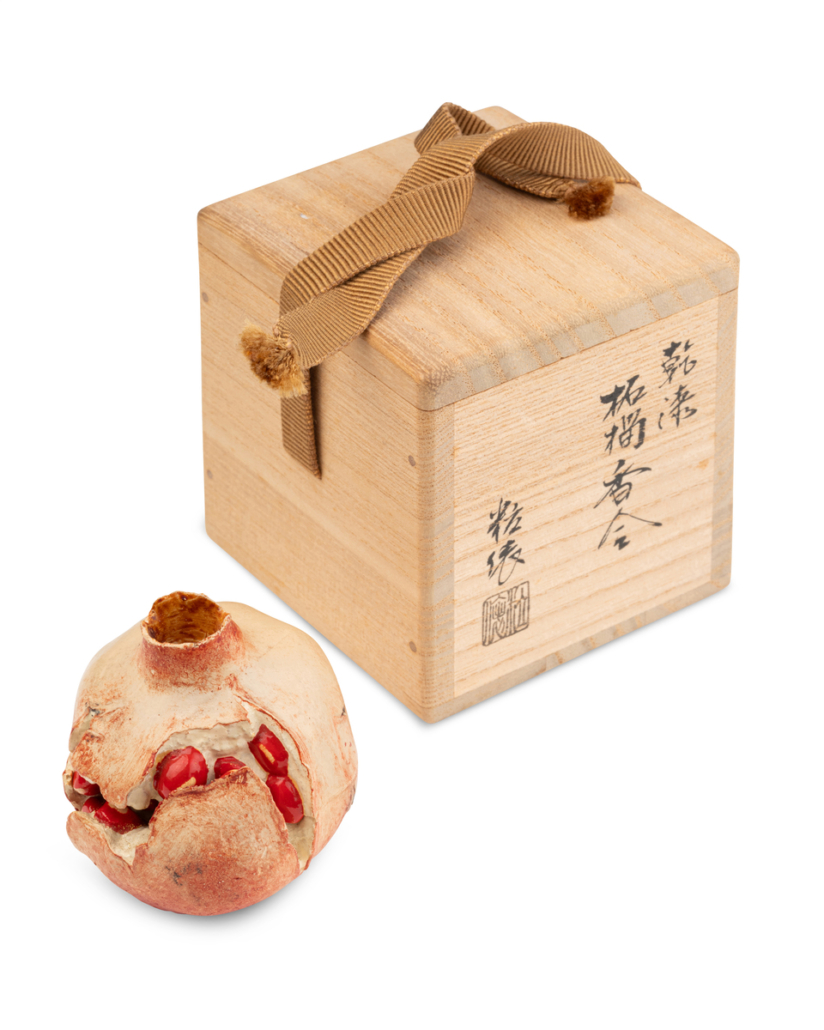
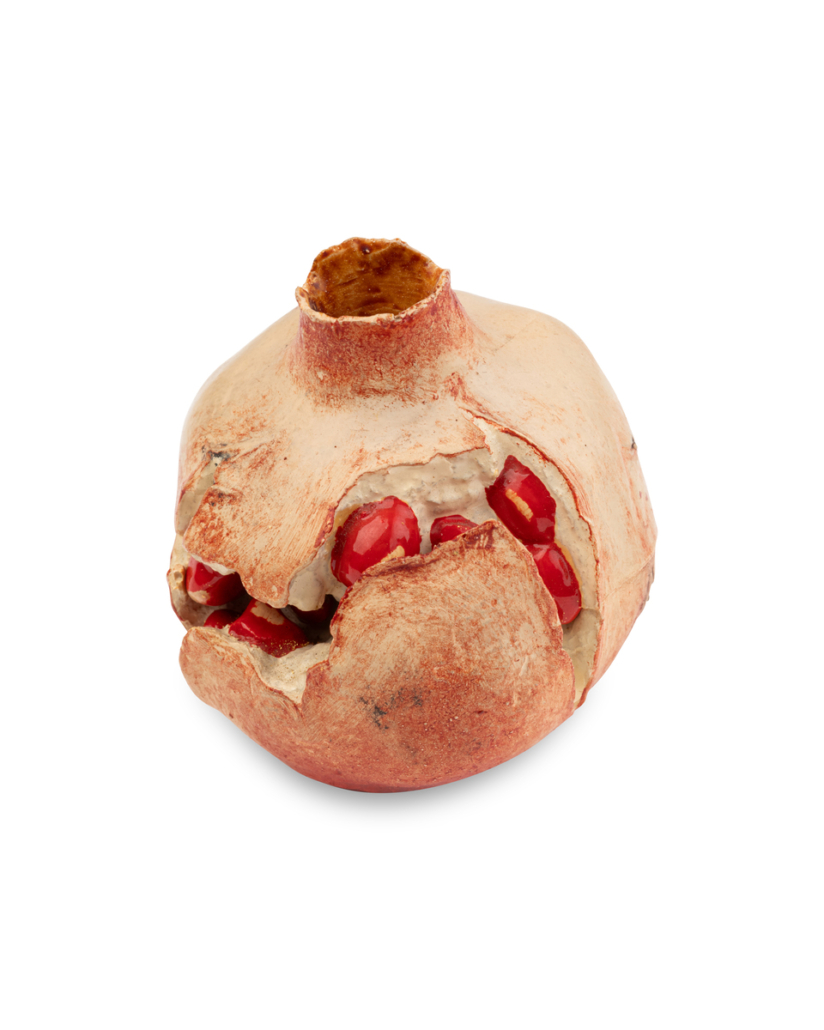
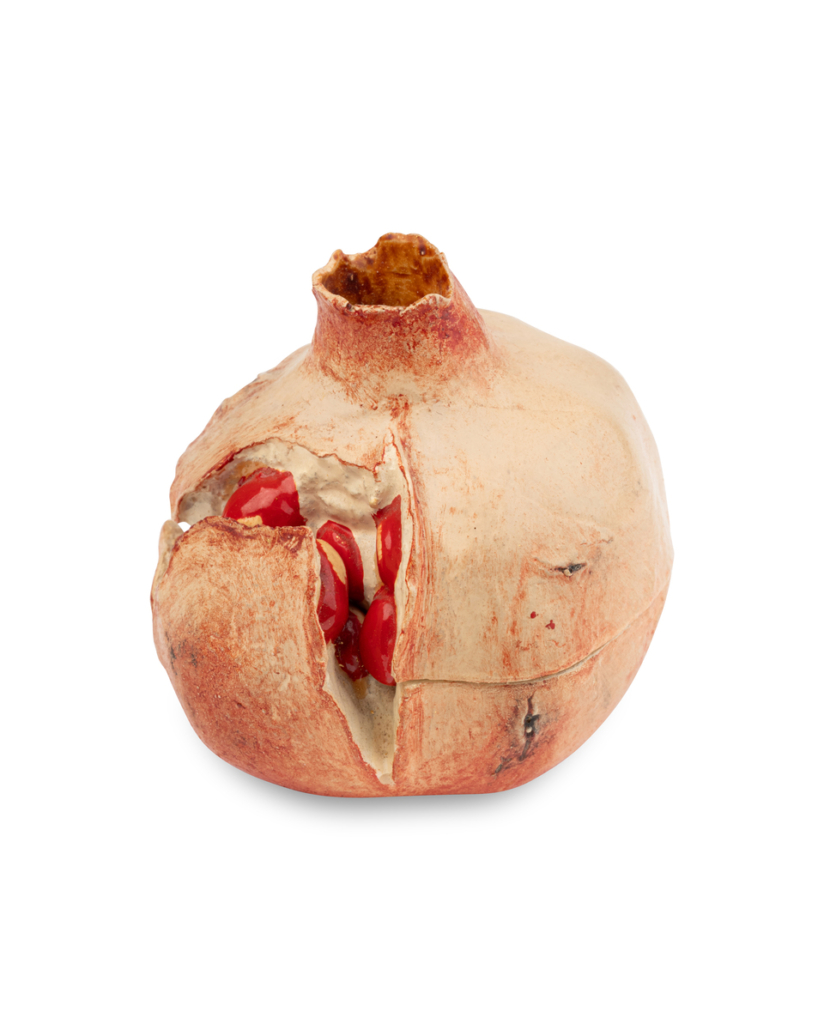
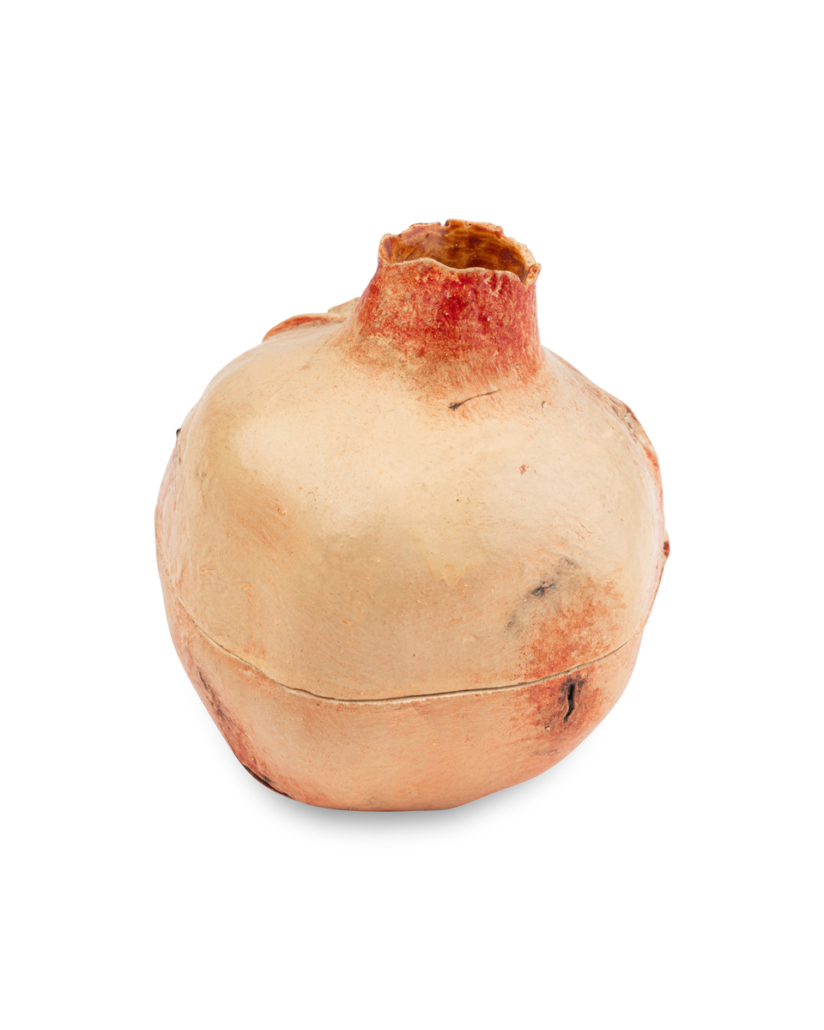
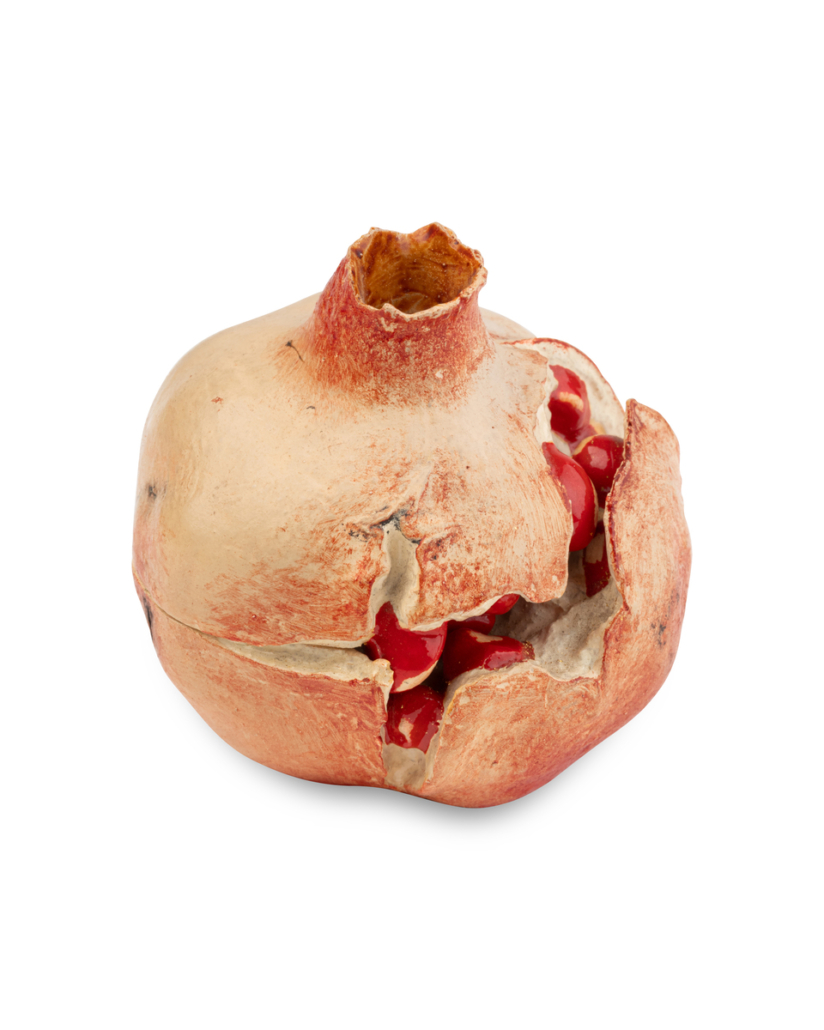
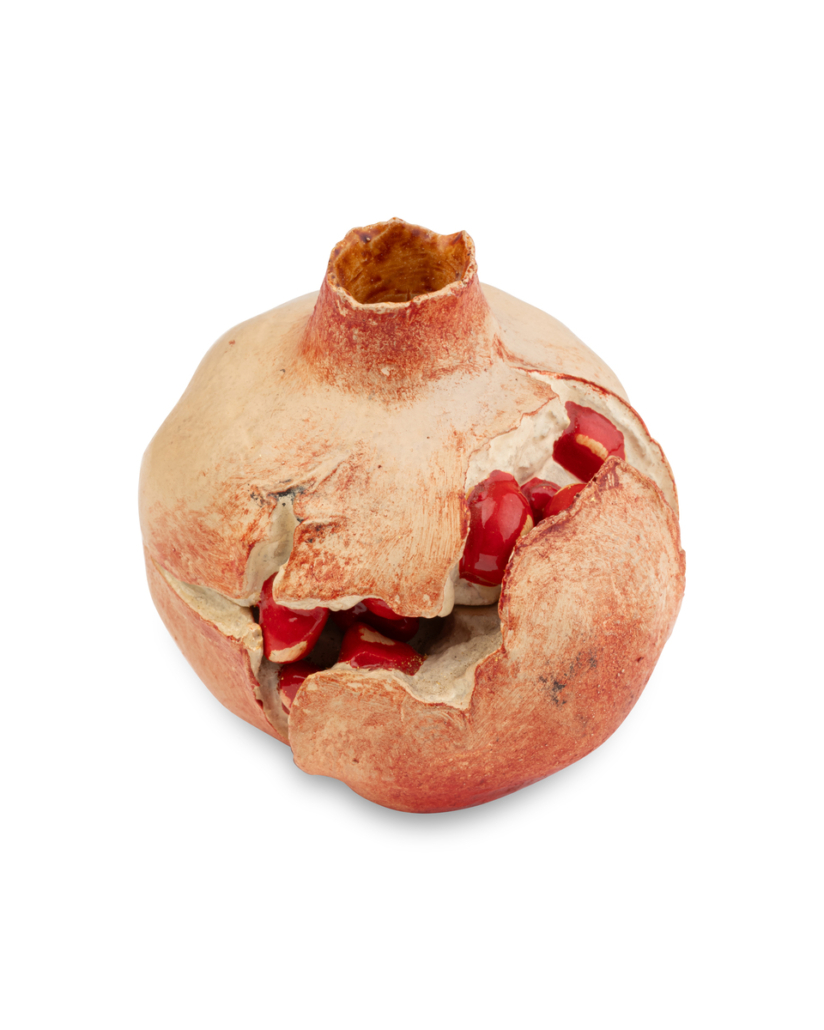
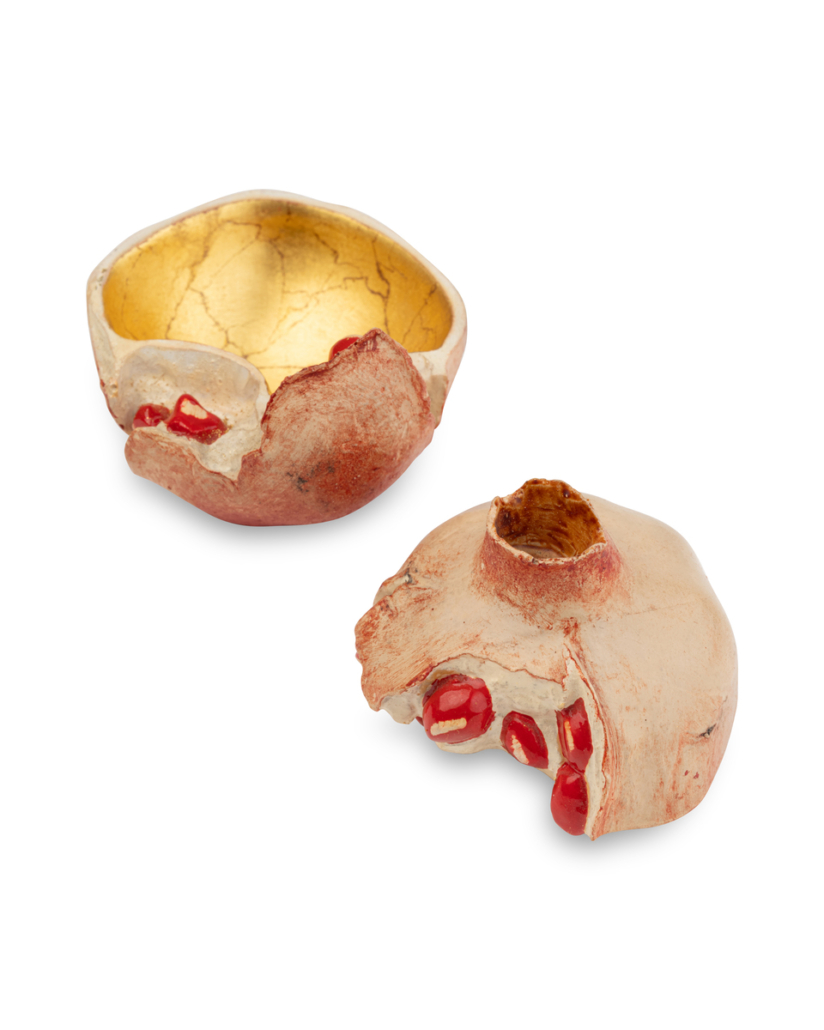
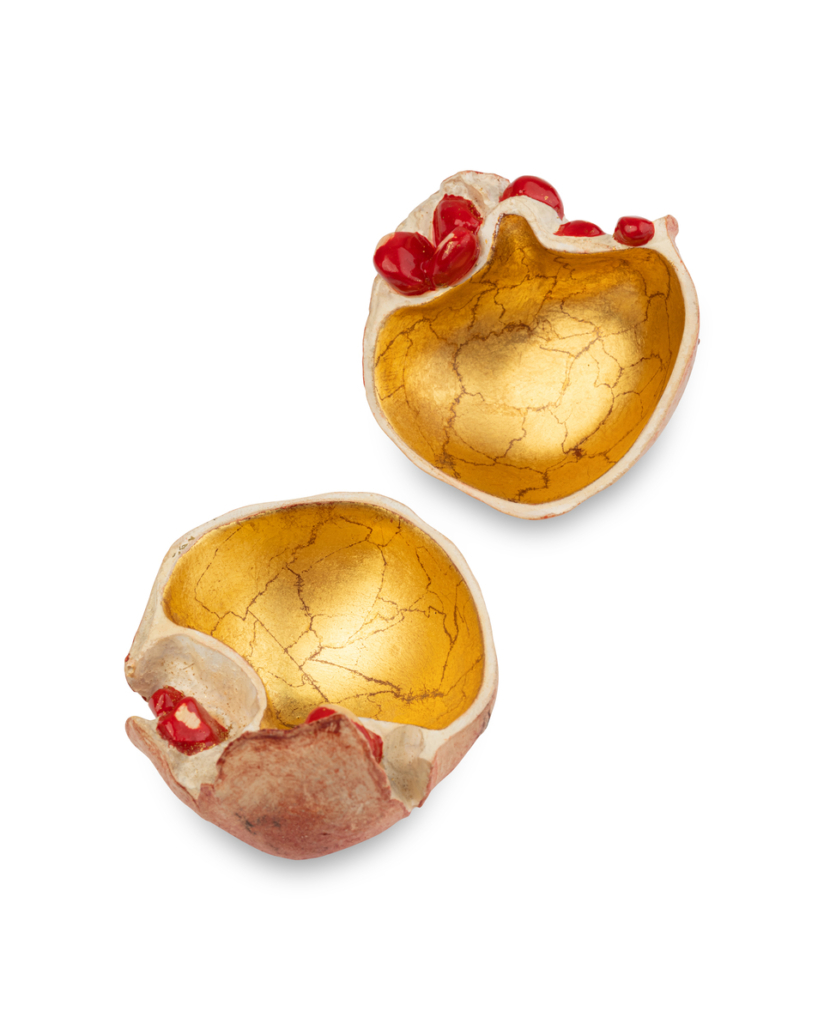
Curious small incense box, or kōgō, in red and pink lacquer, fashioned in the form of a split pomegranate. The interior is finished in gold lacquer with a crackled effect. A kōgō is an incense container used in Japan in the context of the tea ceremony. Made of glazed earthenware, lacquered wood, or white porcelain, they often depict animals, plants, or human figures.
The pomegranate, the fruit of the pomegranate tree, is a powerful symbol in Japan. It is very often associated with prosperity and the continuity of a lineage. From its Latin origin, granatus, meaning “abundant in seeds,” to the far reaches of Asia, this fruit carries the same symbolism of almost heraldic richness.
The symbolism of the pomegranate also evokes fertility through the multitude of seeds contained in its heart. It can be seen as a sign of abundance and of spiritual fertility.
The pomegranate’s rind—considered the hardest skin of all known fruits—protects its seeds like a nurturing mother safeguarding and raising her offspring. This may suggest that our state of consciousness, morality, and knowledge is limited, and that it is only through Love that we are able to progress.
Sold with its transport box signed by : Tsubatawara Ajiji : (ツバタワラ アジジ)
Japan – Shōwa period (1926–1989)
Height: 6 cm – Length: 5.5 cm – Width: 5 cm