







CHESTNUT KOGO – SHŌWA
Référence : 2026-1469
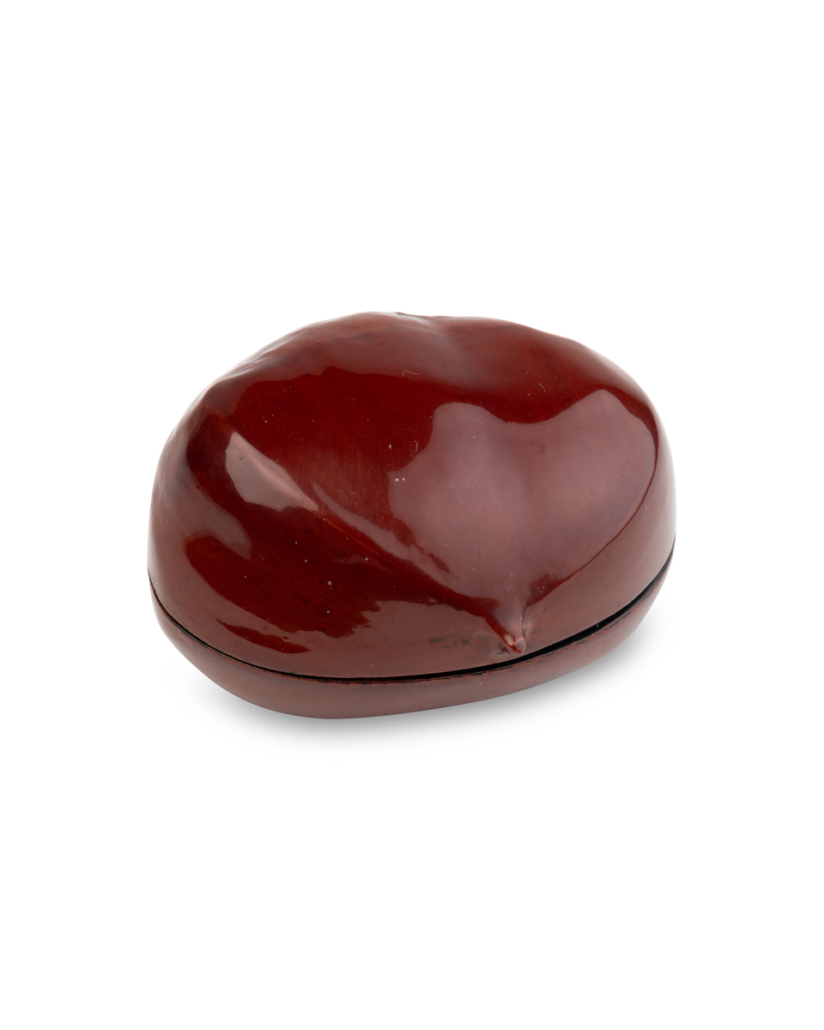
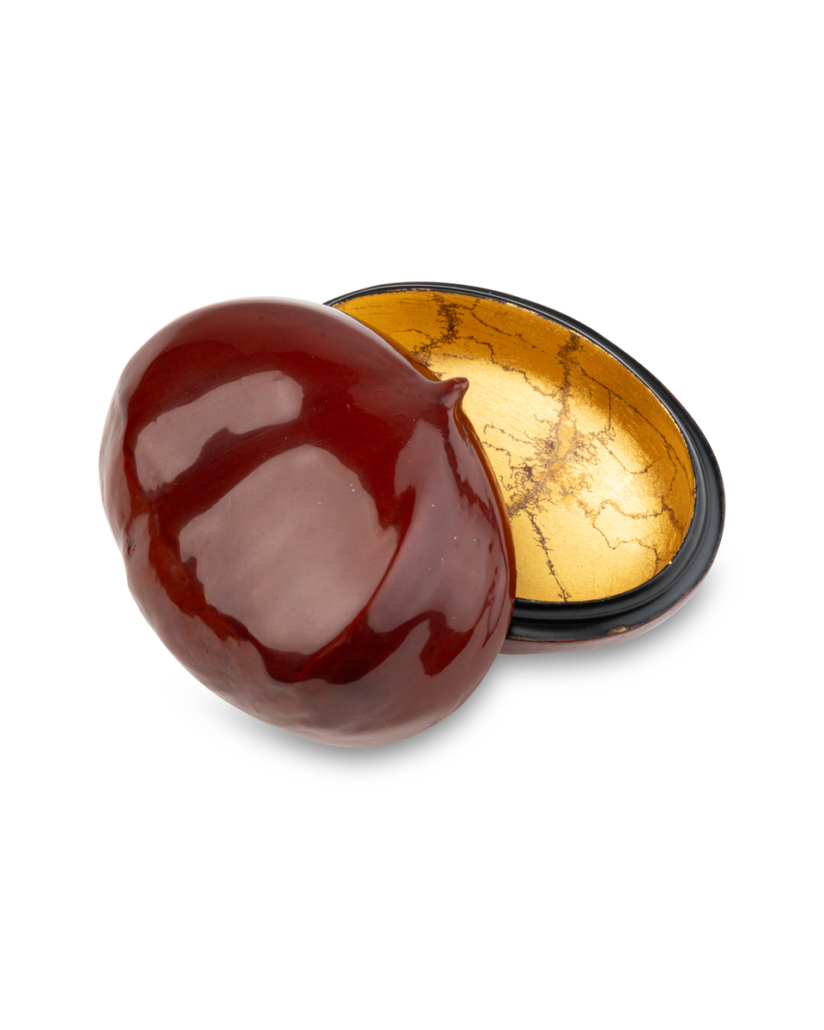
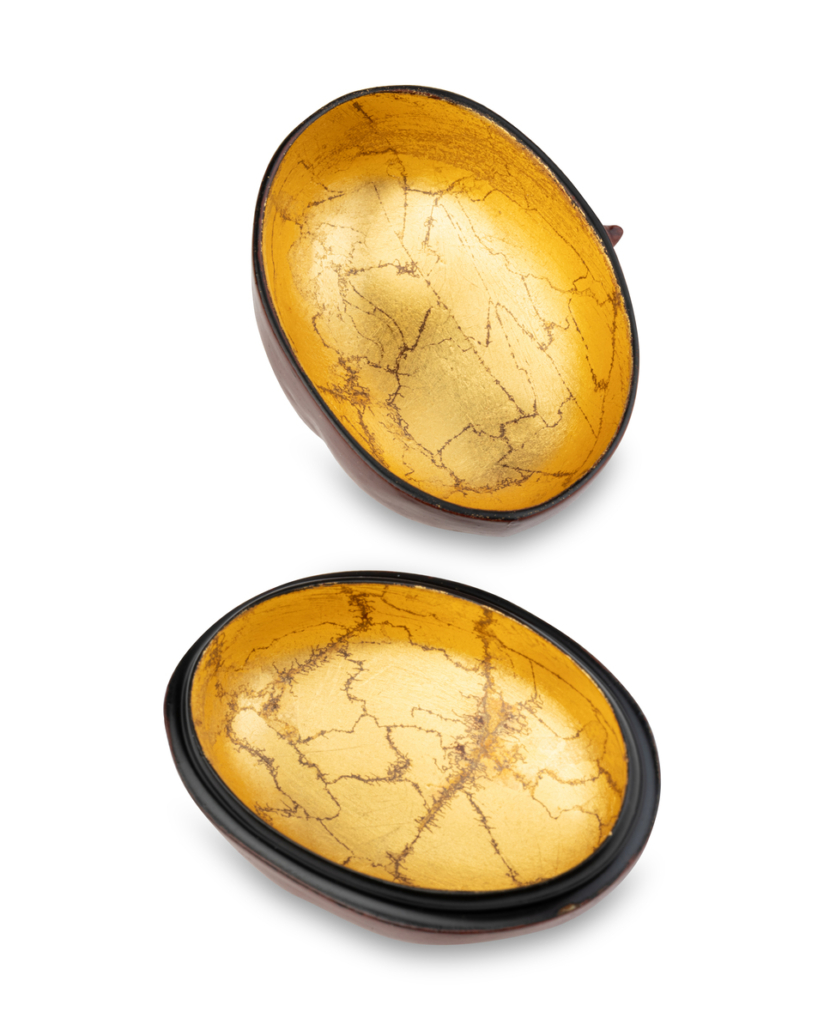
Kōgō (incense box) in lacquered wood shaped like a chestnut. The exterior surface of the box is decorated with a beautiful shade of brown lacquer. The interior is finished in gold fundame lacquer, while the contact surfaces between the lid and the base are coated in black lacquer.
The accompanying storage box (tomobako) is signed by Azechi Takio (1926–1989), a master lacquer artist born in the town of Yamanaka (now part of Kaga following its merger with the city of the same name), in Ishikawa Prefecture. In addition to inheriting the family lacquer workshop, he devoted himself to the practice of kanshitsu (dry lacquer technique). In 1982, he founded the Musō workshop, dedicated to glazing ceramics for the tea ceremony.
The chestnut (kuri) occupies a central place in Japanese culture and gastronomy. Castanea crenata, or the Japanese chestnut tree, is a native species whose fruits were already being extensively harvested during the Jōmon period (13,000 BC – 400 AD). In Japan, the chestnut fully embodies its symbolic role as the final fruit of autumn, an essential seasonal marker in a country that, despite (or perhaps thanks to) its high level of urbanization, still deeply values contact and harmony with nature. Thus, “Lady Kuri” (the affectionate Japanese nickname for the chestnut) appears every autumn in the display windows of major pastry shops and on the menus of fine dining restaurants. The fruit is featured in a wide variety of dishes, ranging from pastries and syrups to cakes. Chestnuts, found throughout Japan, are regarded as symbols of victory and good fortune.
Japan — Shōwa era (1926–1989)
Height: 3.3 cm – Length: 5.2 cm – Width: 4.2 cm