



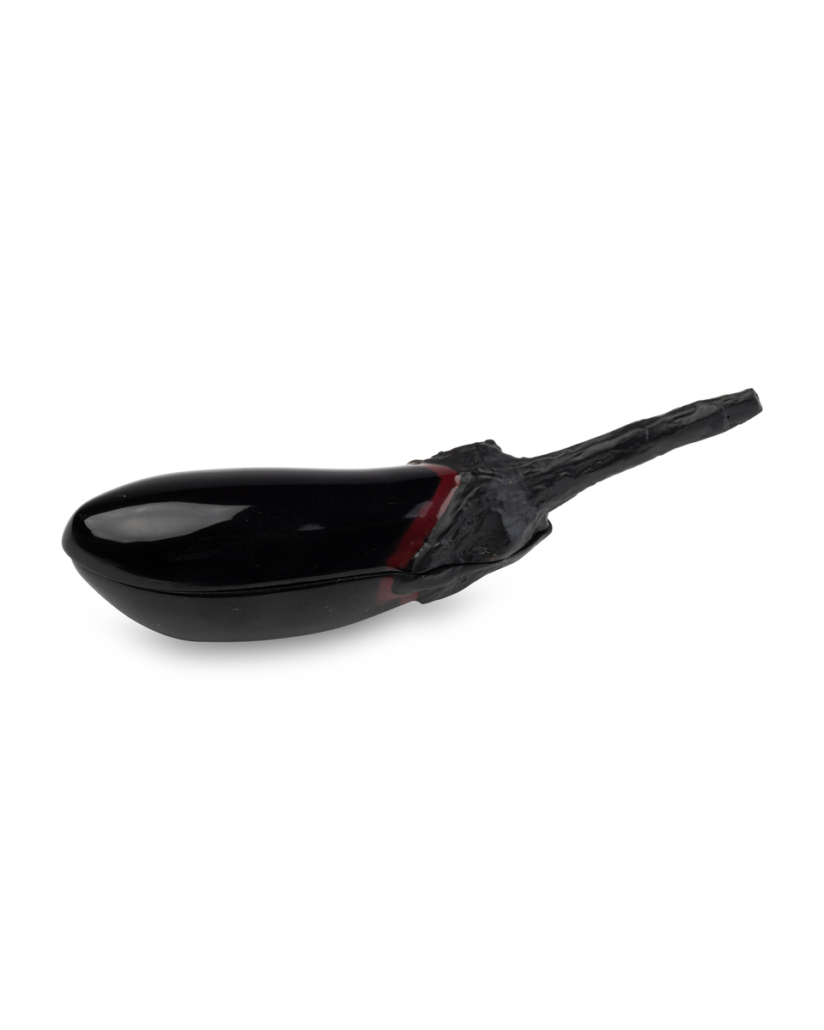



EGGPLANT KOGO – SHŌWA
Référence : 2026-1470
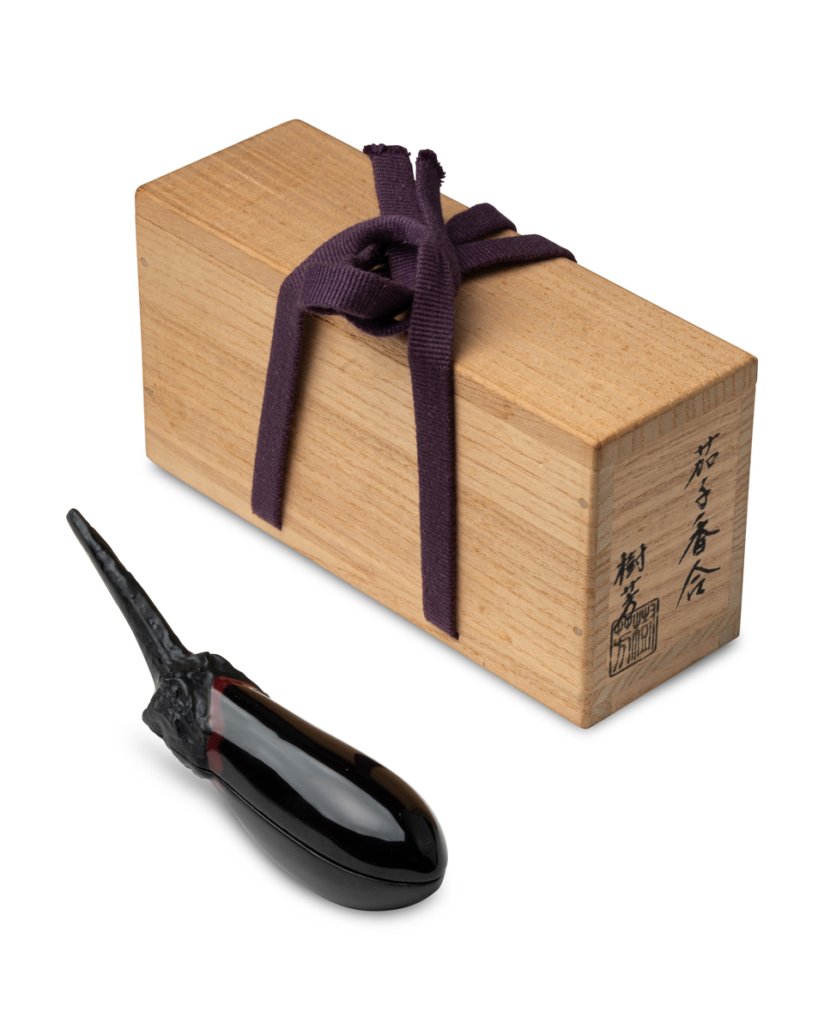
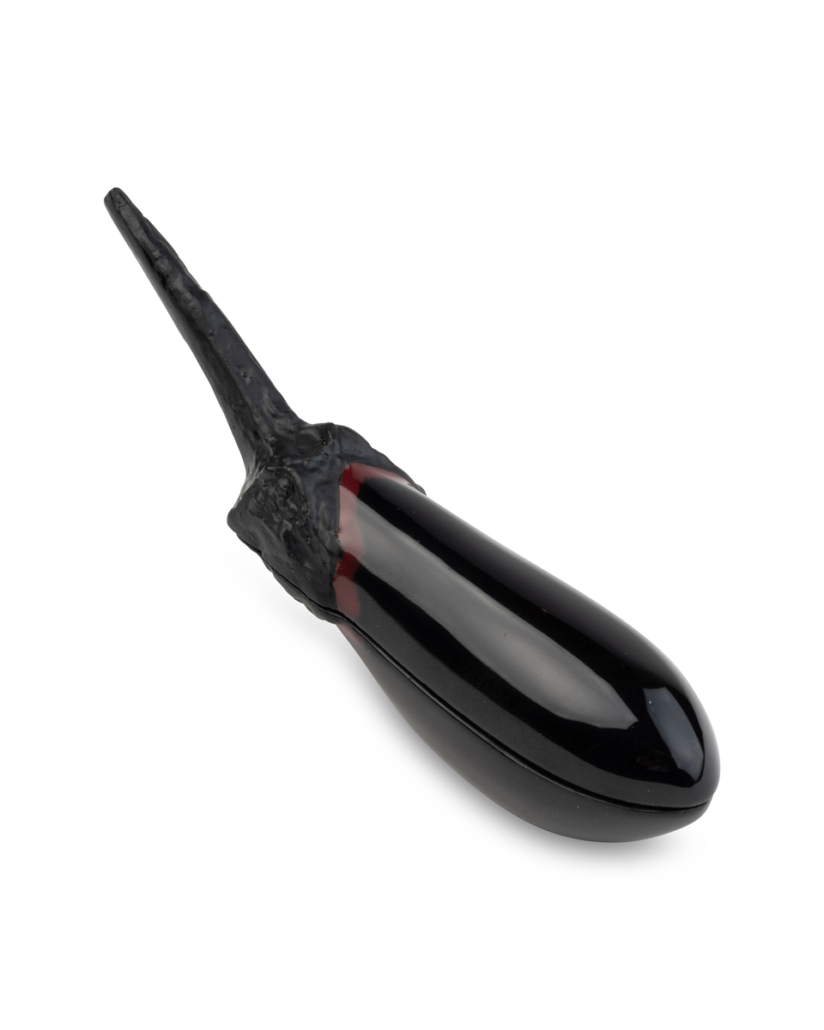
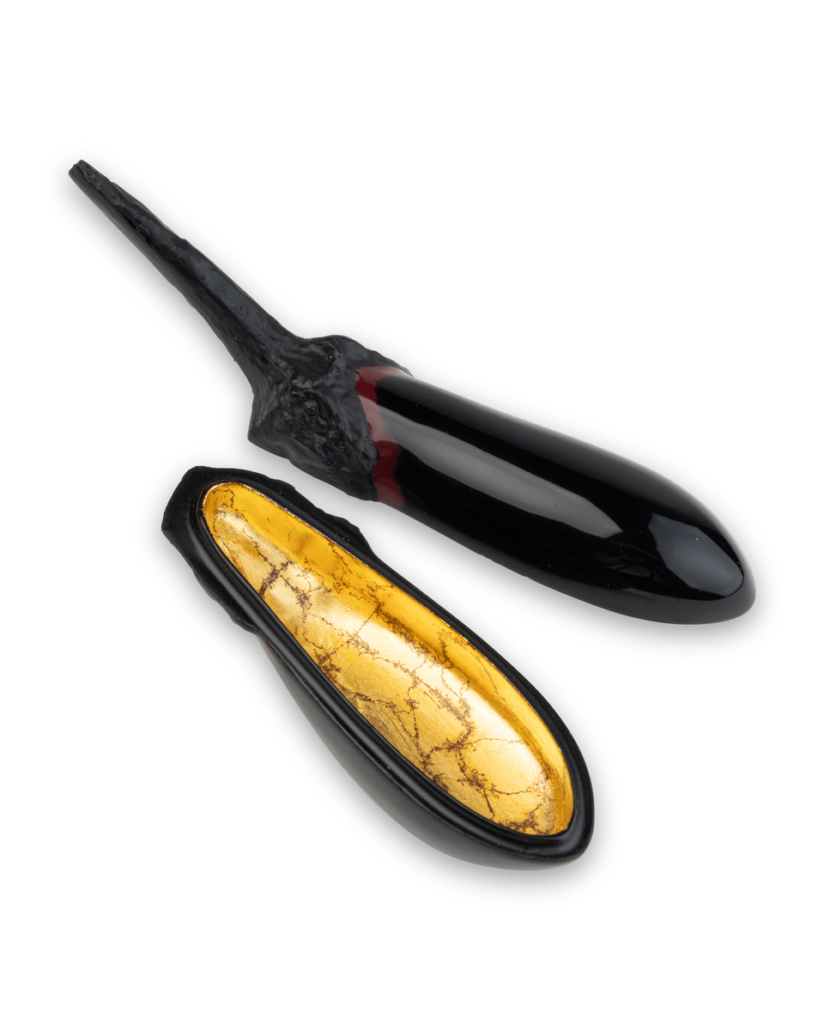
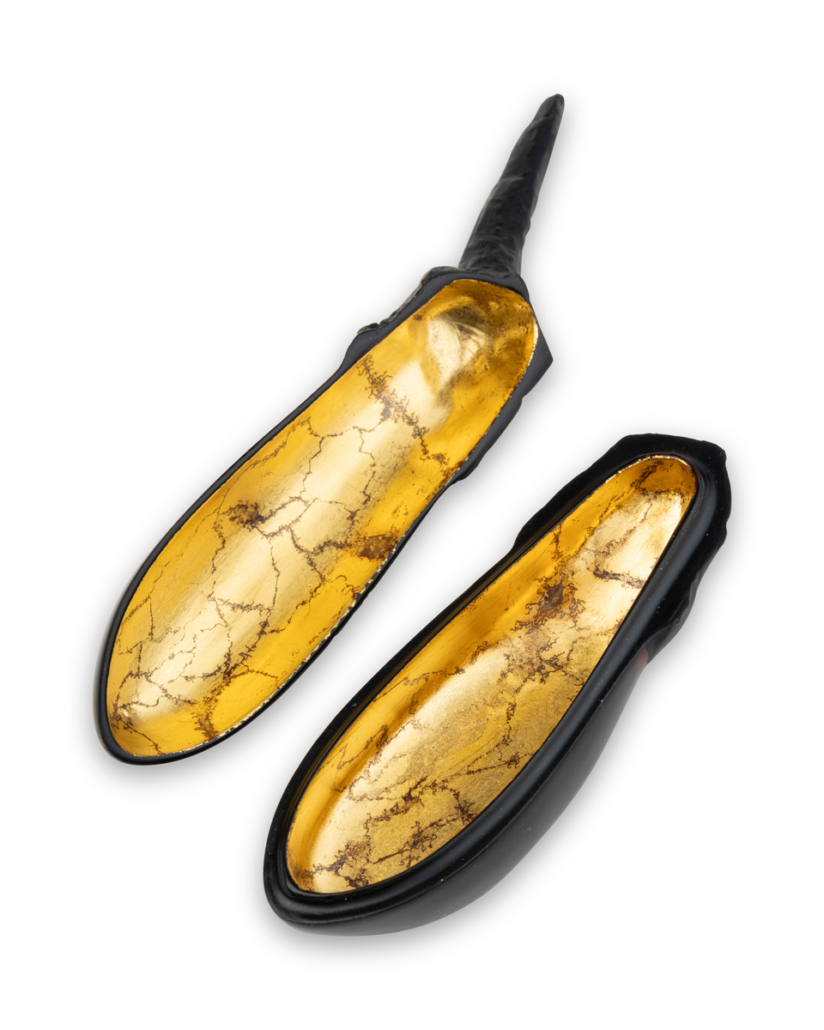
Small lacquered wooden box in the shape of an eggplant. The upper part of the fruit near the leaves is painted with silver or tin pigments forming the stem. The subtly shaded lacquer work, ranging from violet to pinkish tones, is particularly refined. The interior is painted with gold pigments.
A kōgō is an incense container used in Japan as part of the tea ceremony. Made of glazed earthenware, lacquered wood, or white porcelain, they often depict animals, plants, or human figures.
The eggplant holds a particular symbolism in Japan, notably in the hatsuyume (the first dream of the New Year). Traditionally, this dream is believed to predict the dreamer’s fortune for the coming year. Since the Edo period, popular belief maintains that dreaming of Mount Fuji, a hawk, and an eggplant is especially auspicious. A Japanese saying summarizes the principle of hatsuyume: Ichi-Fuji, Ni-Taka, San-Nasubi (“1. Fuji, 2. Hawk, 3. Eggplant”).
This first-dream tradition was widespread during the Edo period, though its origins remain uncertain. Several hypotheses exist. According to one version attributed to Tokugawa Ieyasu (1543–1616), the formula derives from the former province of Suruga: these were the three “highest” things in the province—the highest mountain (Mount Fuji), Mount Ashitaka (ending in taka, meaning “hawk”), and the very high price of the season’s first eggplants.
Other interpretations emphasize the symbolic significance of the three elements: the sacred character of Mount Fuji, the strength and intelligence of the hawk, and the homonymy between the word for eggplant (nasu) and the verb “to accomplish.”
It is also possible that the formula originated in the town of Komagome, home to the Komagome Fuji Shrine, from where Mount Fuji could be observed. Archaeological excavations conducted in the 1970s revealed the remains of a falconers’ residence established by Shōgun Yoshimune Tokugawa (1684–1751). Finally, during the Edo period, Komagome was known as a center of eggplant production.
Accompanied by its original storage box. Signed by Arai Kyōshi (新井教師).
Japan – Shōwa period (1926–1989)
Height: 4.5 cm – Length: 12.5 cm – Width: 3 cm