




CHOSHITSU MANJU NETSUKE – EDO
Référence : 2026-1498
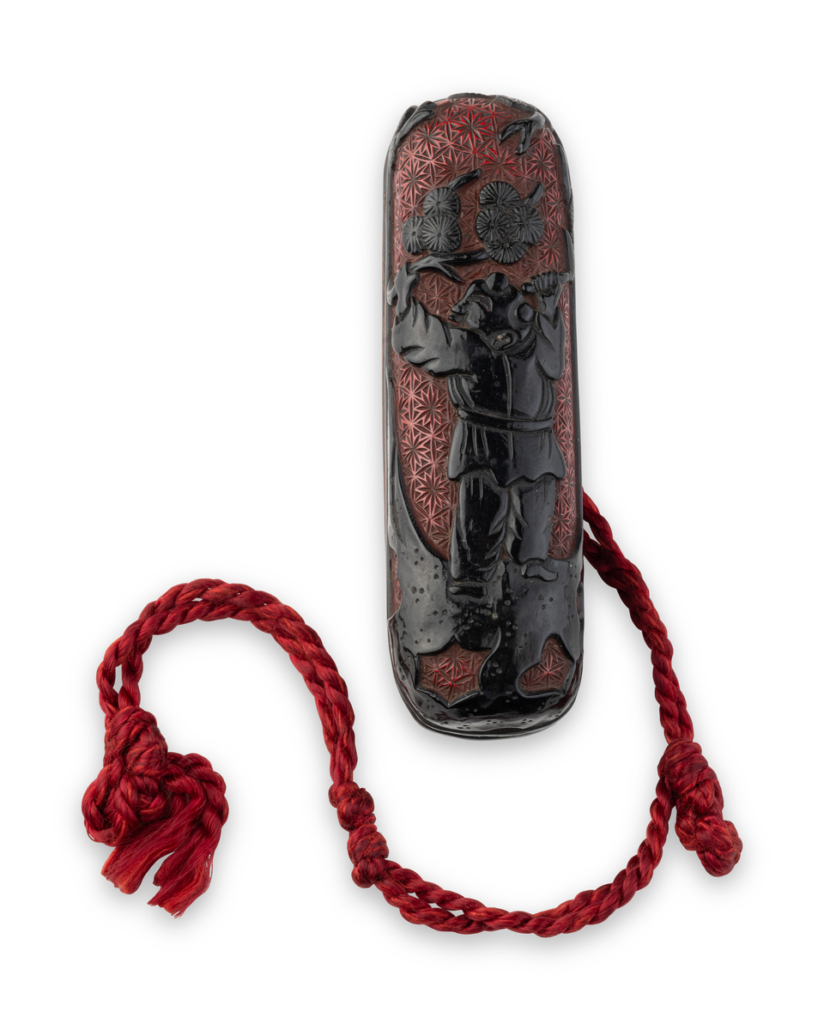
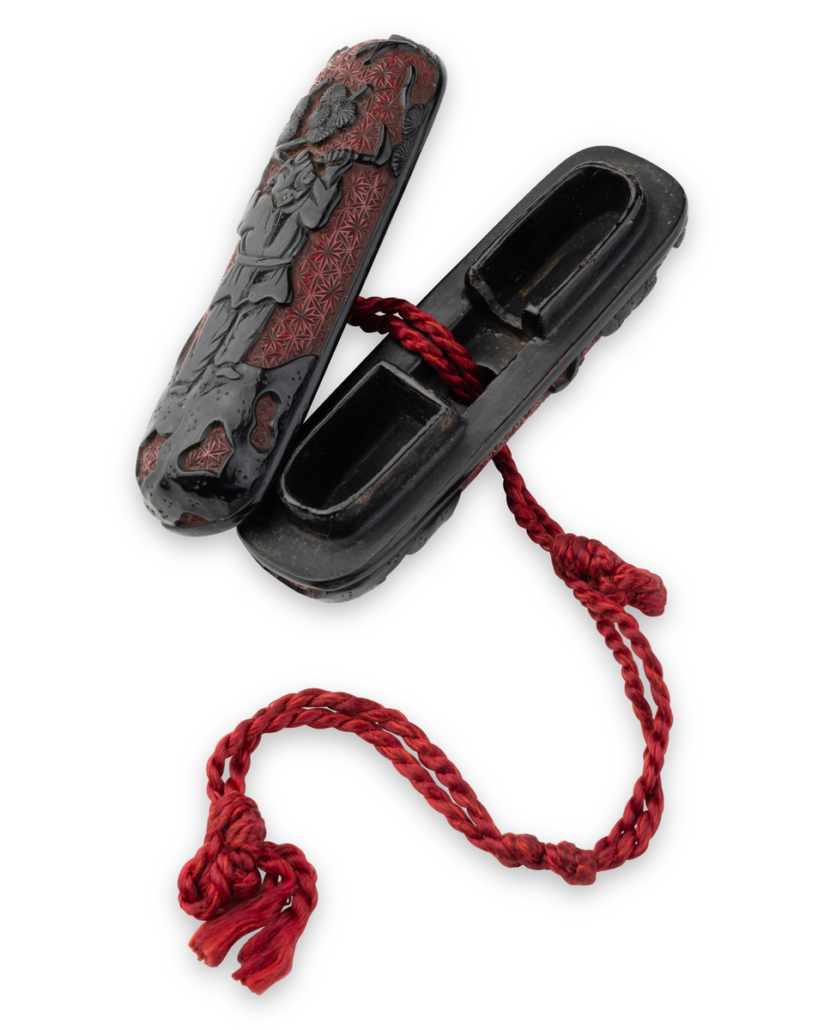
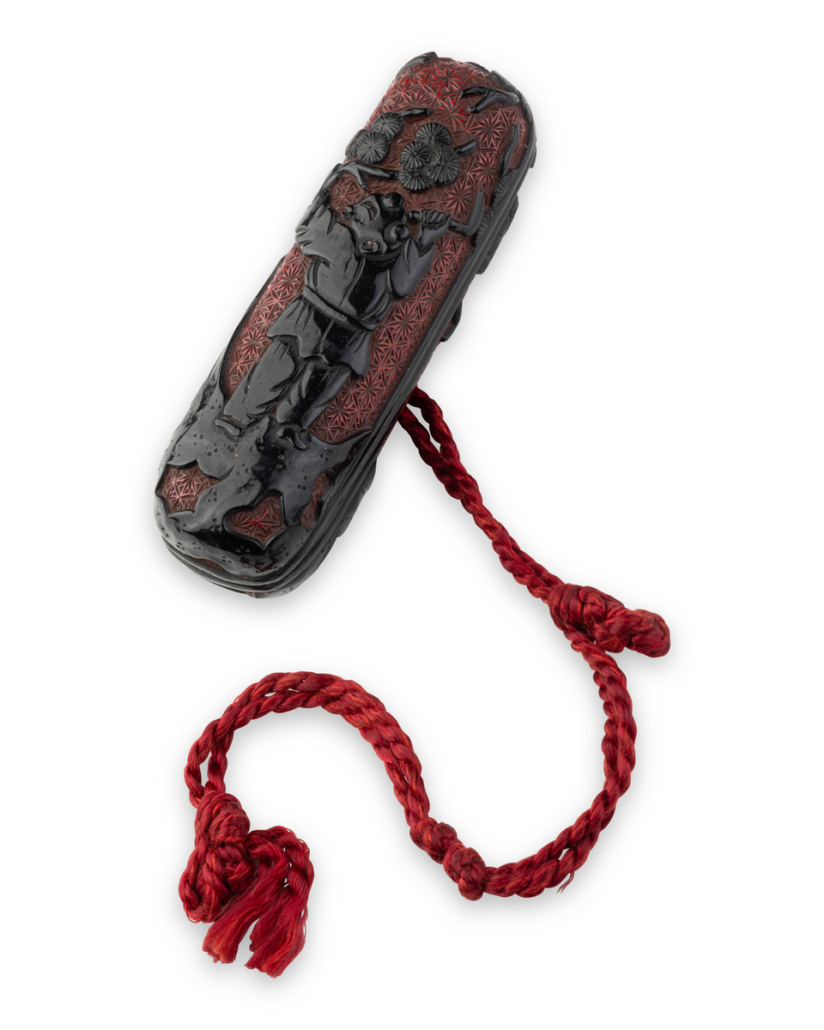
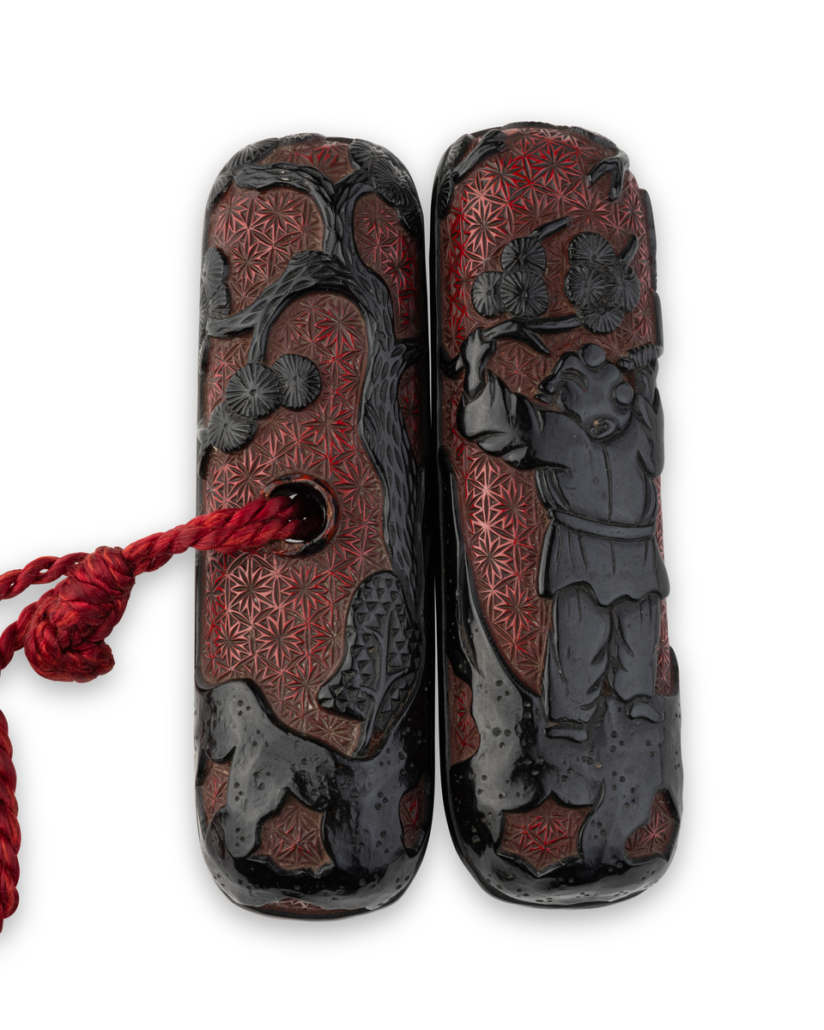
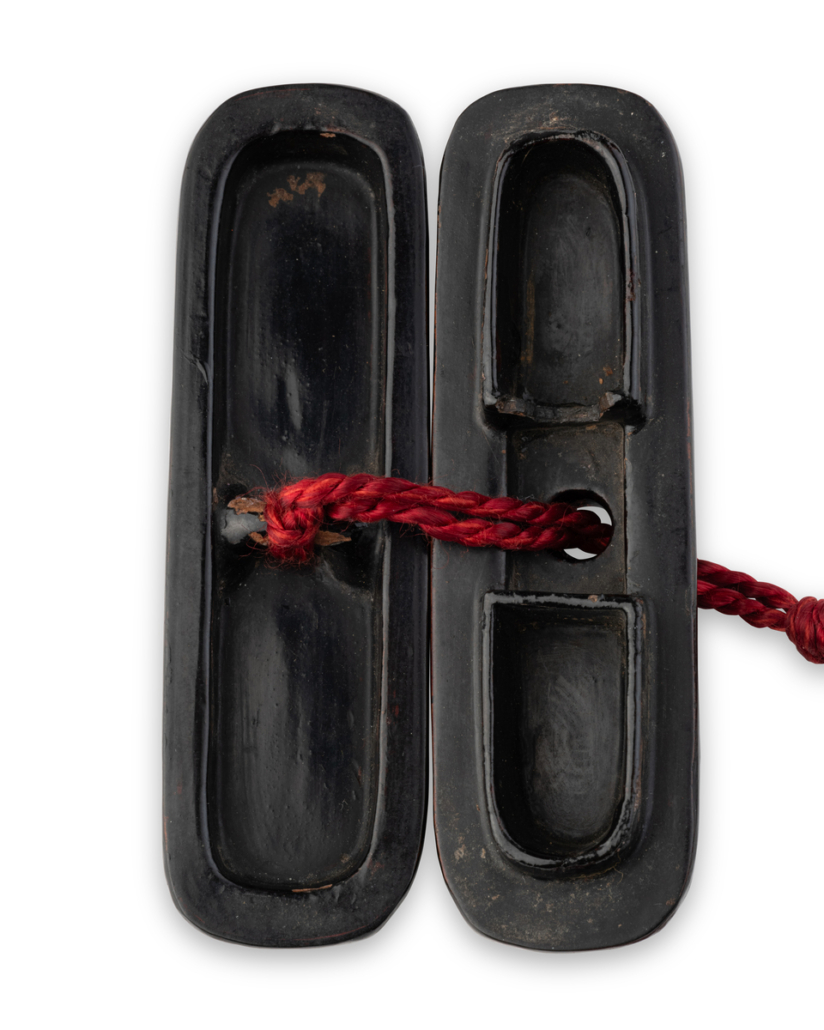
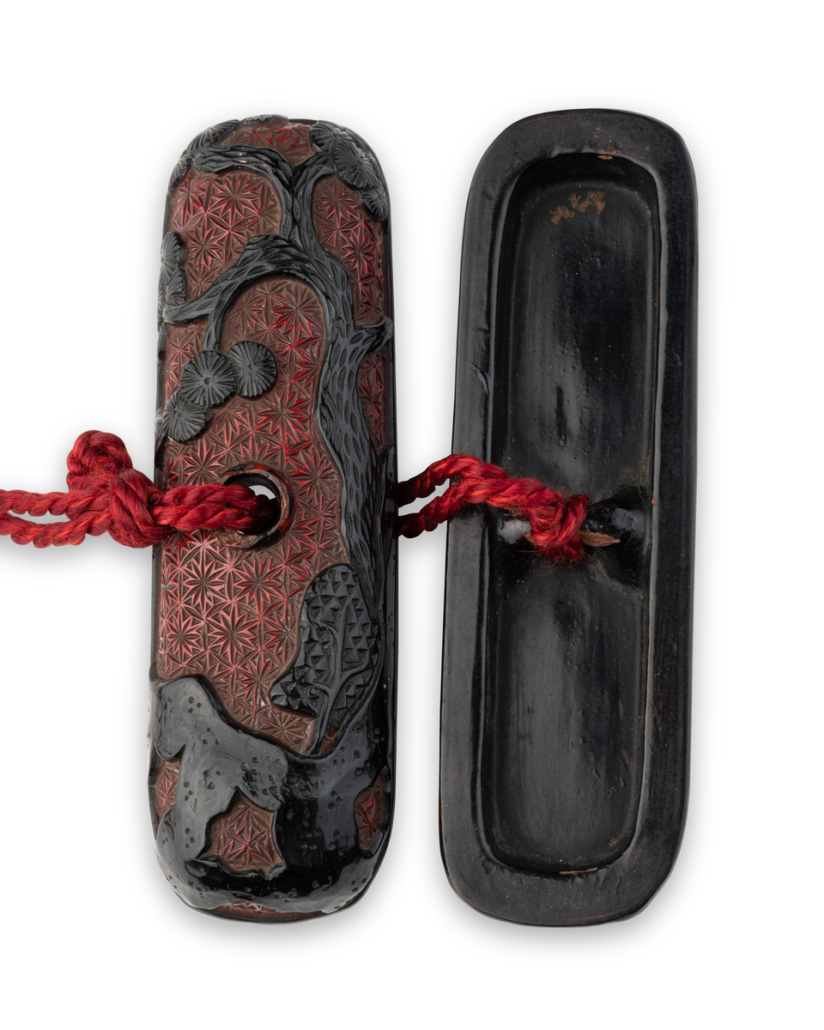
Wood netsuke covered with layers of red and black lacquer, carved using the tsuikoku technique (carved black lacquer), in the form of a manju, decorated with a scene of a child beneath a pine tree. The child holds a sickle in his right hand and is about to cut a branch, which he grasps with his left hand in carved black lacquer, all set against a red lacquer ground intricately incised with naturalistic geometric motifs.
The tsuikoku technique is one of the two main variants of chōshitsu (carved lacquer), the other being tsuishu (carved red lacquer). Like many decorative lacquer techniques, chōshitsu originated from Chinese artistic ingenuity, particularly that of artisans of the Song dynasty (960–1279). Although the first significant trade relations between Japan and China date back to the 7th century, under the Sui (581–618) and Tang (618–907) dynasties, it was not until the Muromachi period (1336–1573) that chōshitsu lacquers were imported in large quantities as karamono (“Chinese things”), avidly collected by the shogun Ashikaga Yoshimasa (1436–1490). However, the Japanese development of these techniques truly flourished during the Edo period (1603–1868), when a master lacquer artist named Tamakaji Zōkoku (c.1804/1806–1867), born in Takamatsu in present-day Kagawa Prefecture on the island of Shikoku, undertook to study and adapt these techniques to suit contemporary Japanese taste.
Provenance: the collection of William “Billy” Wilberforce Winkworth.
William “Billy” Wilberforce Winkworth was the son of Stephen D. Winkworth, who founded the Oriental Ceramic Society at his home in 1921. After serving in the army during the First World War, he joined the staff of the British Museum from 1922 to 1926 under R. L. Hobson in the Department of Ceramics. He left this position to become a full-time collector and “amateur dealer.” Later, between 1948 and 1970, he worked part-time as a cataloguer for Sotheby’s, where he catalogued netsuke, lacquerwares, and Japanese sword fittings. He was renowned for his keen eye and expertise, particularly in ceramics, and exerted a strong influence on his generation of British collectors. His few publications are listed in the obituary by John Mallet. He retired to the Isle of Wight in 1972.
Japan – Edo period (1603–1868), 19th century
Height : 2 cm- length: 7.5 cm – width : 2 cm