



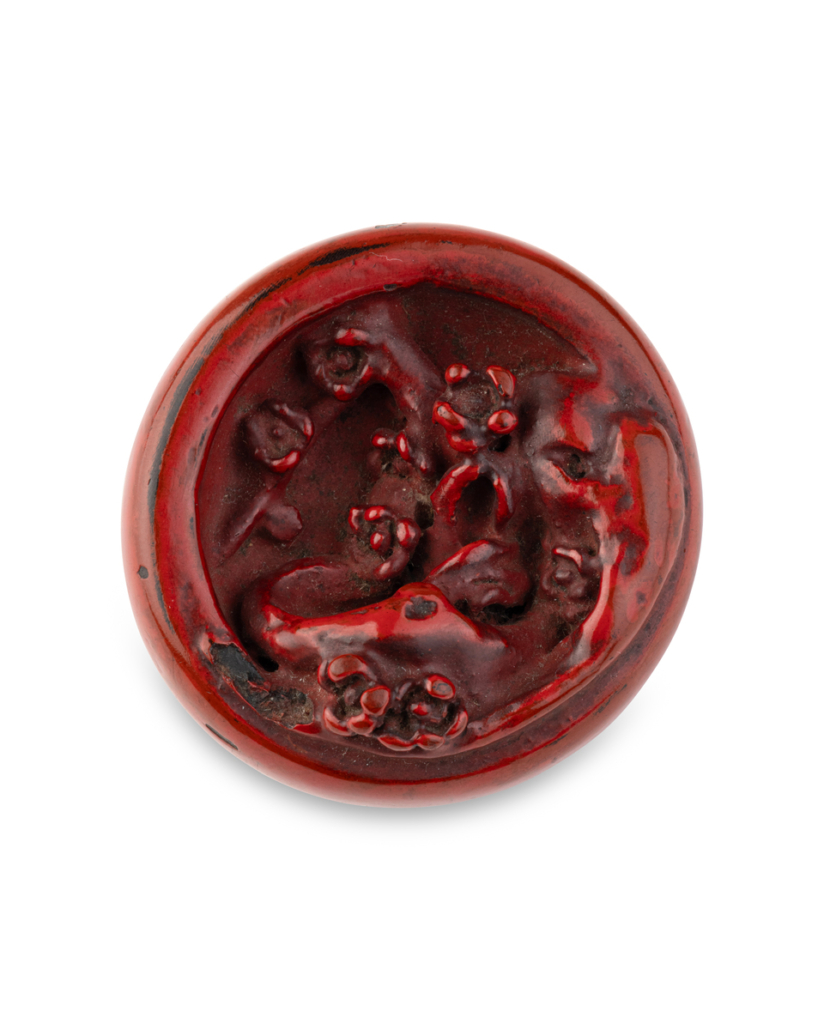
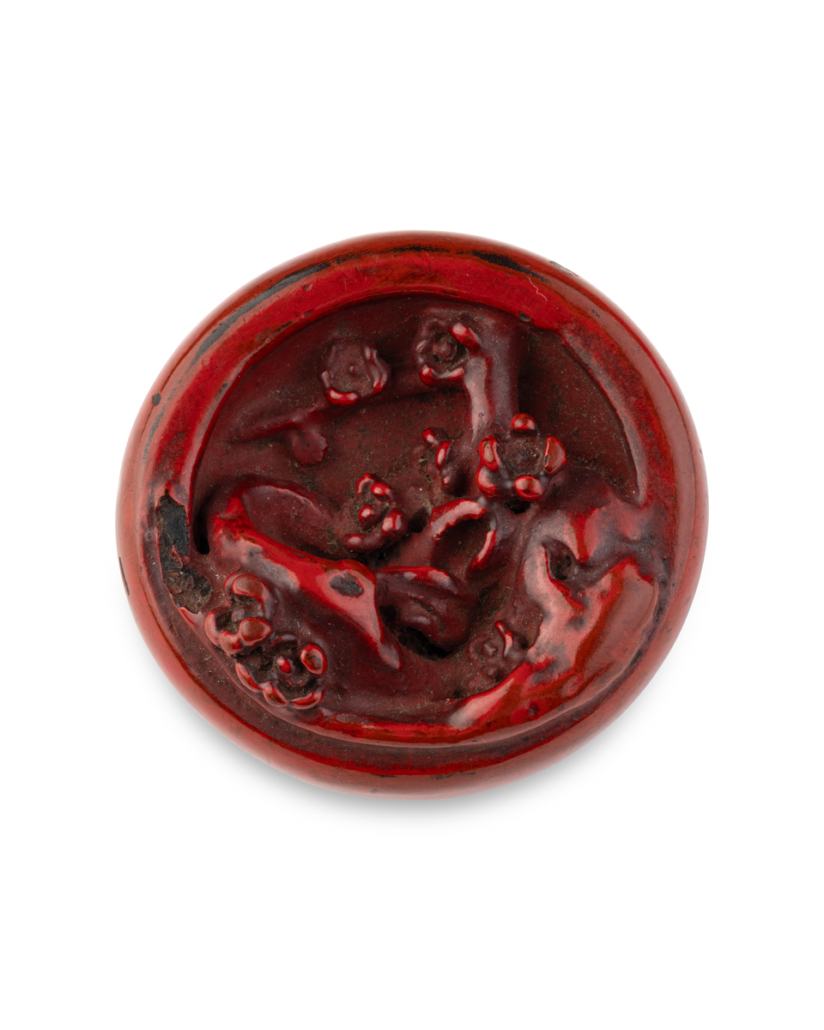
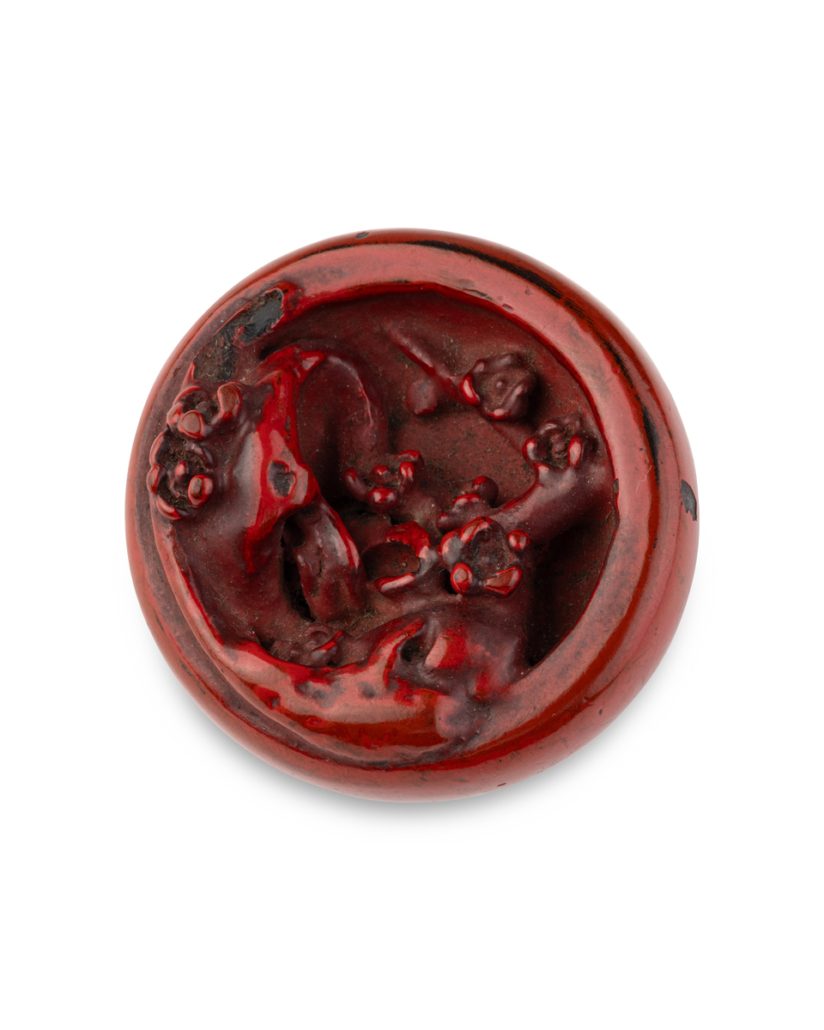
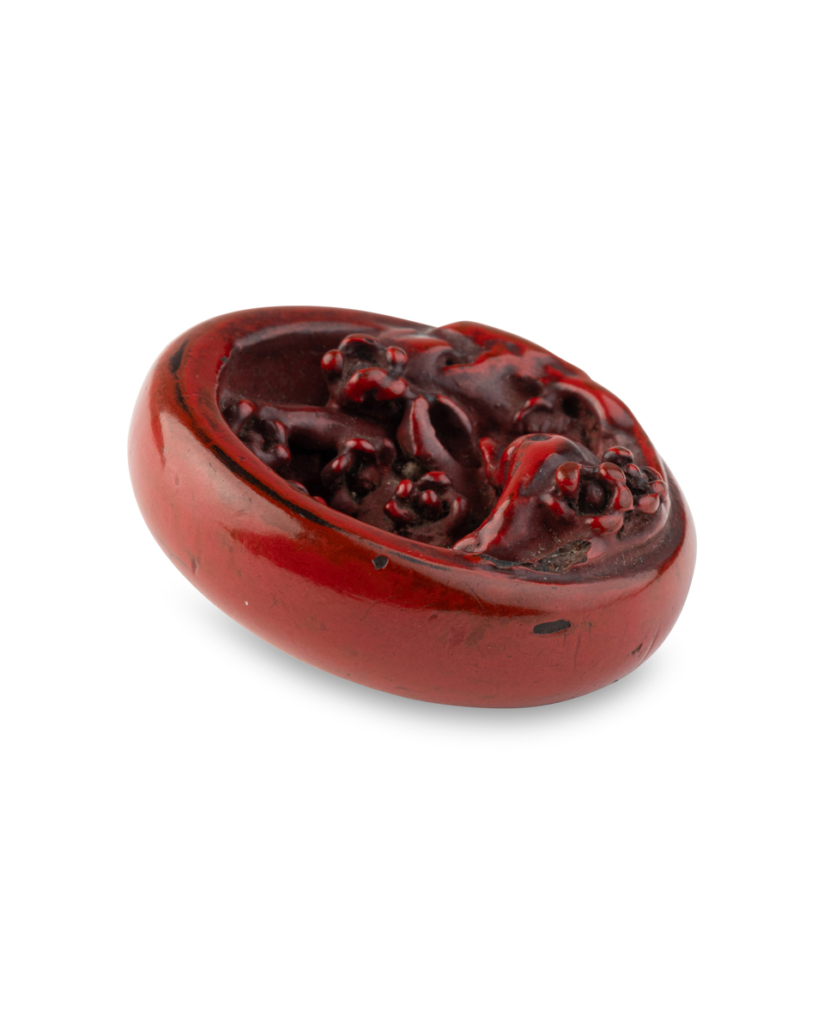

TSUISHU MANJU NETSUKE CHERRY BLOSSOM – EDO
Référence : 2026-1488
Manju-type netsuke (round in form) in red lacquer, carved using the tsuishu technique, decorated with blossoming cherry branches (sakura).
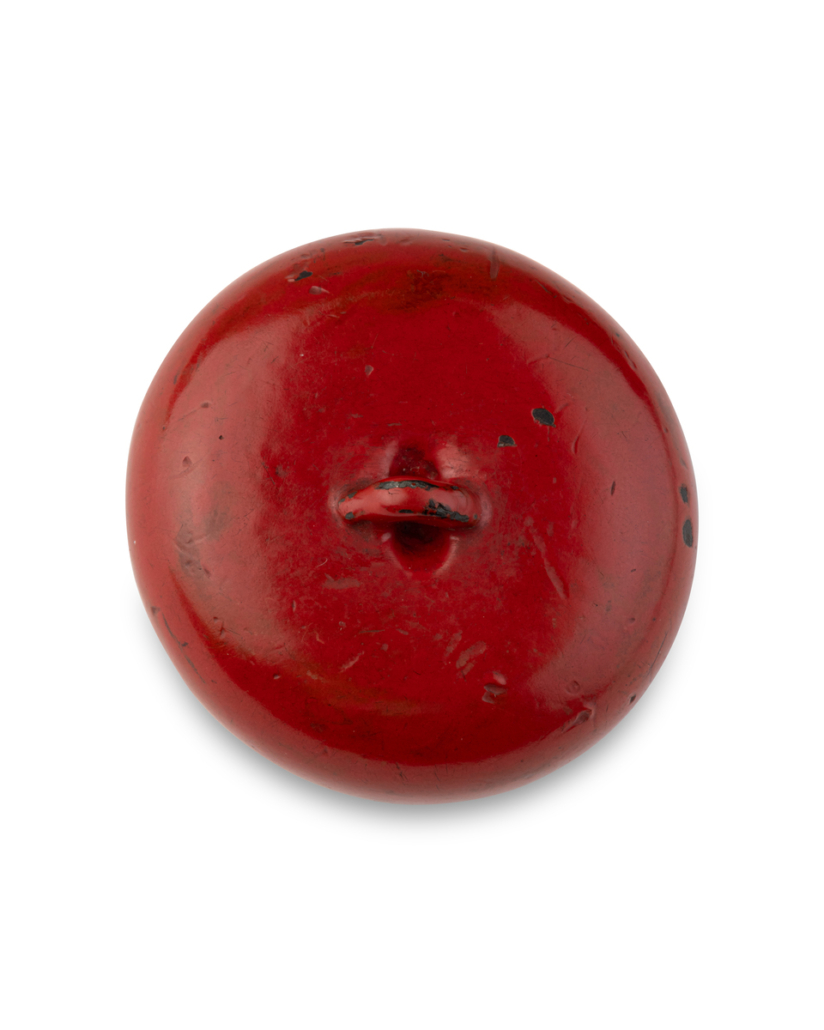
Round or oval in form, the manju netsuke takes its name from the soft, round, steamed cake whose recipe was introduced from China in the early 13th century by Shōichi Kokushi, a monk and founder of Tōfuku-ji, a Buddhist temple in Kyoto. These cakes were believed to have the power to expel the ill winds associated with seasonal change. While most manju netsuke were made of ivory, examples in iron or wood—either plain or lacquered—are not uncommon. Most, as in this case, measure between 2 and 6 cm in diameter. Their rounded shape, reminiscent of modern buttons, earned them the nickname “mandarin buttons,” although this comparison is entirely inaccurate in terms of their actual use. Various attachment systems were employed; here, the manju is carved from a single block and pierced with two holes to allow a cord to pass through, for attachment to a potential inrō or other object.
The cherry blossom, or sakura, is one of the most emblematic and revered flowers in Japan. It symbolizes ephemeral beauty and the transient nature of life. Each year, during the spring blooming season, people in Japan celebrate the event through festivals known as hanami, gathering to admire and appreciate the blossoms. This practice is deeply rooted in Japanese culture and reflects both gratitude for the beauty of nature and an awareness of life’s fragility. The brief flowering period—lasting only a few days—serves as a reminder to cherish the present moment and appreciate life’s fleeting beauty. For this reason, cherry blossoms are often associated with renewal, hope, and gratitude.
Sakura, or cherry blossom, is likely the most well-known and iconic flower of Japan. It holds a special place in Japanese culture, symbolizing both beauty and the impermanence of life. Cherry blossoms are enjoyed during hanami, a tradition of viewing the flowers and picnicking beneath the blooming trees. Each spring, cherry trees bloom across Japan, creating breathtaking landscapes with their delicate pink blossoms. The cherry blossom has inspired countless works of art and poetry and remains an enduring symbol of Japan and its culture. Beyond its cultural and symbolic importance, it is also admired for its aesthetic beauty. There are more than 200 varieties of cherry trees, each with its own characteristics, with blossoms ranging in color from pure white to deep pink.
Provenance: Collection of William “Billy” Wilberforce Winkworth.
William “Billy” Wilberforce Winkworth was the son of Stephen D. Winkworth, who founded the Oriental Ceramic Society at his home in 1921. After serving in the army during the First World War, he joined the staff of the British Museum from 1922 to 1926 under R. L. Hobson in the Department of Ceramics. He later left this position to become a full-time collector and “amateur dealer.” From 1948 to 1970, he worked as a part-time cataloguer for Sotheby’s, where he catalogued netsuke, lacquerware, and Japanese sword fittings. He was renowned for his eye and expertise, particularly in ceramics, and exerted considerable influence on his generation of British collectors. His few publications are listed in John Mallet’s obituary. He retired to the Isle of Wight in 1972.
Japan – Edo period (1603–1868)
Height : 2 cm – Diameter: 4.2 cm