



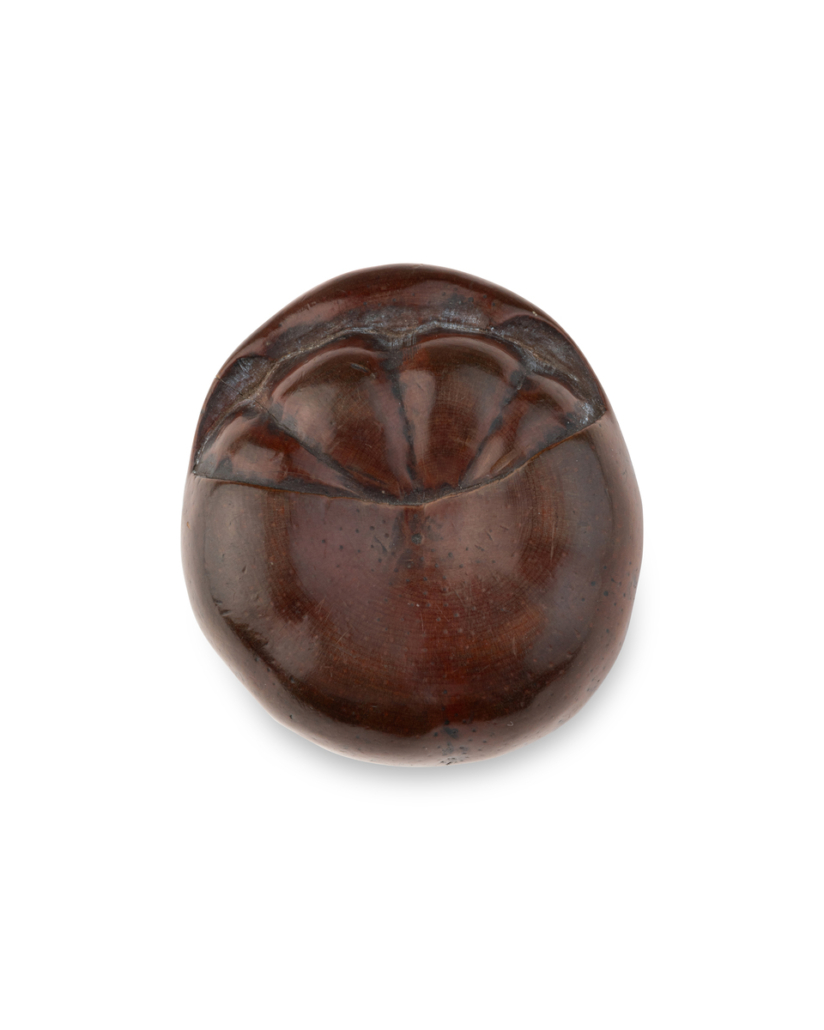
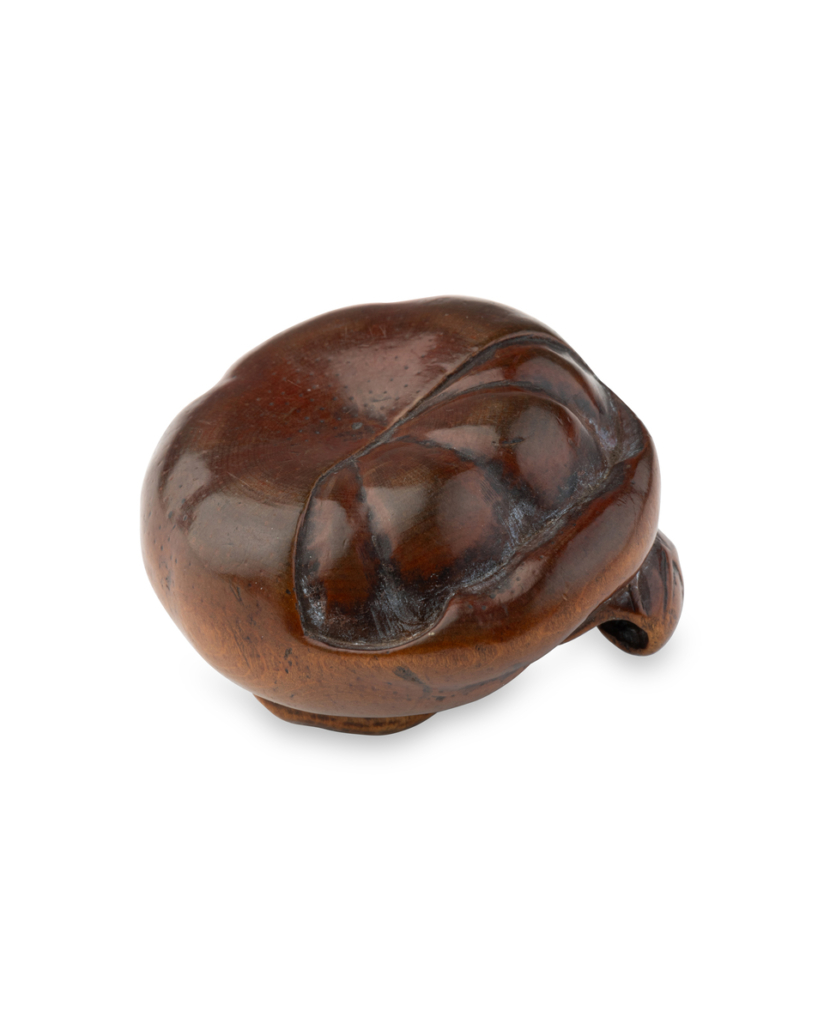

ORANGE NETSUKE – EDO
Référence : 2026-1496
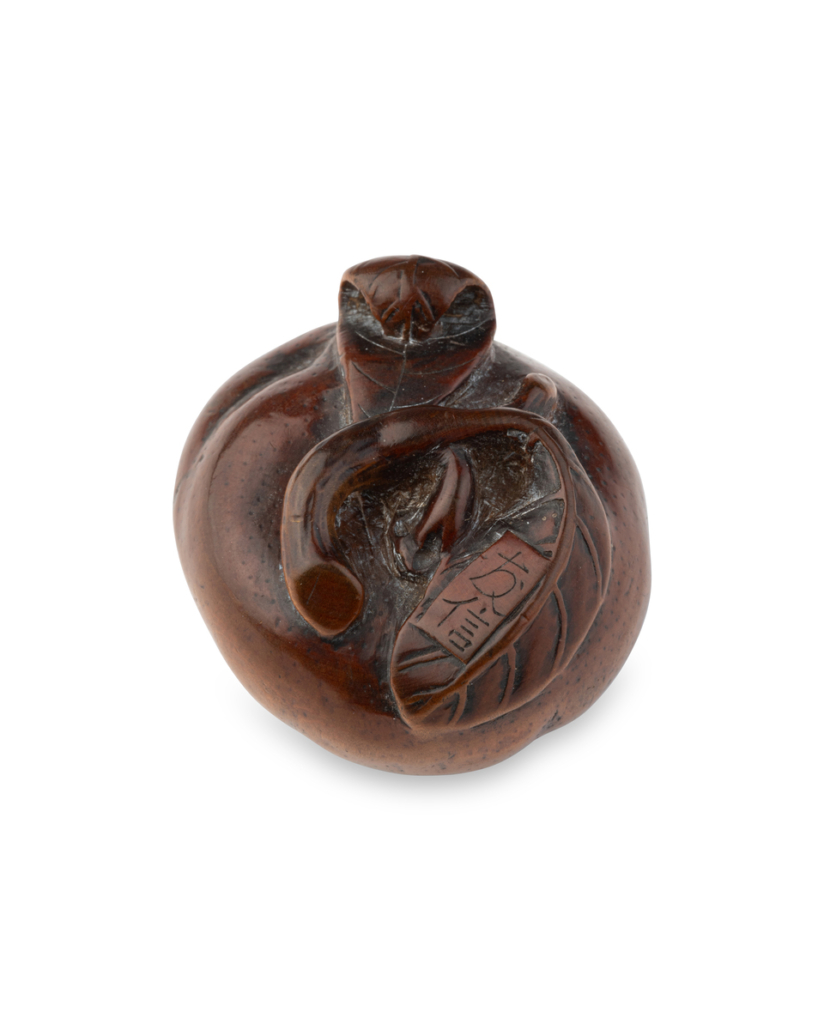
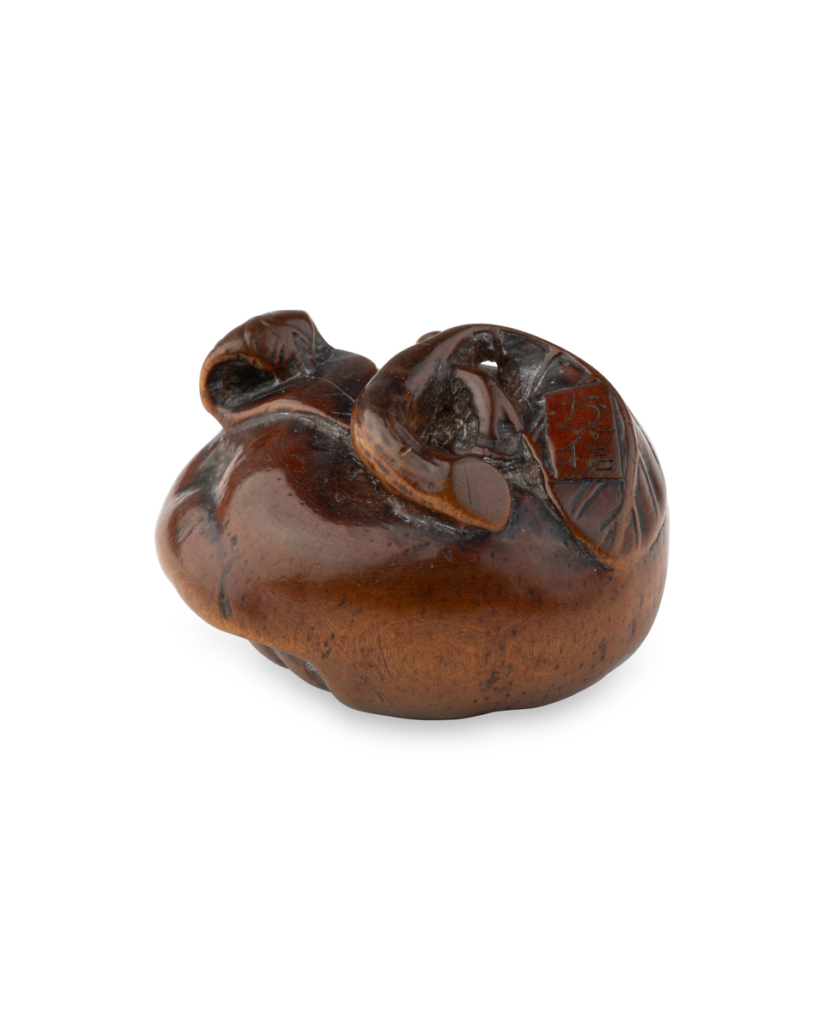
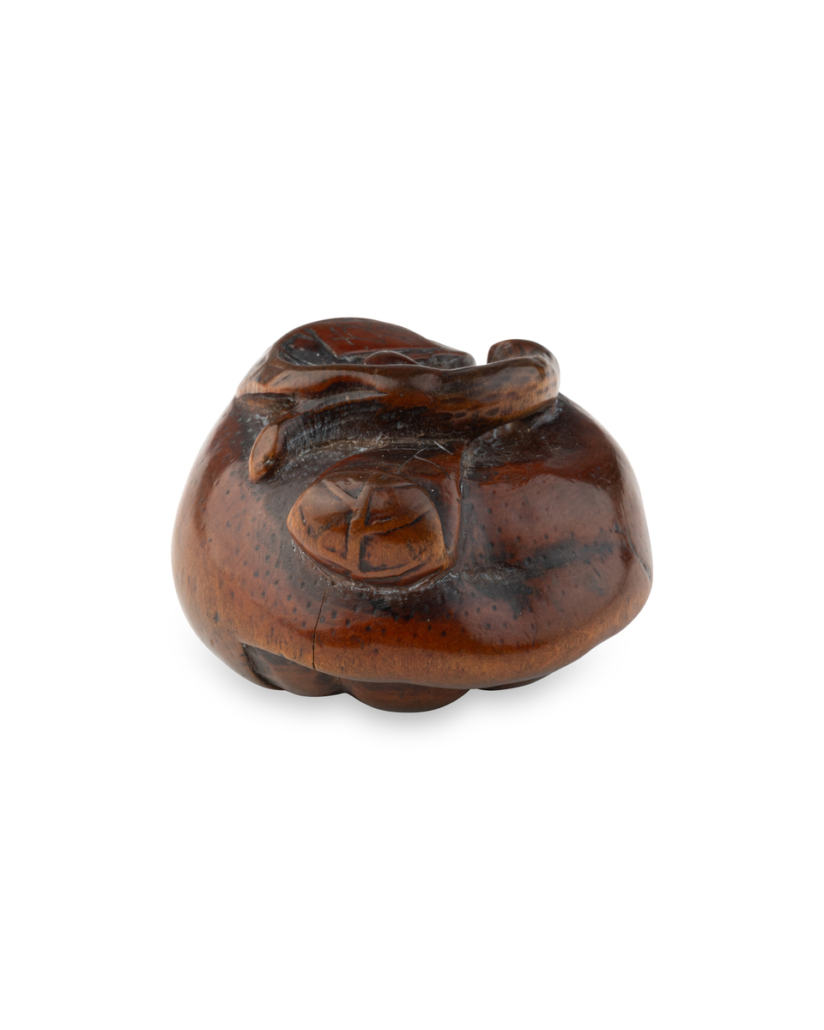
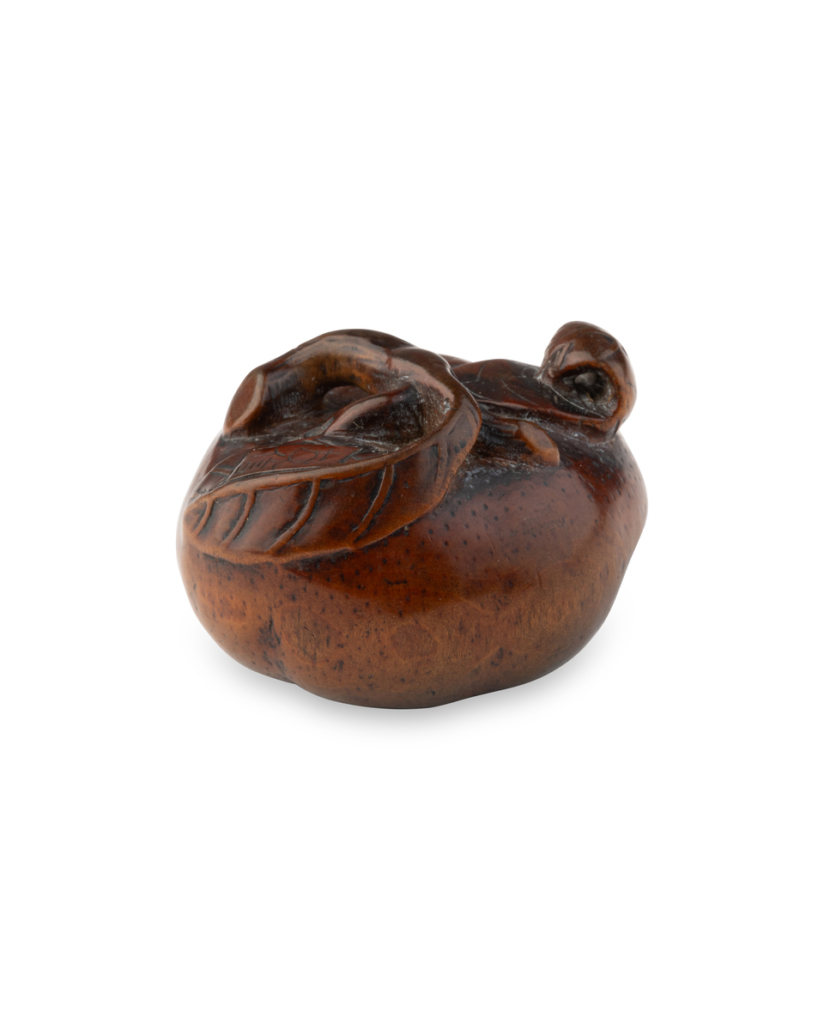
Katabori-type netsuke (fully three-dimensional) in carved boxwood, in the form of a tachibana orange within its foliage, the peel on the reverse opened to reveal the segments.
Signed (Arima) Tomonobu, a prolific artist active during the first half of the 19th century. A specialist in natural subjects—particularly fruits and vegetables, which he consistently carved in wood—his works are characterized by himotoshi (cord holes) carved into the stem or the leaves.
The orange (tachibana) is a well-known decorative motif in Japan and carries a particular symbolic meaning. A specific variety of bitter orange, the daidai (Citrus aurantium daidai), is offered to household deities during New Year celebrations, as it evokes longevity and the continuity of generations. It is also among the objects found in the sack of Hotei, one of the Seven Gods of Good Fortune, symbolizing prosperity and cheerfulness.
Provenance: Collection of William “Billy” Wilberforce Winkworth. This netsuke is illustrated in the publication for which he wrote the preface: Neil K. Davey, Netsuke: A Comprehensive Study Based on the M. T. Hindson Collection, London: Philip Wilson Publishers, 1982, p. 206.
William “Billy” Wilberforce Winkworth was the son of Stephen D. Winkworth, who founded the Oriental Ceramic Society at his home in 1921. After serving in the army during the First World War, he joined the staff of the British Museum from 1922 to 1926 under R. L. Hobson in the Department of Ceramics. He later left this position to become a full-time collector and “amateur dealer.” From 1948 to 1970, he worked as a part-time cataloguer for Sotheby’s, where he catalogued netsuke, lacquerware, and Japanese sword fittings. He was renowned for his eye and expertise, particularly in ceramics, and exerted considerable influence on his generation of British collectors. His few publications are listed in John Mallet’s obituary. He retired to the Isle of Wight in 1972.
Japan – Edo period (1603–1868), first half of the 19th century
Diameter: 4.5 cm