


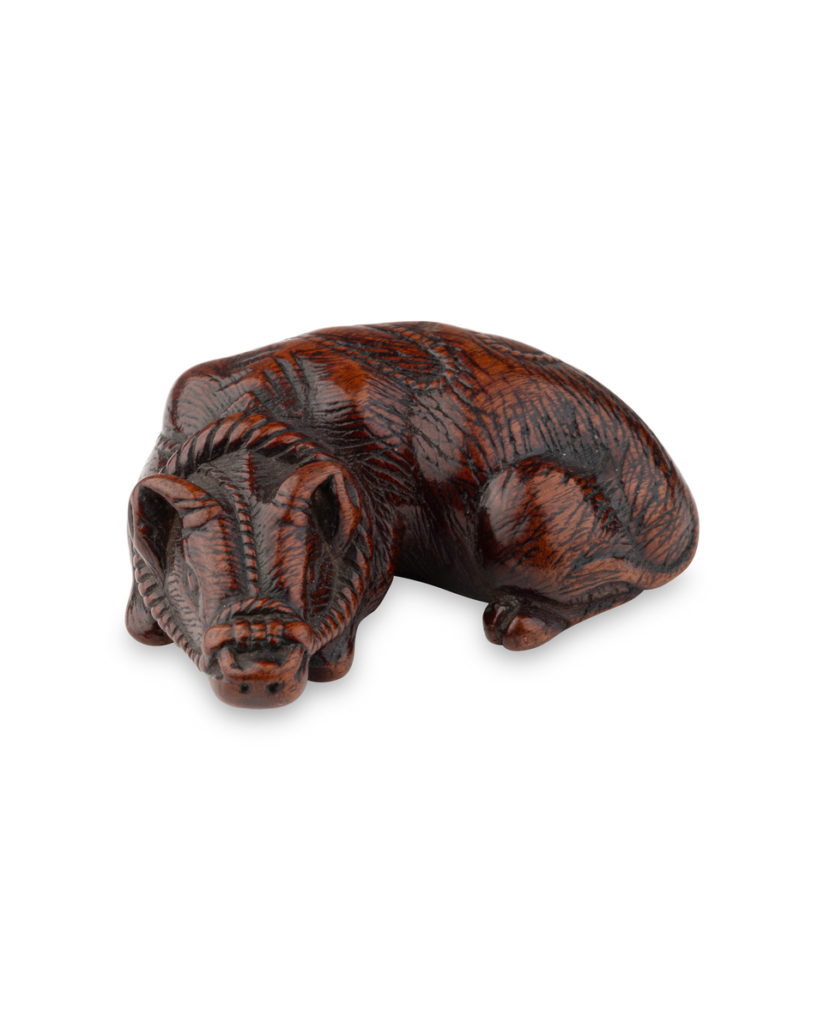
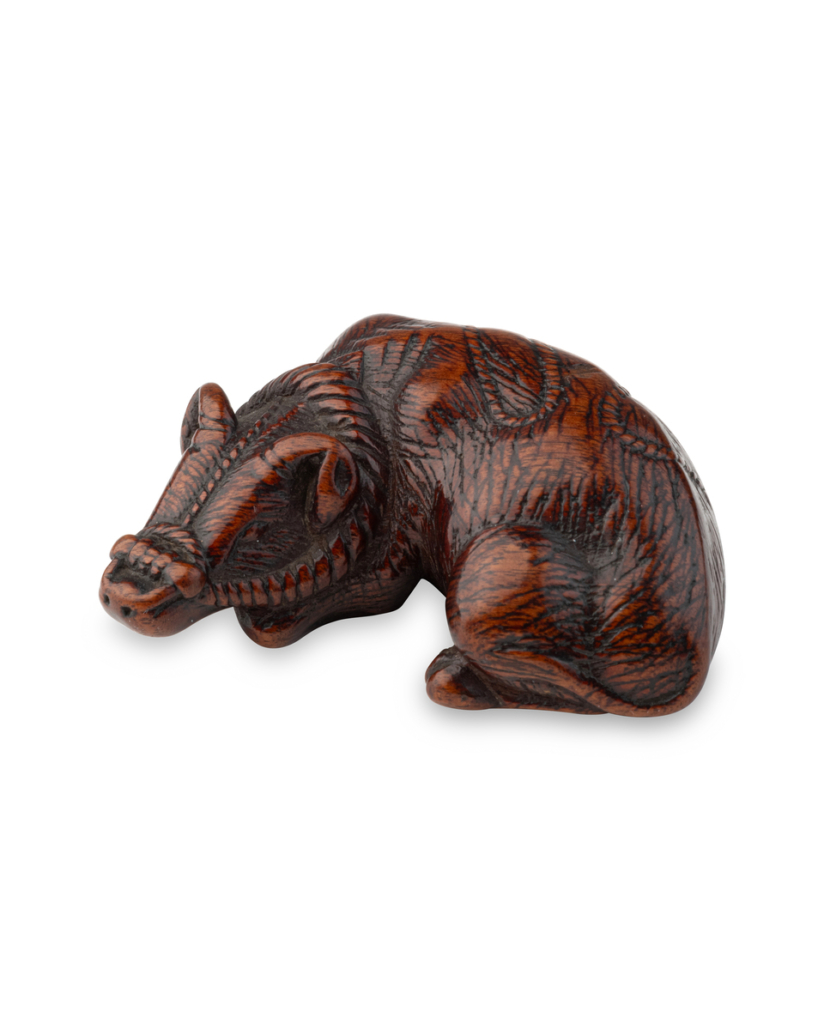
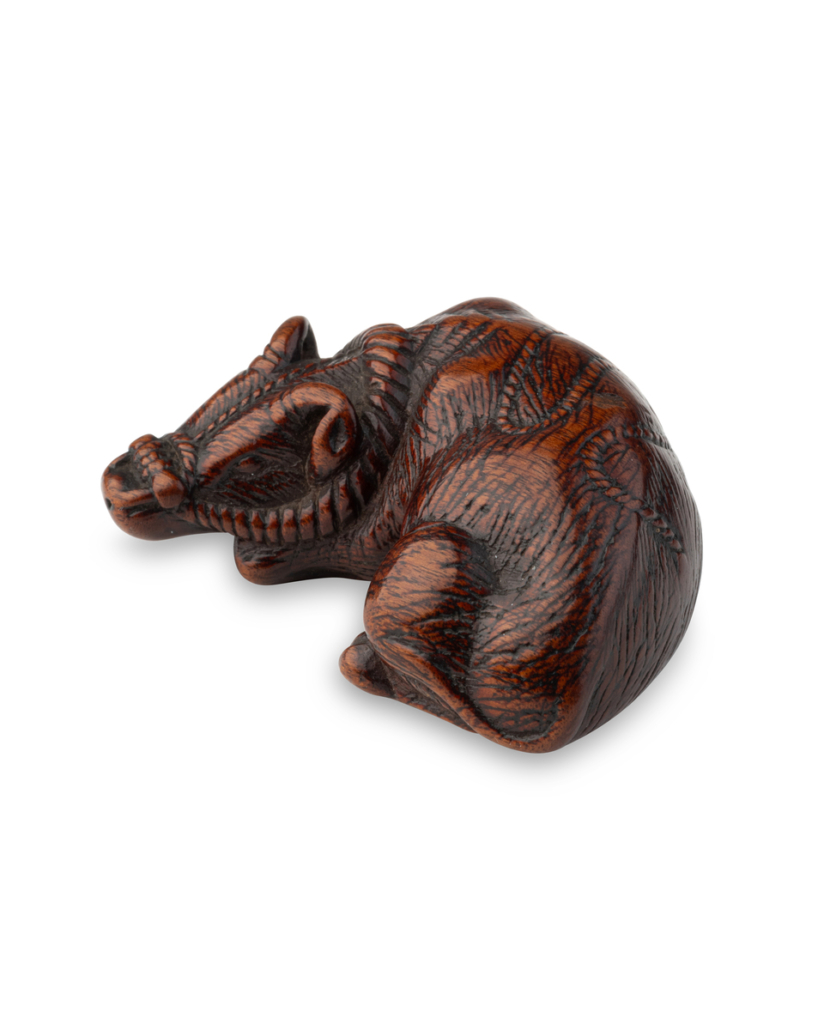


RECUMBENT OX NETSUKE – EDO
Référence : 2026-1494
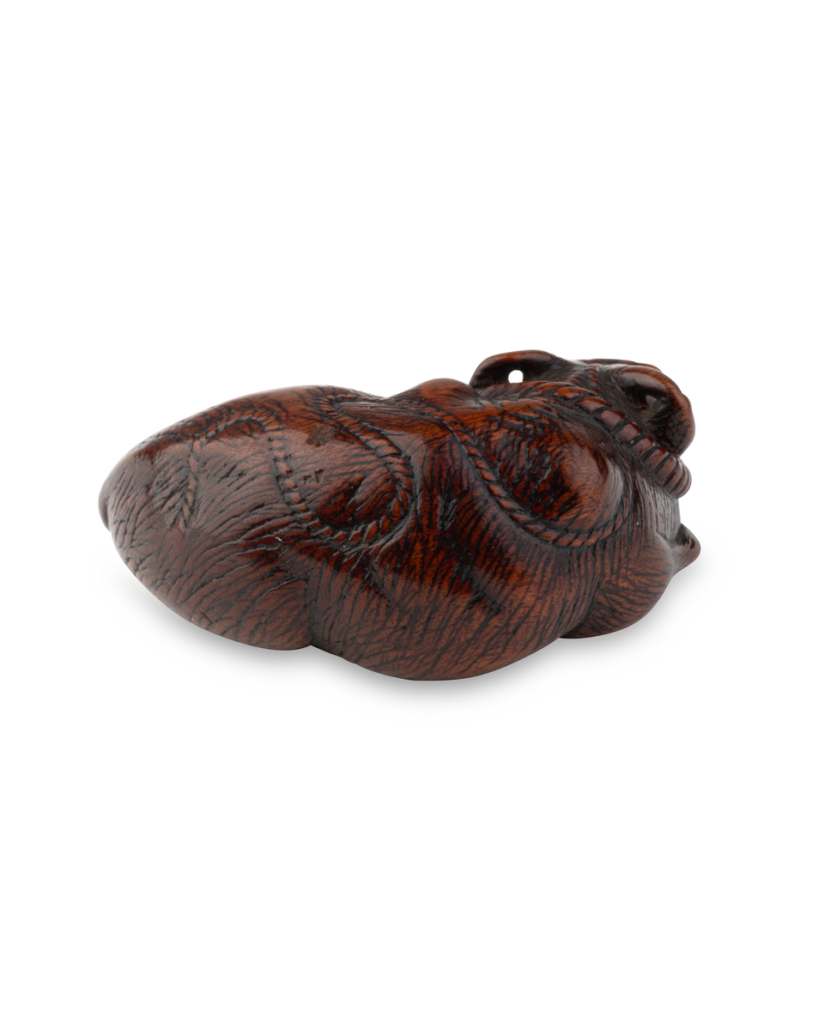
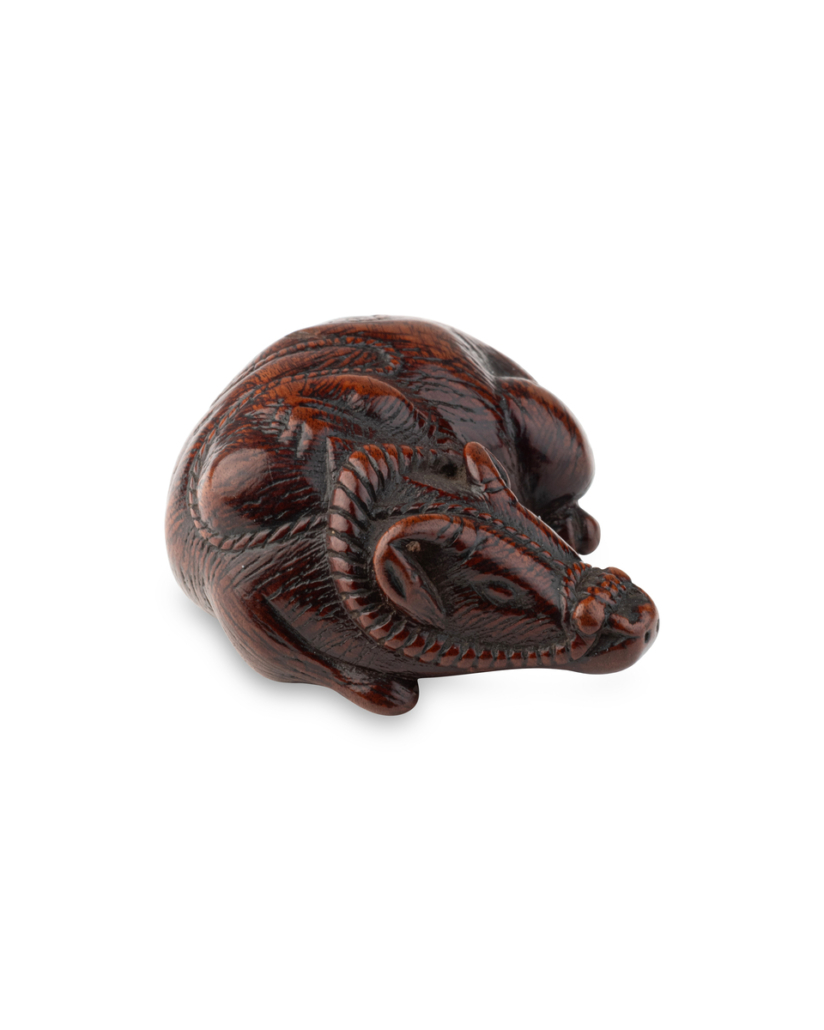
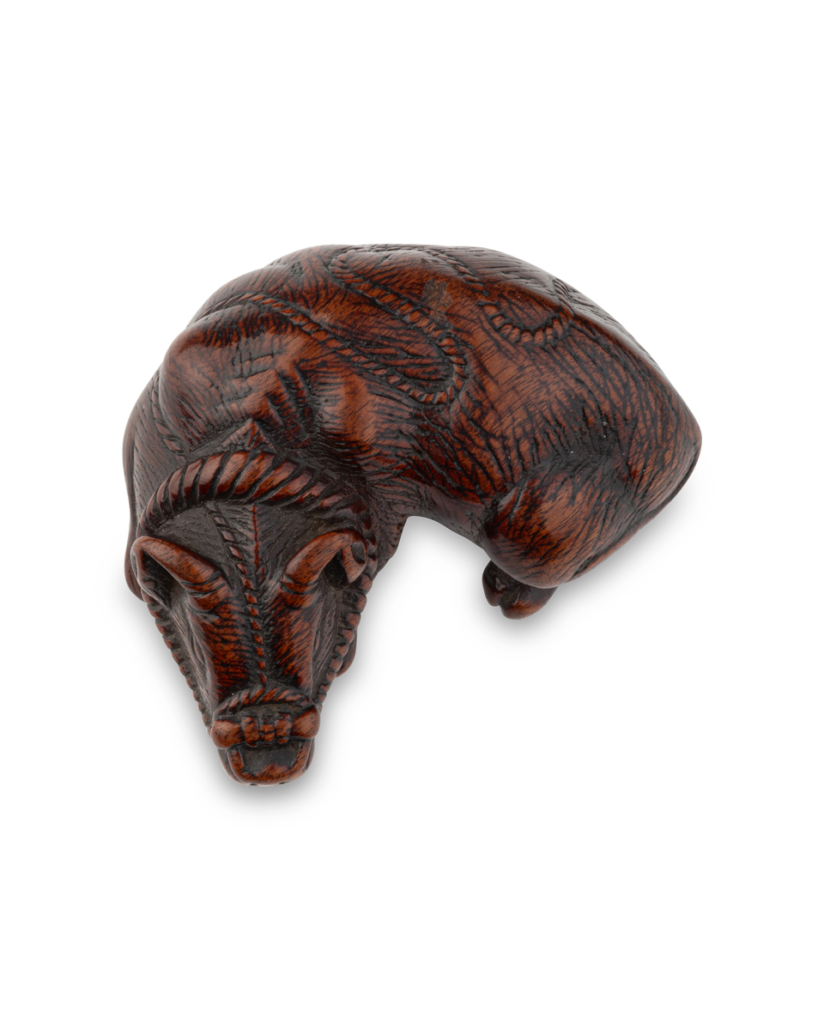
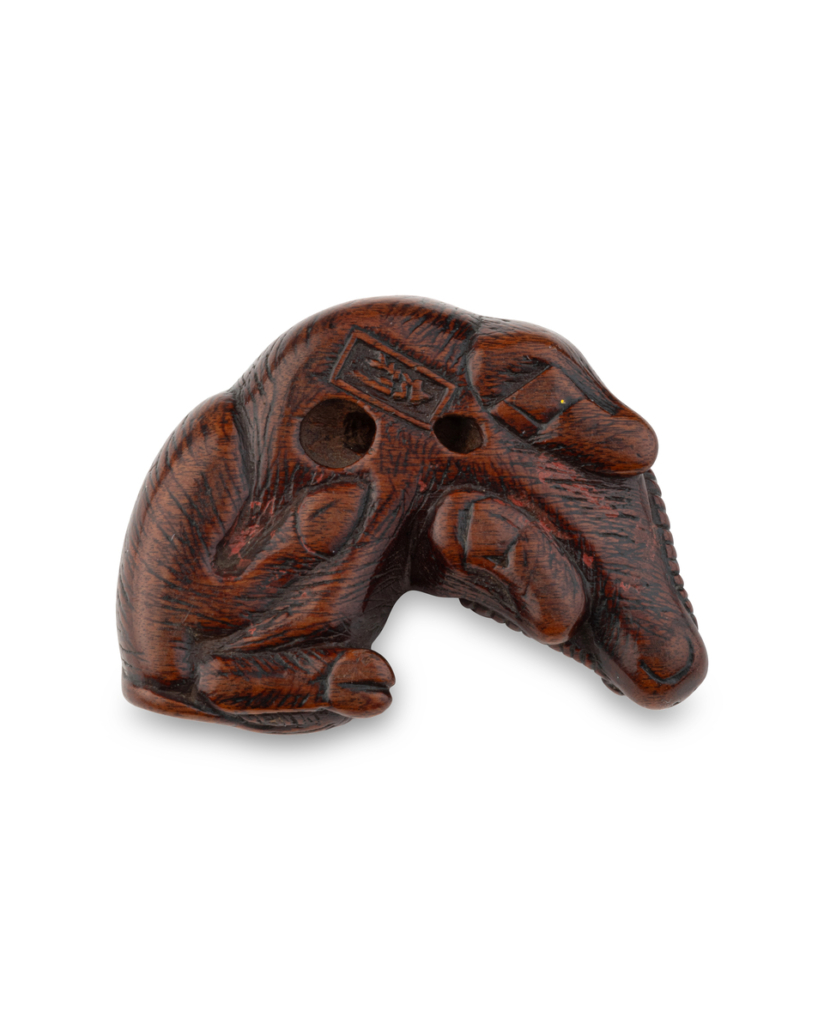
Katabori-type netsuke (fully three-dimensional) in carved boxwood, depicting a recumbent ox, its head harnessed and turned to the left, with its legs folded beneath its body.
Apocryphal signature of Tadatoshi, a 19th-century craftsman known for wood netsuke.
The ox (ushi) is, in China, a symbol of spring and agriculture, and in Japan the emblem of Tenjin, the deity of calligraphy. Sugawara no Michizane (845–903), a learned aristocrat, poet, and high-ranking official of the Heian period (794–1185), was said to have ridden an ox during his forced exile to the island of Kyushu by his political rivals of the Fujiwara clan, in the final years of his life. In Japanese art, the ox also frequently serves as a mount for hermits and sages. Likewise, the motif of a child playing on the back of an ox, or crouching beside it, is a common subject in both Japanese and Chinese art, symbolizing perfect tranquility.
Provenance: Collection of William “Billy” Wilberforce Winkworth.
William “Billy” Wilberforce Winkworth was the son of Stephen D. Winkworth, who founded the Oriental Ceramic Society at his home in 1921. After serving in the army during the First World War, he joined the staff of the British Museum from 1922 to 1926 under R. L. Hobson in the Department of Ceramics. He later left this position to become a full-time collector and “amateur dealer.” From 1948 to 1970, he worked as a part-time cataloguer for Sotheby’s, where he catalogued netsuke, lacquerware, and Japanese sword fittings. He was renowned for his eye and expertise, particularly in ceramics, and exerted considerable influence on his generation of British collectors. His few publications are listed in John Mallet’s obituary. He retired to the Isle of Wight in 1972.
Japan – Edo period (1603–1868), 19th century
Height: 1.5 cm – Length: 4.5 cm – Width: 4 cm