






INK BLOCK NETSUKE – EDO
Référence : 2026-1490
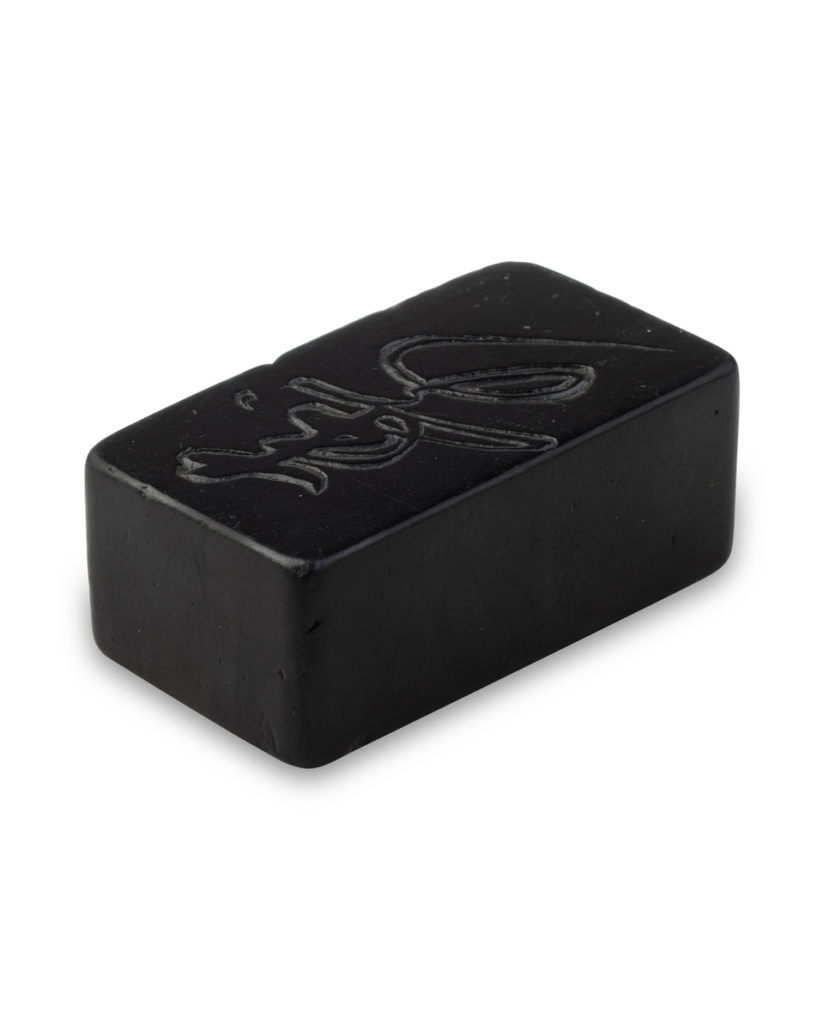
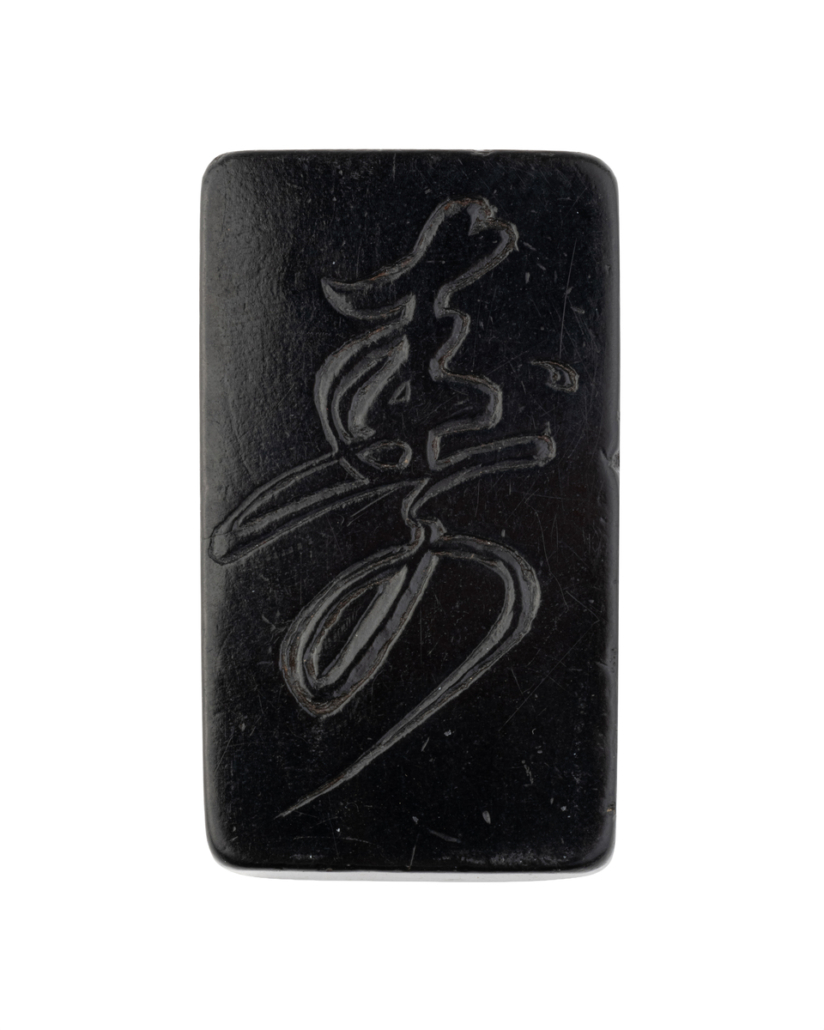
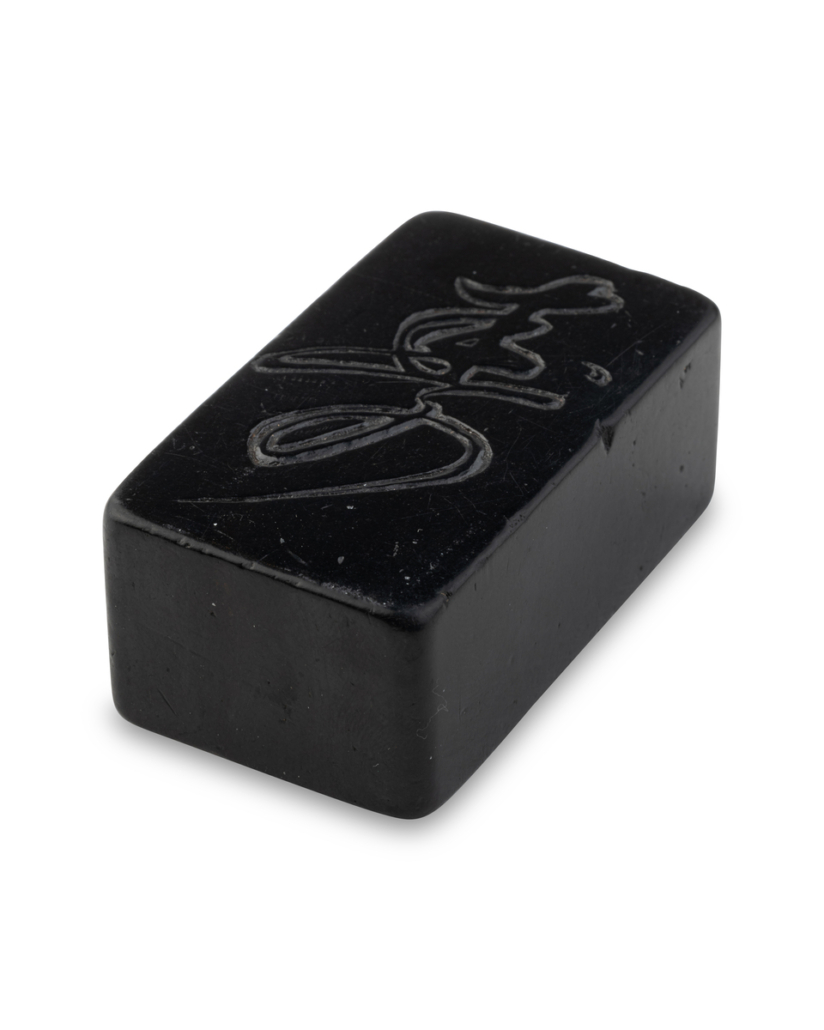
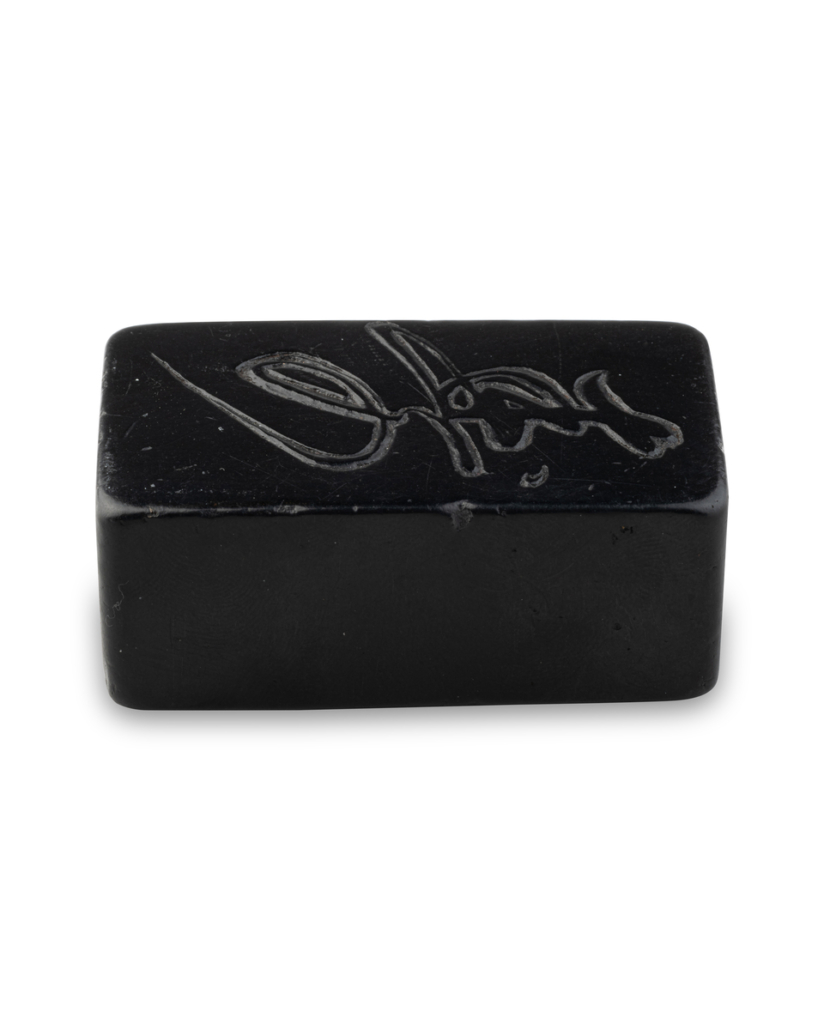
Katabori-type netsuke (fully three-dimensional) in carved wood, lacquered in black, depicting the character ju (“longevity”).
Signed Zanaka.
Ink in East Asia is generally presented in the form of hard, molded sticks, more commonly referred to as “ink cakes.” These cakes, composed of soot and animal glue, are ground against an inkstone with a small amount of water, producing a liquid used as ink. Ink and its various uses were introduced to Japan in the 7th century: the Buddhist priest Damjing, of Korean origin, was sent by the kingdom of Goguryeo (one of the Three Kingdoms, 57 BCE–668 CE) to Japan, where he arrived around 610. At that time, Japan was under the influence of the Soga clan, one of the most powerful families in the archipelago (and possibly of Korean origin), which had, over the decades, taken control of numerous Korean immigrant families. These groups, benefiting from both the technological and cultural advancements of Chinese civilization, formed specialized communities in various crafts and techniques. Through this influence, many scholars, monks, and teachers came from Korea to Japan, Damjing among them. Tasked with teaching Buddhist rites, he was also proficient in the techniques of papermaking and ink production, which subsequently spread throughout Japan.
Provenance: Collection of William “Billy” Wilberforce Winkworth.
William “Billy” Wilberforce Winkworth was the son of Stephen D. Winkworth, who founded the Oriental Ceramic Society at his home in 1921. After serving in the army during the First World War, he joined the staff of the British Museum from 1922 to 1926 under R. L. Hobson in the Department of Ceramics. He later left this position to become a full-time collector and “amateur dealer.” From 1948 to 1970, he worked as a part-time cataloguer for Sotheby’s, where he catalogued netsuke, lacquerware, and Japanese sword fittings. He was renowned for his eye and expertise, particularly in ceramics, and exerted considerable influence on his generation of British collectors. His few publications are listed in John Mallet’s obituary. He retired to the Isle of Wight in 1972.
Japan – Edo period (1603–1868)
Height: 2 cm – Length: 5.5 cm – Width: 3 cm